

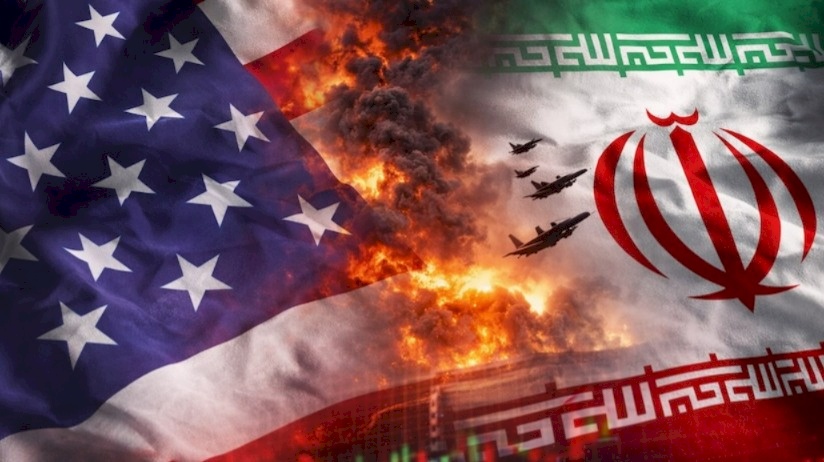
Wall Street Journal: The confrontation between America and Iran has entered a more dangerous phase
SadaNews - The Wall Street Journal sees that the confrontation between the United States and Iran has entered a new, more dangerous phase, as both sides seek to continue mutual military and political pressure without slipping into a full-scale war, but they are constantly approaching red lines that could lead to a wide escalation that is difficult to contain.
According to the newspaper's report, recent days have seen the most dangerous escalation since U.S. President Donald Trump announced a ceasefire in April 2026, following a nearly 40-day U.S.-Israeli military campaign against Iran.
The report indicates that the last spark began with an exchange of attacks between Iran and Israel after Tehran launched direct missiles at Israel in response to an Israeli raid targeting Beirut. The escalation quickly turned into a series of reciprocal responses that almost spiraled out of control, while the Trump administration struggled to contain the situation.
The crisis escalated further when an American Apache helicopter fell off the coast of Oman, amid U.S. assessments that it was hit by an Iranian drone. Although Iranian officials confirmed that the downing of the helicopter was unintentional, Washington responded with a series of strikes lasting hours, followed by Iran launching missiles and drones towards U.S. allies in the Gulf and Jordan.
The newspaper notes that the current tension is also linked to the struggle over the Strait of Hormuz, through which a large part of global oil exports passes. The United States continues to impose a naval blockade on Iranian ports, while Tehran uses drones and speedboats to impose restrictions on maritime traffic in the strait, raising the likelihood of direct military friction.
The newspaper quoted Iranian affairs analyst Dina Esfandiari as saying that both sides "are waging war while simultaneously attempting to establish boundaries for a ceasefire and improve their positions through military strikes," noting that neither wants an open war, but both are prepared to continue limited confrontations.
In light of this escalation, diplomatic efforts remain stalled. Despite Trump's repeated statements about nearing an agreement, negotiations have not made significant progress. The U.S. president expressed his frustration at the slow pace of talks, threatening new strikes on vital facilities inside Iran if Tehran continues to stall.
The report confirms that Iranian leadership emerged from weeks of warfare suffering significant economic and military damage, but in return gained an important leverage in its ability to threaten shipping in the Strait of Hormuz and target energy facilities in Gulf countries.
Tehran also faces domestic pressures from hardliners calling for more firmness towards the United States and Israel, pushing it to adopt a strategy of calculated military responses aimed at restoring deterrence without escalating into a full confrontation.
Researcher Hamid Reza Azizi states that the current situation is "extremely fragile," warning that any miscalculation could lead to unintended escalation. However, he notes that Iran has thus far been keen to remain beneath the threshold that could push Washington to end the ceasefire, represented by the killing of American soldiers.
Conversely, the report observes that Iran has shown some restraint in recent days, as it used relatively limited numbers of missiles and drones, seemingly an attempt to deliver deterrence messages without expanding the scope of war.
The Wall Street Journal concludes that America and Iran are currently caught in a state of "neither war nor peace", as each side seeks to avoid retreating or making significant concessions while continuing to use military pressures to improve its negotiating terms. However, the continuation of this situation makes the region susceptible at any moment to a new explosion that could turn the limited confrontation into a broader and more dangerous conflict.
 Follow the latest Sada News via Google News
Boy injured by occupation fire during the storming of Qalandia camp

Behind the Suspension of Strikes on Iran: A Recommendation from the Commander of CENTCOM t...

Occupation hands over the body of the martyr Sufyan Abu Leil after holding it for 4 months

Israeli President Talks with King of Bahrain About Regional Developments

Israeli Cabinet Approves the Entry of the "Peace Council" and International Forces into Ga...

Katz Signals Expansion of Camps Evacuation Model to Other Areas in the West Bank

Progress in Iran-Oman Talks on Managing the Strait of Hormuz
