

Expired Insulin and 'Boko Medicines': Sudanese Patients Caught Between the Fires of War and Poisoned Medicine
SadaNews - Behind the armed conflict in Sudan, diabetic patients are engaged in a dual struggle for survival, as they must not only endure the fire of weapons and the scarcity of food, but also obtain the rare insulin medication with confirmed expiration dates, which is not guaranteed in a country living on the edge.
Amid the total collapse of healthcare services with hospitals and health centers closing, and production halting at pharmaceutical factories and disruption of distribution chains for vital medicines, the challenge for diabetic patients is compounded.
Available but Expired
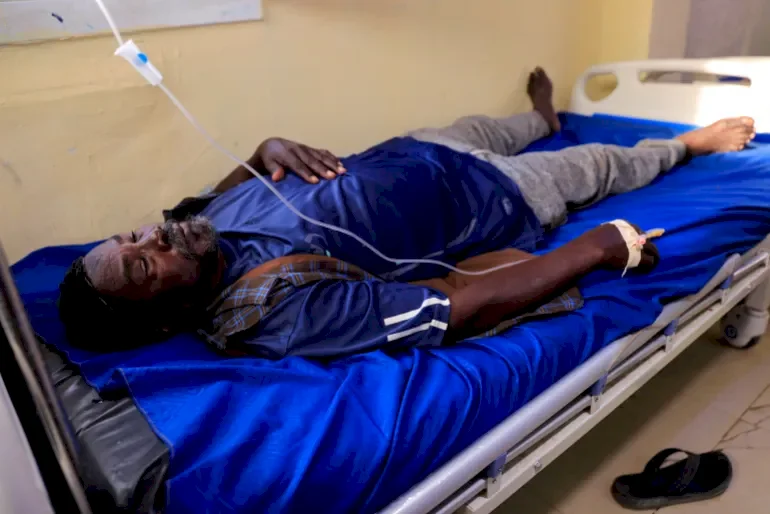
From his war-damaged home in the northern Khartoum neighborhood of Khartoum, Mortada Mohi al-Din, who is lying on his modest bed, tells Al Jazeera: "Sometimes the insulin is expired. You can't know if it's spoiled or past its expiration date. You can check the expiration date but it may be spoiled due to poor storage."
In any case, the man in his fifties is keen to preserve his limited remaining doses of insulin and use them very carefully amid a significant shortage of this substance in pharmacies.
Since April 2023, the Rapid Support Forces have been fighting battles with the Sudanese Army following a dispute regarding their integration into the military establishment, resulting in a famine considered among the worst globally, in addition to the deaths of more than 50,000 people and the displacement of nearly 14 million others, about a quarter of the country’s population.
'Boko Medicines'
The chaos, and the closure of pharmaceutical factories due to war, has allowed smuggling networks to flourish widely, flooding the black market with unregulated and highly priced medicines locally known as 'Boko medicines.'
These smuggled medicines include those intended for treating intravenous malaria. Instead of being a solution for patients, they may turn into toxic and lethal substances due to exceeding the associated temperature and storage standards, often leading to their spoilage.
Hamza Mutawakkil, a pharmacist residing in Omdurman, tells Al Jazeera that relying on unregulated channels for obtaining medicines, including malaria medications, which are intravenous injections, puts patients' lives at direct risk.
Because intravenous treatments require absolute sterilization, administering improperly smuggled injections that do not meet health standards can lead to severe complications, including acute bloodstream infections, systemic shock, or even death.
Supply Paralysis
Before the war, local factories succeeded in securing self-sufficiency for Sudan in medicines related to treatments for diseases like hypertension, diabetes, colds, and child care. But the situation today has turned upside down.
Most medicine production lines have stopped working, while a report from the 'Health Resources and Services Availability Monitoring System' operated by the World Health Organization indicates a total disruption of about 40% of health facilities in the country.
The situation is more critical nationwide, with about 87% of facilities closed in Khartoum and 85% in Kordofan, while the only operating maternity hospital that continued providing its services in the besieged city of Al-Fasher despite severe shortages faces the imminent risk of closure, according to a report from the United Nations Population Fund.
In the public sector funded by the government, officials acknowledge that the war and destruction have devastated the health system and infrastructure, leaving it in ruins, despite claims from the national medical supplies fund that it has successfully provided 75% of cancer and kidney disease medicines overall.
Pillage and Looting
Logistical obstacles have compounded the plight of patients in Sudan. A report released by the World Health Organization in January revealed that crossing international aid from neighboring countries to remote areas like Darfur could take about 90 days, aggravated by frequent thefts and looting of vital supplies within remaining pharmacies and hospitals.
Drone attacks targeting hospitals in Darfur and the Blue Nile state reveal the extent of systematic destruction perpetrated by attacking forces on medical institutions, prompting the Director-General of the World Health Organization, Tedros Adhanom Ghebreyesus, to warn of a complete collapse of the health system in Sudan amid one of the world's most serious humanitarian emergencies.
The Director-General of the international organization states: "These events are a stark reminder of the urgent need to renew international solidarity and take decisive political and humanitarian actions. Sudan cannot bear this crisis alone."
The Rapid Support Forces have taken control of Al-Fasher, the last stronghold of the Sudanese Army, since late October, leading to the entrapment of about 700,000 civilians, mostly women and children, amid repeated attacks and a complete cutoff of food and medical supplies.
Source: Al Jazeera
 Follow the latest Sada News via Google News
Earthquake of 5.5 Magnitude Hits Western Iran

To Enhance His Support for "Increasing Children"... Vance Announces the Birth of His Fourt...

Death of a Mosque Imam in Armed Attack in Southeastern Iran

Rubio Reveals Circumstances Surrounding the Death of an American Soldier in Iraq

Reliable Threat.. US Embassy in Jordan: Evacuation of International Airport and Port in Aq...

Italy Raises Alert Level to 'Red' with Deadly Heat Wave

Kuwaiti Army Intercepts Iranian Missile and Drone Attacks
