

International Economy
Closure of the Strait of Hormuz Causes Sharp Rise in Ship Insurance Costs.. Stranded Sailors Call for Help to Leave the Gulf
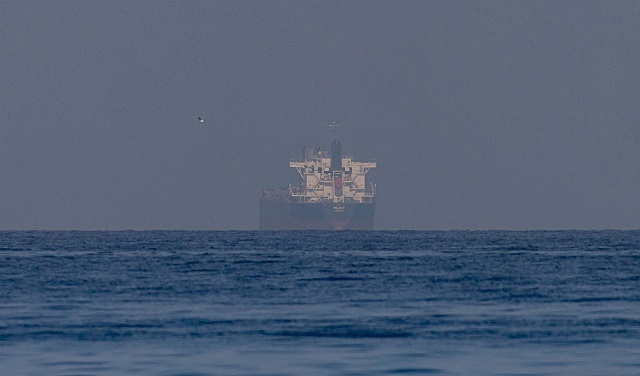
SadaNews - The ongoing war against Iran has led to a significant increase in ship insurance costs in the region, particularly for vessels crossing the Strait of Hormuz, which provided a passage for one-fifth of the world's oil and LNG supplies before the war. There has been a 95% drop in maritime traffic following Iranian threats and the targeting of some ships in response to the US-Israeli joint attack.
The International Union of Marine Insurance announced that some insurance companies are sending what are called "war risk termination notices" for ships, aimed at "re-evaluating" this coverage and then "reactivating it under amended terms," following the US-Israeli declaration of war on Iran on February 28.
Despite the name, these "termination notices" do not necessarily end the coverage, as war insurance remains available for ship owners and operators wishing to purchase it.
Officials in London, the largest marine insurance market in the world, confirmed that ship captains are avoiding passage through the strait to protect their crews, not due to an inability to acquire insurance.
The Lloyd's market, a London-based trade association, stated on Monday that "security concerns, not the availability of insurance, are what is reducing maritime traffic."
Nevertheless, the price of insurance policies for crossing the strait has sharply increased, according to market participants. Previously, war risk insurance costs were usually less than 1% of the value of the ship before the outbreak of the ongoing war. Today, the cost of this insurance can reach tens of millions of dollars for a single crossing of the Strait of Hormuz.
David Smith, head of the marine insurance department at the specialized brokerage "McGill," estimates that prices range between 3.5% and 10% of the ship's value, adding, "These prices change almost every hour."
Insurance rates for shipments covering the goods themselves are following the same trend.
David Smith points out that "the value of a brand-new LNG carrier can range between $200 million and $250 million, and its cargo value can reach the same amount."
**Multiple Types of Insurance**
Commercial ships first need hull insurance, which covers loss or damage to the vessel, followed by protection and indemnity insurance, which covers liability towards third parties.
Goods must be covered by cargo insurance.
Finally, ships obtain war risk insurance, usually through an annual premium; however, this insurance does not include entering areas where conflict is active, known as "listed areas."
To enter these areas, a new war risk insurance premium must be renegotiated.
**Reclassifying Dangerous Areas**
London's marine insurance market officially expanded the scope of "listed areas" in the Gulf in early March.
Neil Roberts, head of marine and aviation insurance in the London marine insurance market and a member of the committee responsible for updating the list, explains that this system "enables insurance companies to respond quickly and appropriately to high-risk areas."
In determining war risk insurance premiums, insurers consider numerous factors, including the type of vessel, its flag, owner, size, speed, and cargo.
David Smith explains, "There is currently no demand for purchasing," noting that one insurance firm reported that the underwriting rate for policies related to the Strait of Hormuz is less than 1%.
**US Insurance Initiative**
US Treasury Secretary Scott Piesen promised on Thursday to launch an American insurance initiative aimed at encouraging crossings of the Strait of Hormuz.
Former President Donald Trump suggested this plan, which includes naval escorting and urged Western powers and other countries to join it.
However, it seems that most are hesitant in light of the ongoing conflict.
David Smith anticipates that if a militarily protected crossing program is implemented and proves effective, insurance prices will drop "very quickly."
Traffic through the strait has decreased by 95% from March 1 to March 26, compared to pre-war levels, according to maritime monitoring company "Kepler."
Since March 1, 24 commercial vessels, including 11 oil tankers, have been attacked or reported incidents in the Gulf, the Strait of Hormuz, or the Gulf of Oman, according to the UK Marine Trade Operations agency (UKMTO).
Stranded sailors in the Gulf are seeking help.
In connection with the ongoing hostilities in the Gulf, the International Transport Workers' Federation reported that it has received over 1,000 emails or text messages from stranded sailors in the Strait of Hormuz and the surrounding area since the war began.
According to the UN's International Maritime Organization, there are around 20,000 sailors trapped in the Gulf, and at least 8 sailors or port workers have died in incidents in the region since February 28.
Mohamed Rashidi, coordinator of the ITF Arab World and Iran network, said, "This is an exceptional situation, and there is a lot of panic," describing it as "truly shocking."
He added, "I am receiving calls from sailors at two and three in the morning; they contact me as soon as they have internet access."
He noted that "one sailor called panicked, saying, 'We were bombed here. We don’t want to die. Please help me, sir. Please get us out of here.'"
In one email received by the International Transport Workers' Federation on March 18, a sailor stated that the ship's operator was ignoring the crew’s requests to leave, claiming that there were no flights from Iraq and refused to consider alternative routes.
One of the stranded sailors wrote in an email, which "AFP" has seen and confirmed, "They are forcing us to continue shipping and transferring cargo from ship to ship, even when we express concerns about our safety while we are in a war-zone-like area. They keep us in a position where we have no options."
 Follow the latest Sada News via Google News
Read Also

The World Bank Warns: "The Worst-Case Scenario" for Global Growth is Approaching

Trump Prepares to Impose New Tariffs on Dozens of Economies

Gold Surpasses $4,100 as Selling Pressure Eases

Oil Rises for the Fourth Day as Supply Risks Escalate

An Additional $8 Billion.. A New Account from the Pentagon on the Cost of the War with Ira...

London Stock Exchange Enters the Era of 24/7 Trading

Shamaran Petroleum: Suspension of Oil Production in Duhok Fields in the Kurdistan Region o...
