

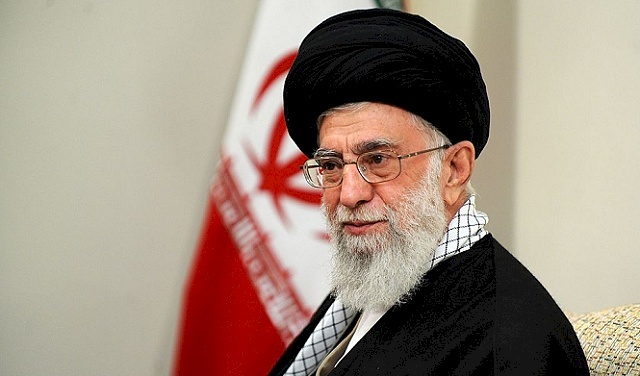
Notable Iranian Leaders Killed in the War
SadaNews - Since February 28, the American-Israeli strikes on Iran have claimed the lives of many senior political and military figures in the war that has entered its second month.
Here are some of the most notable figures killed, according to a report by the news agency "Reuters":
Ali Khamenei
The former Supreme Leader Ali Khamenei, who ruled Iran with an iron fist since his selection for this position in 1989, while he sharpened animosity towards the United States and Israel, was killed at the age of 86 in an American-Israeli airstrike on his compound in Tehran on February 28.
His rule, which lasted more than three decades, was characterized by consolidating his power through the security apparatus and expanding Iran's regional influence, even as heightened tensions over its nuclear program put it in repeated confrontations with the West.
Ali Larijani
Ali Larijani, the Secretary of the Supreme National Security Council of Iran. Iranian media reported that he was killed at the age of 67 in an American-Israeli airstrike in the Pardis area of Tehran on March 17, along with his son and one of his deputies.
Larijani was a former commander of the Revolutionary Guard, part of the nuclear negotiation team, and maintained good relations with Western negotiators. He was also a close advisor to the late Iranian leader and played an important role in shaping Iran's security and foreign policy.
Ismail Al-Khatib
Ismail Al-Khatib, the Iranian Minister of Intelligence, was killed in an Israeli airstrike on March 18. Al-Khatib was a cleric and a politician from the hardline faction, worked in Ali Khamenei's office, and received guidance from him before taking over the civil intelligence agency in August 2021.
Ali Shamkhani
Ali Shamkhani, a close advisor to Khamenei and a key figure in shaping Iran's security and nuclear policies, was killed in American-Israeli strikes on Tehran on February 28.
He was a former defense minister and a long-time security official, recently resuming his pivotal role in decision-making during wartime after surviving an attack on his home during the 12-day war in June between Israel and Iran.
Reza Tangsiri
The Israeli military and U.S. Central Command (CENTCOM) announced on Friday the death of "Revolutionary Guard" naval commander Ali Reza Tangsiri in a strike in Bandar Abbas, coinciding with the expansion of strikes on Iranian military facilities, while Tehran responded with rockets and drones.
Senior Military Leaders
Mohammad Pakpour, the top commander of the Revolutionary Guard, the most powerful military force in Iran. Iranian state media reported that he was killed in airstrikes on Tehran on February 28.
He was a seasoned officer in the Revolutionary Guard, rising through the ranks to lead that force after the killing of his predecessor Hossein Salami in the June war.
Aziz Nasir Zadeh, the Iranian Minister of Defense, who was an officer in the Air Force. Sources reported that he was killed in the same wave of strikes targeting high command in Tehran on February 28. He was previously the commander of the Air Force and vice chief of staff of the armed forces, playing a central role in military planning and defense policy.
Abdolrahim Mousavi, the chief of staff of the Iranian armed forces. He was also killed in the February 28 strikes during what Iranian media described as a meeting for the high command in Tehran. He was an officer in the army, a former commander of the regular army, and was responsible for coordinating Iran's military branches and overseeing conventional forces.
Gholam Reza Soleimani, the commander of the Iranian Basij paramilitary force. Iranian state media reported that he was killed in American-Israeli strikes on March 17. He was a high-ranking officer in the Revolutionary Guard, leading the force that plays a central role in internal security and enforcing the state's authority.
Bahnam Rezaei, head of naval intelligence of the Revolutionary Guard, was killed in an Israeli airstrike on the coastal city of Bandar Abbas on March 26, according to the Israeli military, which said he was responsible for gathering information about regional countries.
In addition to the aforementioned names, reports have indicated the deaths of several senior Revolutionary Guard and army leaders, as well as intelligence officials in the strikes, especially during the initial attack on February 28, which targeted a gathering of the high command.
 Follow the latest Sada News via Google News
High-level sources reveal to SadaNews: Washington seeks to hold a Gaza Reconstruction Conf...

Will the election of Khalil al-Hayya change Hamas's approach and path?!

Iraqji Reveals Details of the Attack on the Iranian Supreme Leader's Headquarters

صراع على إرث خامنئي وسط غياب مجتبى.. والمتشددون يتهمون قادة إيران بـ«الانقلاب»

The European Union Reiterates Its Call for Israel to Refrain from Expanding Settlements in...

"Mamdani Berlin".. The German Left Bets on a Politician of Turkish Descent to Lead the Cap...

Hebrew Channel: Kushner Pushing to Enhance Communication Between the United States and the...
