

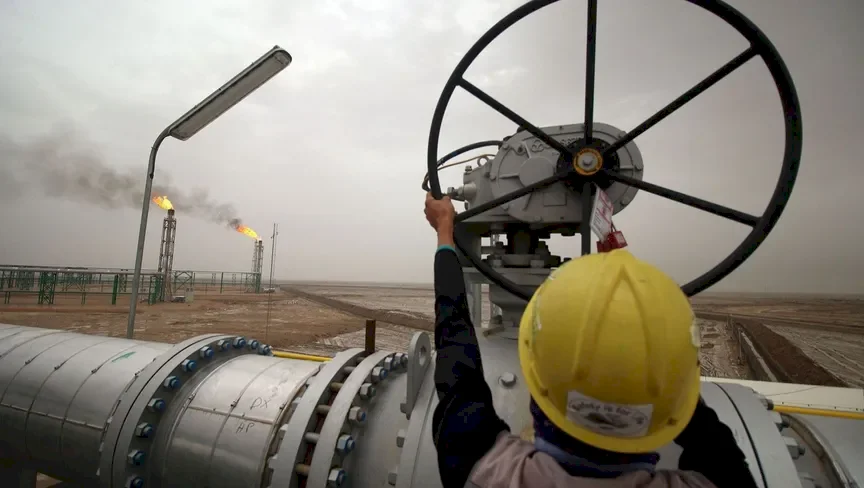
After Kurdistan's Approval.. Iraq Plans to Export One Million Barrels of Oil Through the Ceyhan Pipeline
SadaNews - Iraq plans to pump about one million barrels of oil daily through the pipeline to the Turkish port of Ceyhan via the Kurdish region of Iraq, after the regional government approved the resumption of oil pumping, in a move that supports Baghdad's efforts to export crude amid the Iran war.
Member of Parliament Ibtisam Al-Hilali from the "State of Law" coalition said that Minister of Oil Hayan Abdul-Ghani informed the parliament in Tuesday's session that "the export of Iraqi oil has been halted for more than ten days" due to the war, noting that "the minister announced that oil exports would resume through the region via the Turkish Ceyhan pipeline."
She added that "the Minister of Oil informed parliament members that work is underway to repair the pipes for oil export in the coming days, and that Iraq will export one million barrels daily through the pipeline."
In a related context, a statement from the media office of the Parliament confirmed that the Minister of Oil stated during his visit to the parliament that oil pumping will commence "on Wednesday at ten in the morning."
The Prime Minister of the Kurdistan Region, Masrour Barzani, confirmed in a statement on Tuesday, that "in light of the exceptional circumstances facing the country, and based on the shared responsibility that compels us to overcome this difficult juncture, we have decided to allow the export of oil through the Kurdistan pipeline as soon as possible."
He added that discussions with Baghdad to "urgently lift restrictions on imports and trade movement to the region will continue," stressing the need to "provide the necessary guarantees for oil and gas companies to ensure their return to production in a safe atmosphere."
Export Disruptions Pressure Iraq's Economy
Iraq is one of the countries most affected by the repercussions of the war in Iran, as the majority of its oil exports pass through the Strait of Hormuz, which has seen attacks on ships, leading to a near halt in shipping movement.
The country, which is the second-largest producer in the Organization of the Petroleum Exporting Countries (OPEC), was one of the first producers to reduce their output after the outbreak of the war, with production dropping to about 1.2 million barrels per day from 4.3 million barrels previously due to storage facilities being full, according to the spokesperson for the Ministry of Oil Abdel-Sahib Al-Husnawi.
The country has also had to halt operations at its oil ports after Iranian attacks targeted two oil tankers in its territorial waters.
The Iraqi economy heavily relies on oil revenue. Any disruption in production or export operations could "reflect on the economic situation within two months," according to statements from the Prime Minister's financial advisor, Mazhar Muhammad Salih.
With production cuts and the export crisis, S&P Credit Agency has decided to place Iraq under watch for a potential downgrade in its rating if the crisis continues.
Efforts to Bypass the Strait of Hormuz
Recently, Iraq has been trying to overcome the dilemma of the Strait of Hormuz, having initiated talks with Iran to allow its oil tankers to cross the strait, and is considering alternatives for export while avoiding transit through the strait, including exporting via the Baniyas port in Syria and Tripoli in Lebanon.
In addition to these steps, the country aims to direct oil exports toward the pipeline that passes through the Kurdish region of Iraq, which was established in the 1970s and later developed to a capacity of about 1.5 million barrels per day.
This pipeline, which extends approximately 345 kilometers from Kirkuk province to the Fishkhapur area in Zakho district in Dohuk province, is one of the most important outlets for Iraqi oil exports to global markets via the Mediterranean Sea, granting it strategic importance amid tensions threatening navigation through the Strait of Hormuz.
A few days ago, the Baghdad government requested the region to resume oil exports at a capacity of up to 300,000 barrels per day.
After Baghdad confirmed that the regional government had rejected the request and set conditions "not related to the issue of exporting crude oil," the region reiterated its readiness for "urgent and immediate negotiations to resolve the outstanding points of contention regarding oil exports through the Turkish Ceyhan port."
 Follow the latest Sada News via Google News
Dollar Steadies Near One-Week High Amid War Developments

Trump Imposes Tariffs on Canadian Imports... Ottawa Vows to Respond

Oil Prices Drop After Reports of Mediation Efforts Between the U.S. and Iran

Gold Price Rises Supported by Increased Buying Amid Lower Prices

Due to "Hazardous and Counterfeit Products".. Europe Fines "AliExpress" $627 Million

Gasoline Prices Exceed $4 Again in America Amid Resumed War

What was the financial reward for Spain after winning the World Cup?
