

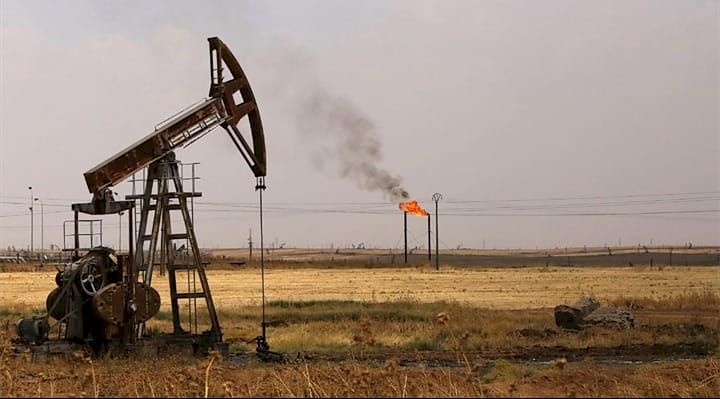
"Weapon of Last Resort".. When Do Countries Use Their Strategic Oil Reserves?
SadaNews - The importance of strategic oil reserves in global markets is increasing as disturbances in energy trade expand, amid the U.S.-Israeli war on Iran, disruptions to navigation in the Strait of Hormuz, and the declaration of "force majeure" by several major oil and gas companies in the Gulf, raising fears of a broader supply disruption and sharp price increases.
These developments come after the announcement of a meeting of the finance ministers of the G7 countries to discuss the possibility of a coordinated joint release of oil from emergency reserves in coordination with the International Energy Agency, which ended in consensus not to withdraw at this time, while keeping the option open if developments worsen.
This discussion reflects the sensitivity of the current moment, as it is not just about rising prices, but about the ability of major economies to contain a potential shock if supply disruptions from the Strait of Hormuz persist, through which a large portion of global oil and gas travels.
This coincides with comments from U.S. Energy Secretary Chris Wright that the United States is considering arranging sales from the strategic oil reserve in coordination with other countries should it decide to withdraw from its stocks, indicating that this option is still under consideration as part of the tools for crisis management in global markets.
The issue is gaining further momentum in light of the recent spike in oil prices, with Brent crude surpassing $119 per barrel in some trades, before retreating to below $100, amid fears that the geopolitical crisis could turn into a large-scale energy shock pushing importing countries to use their strategic reserves, viewing that as a temporary solution.
What Does Strategic Oil Reserve Mean?
The strategic oil reserve is an emergency stock held by countries, or mandated for companies to retain part of it, intended for use in the event of a major or sudden interruption in supplies, whether due to wars, natural disasters, geopolitical crises, or severe logistical bottlenecks.
The concept of these reserves is based on the principle of building a margin of safety that allows countries to continue meeting their vital needs for a specified period if markets experience a significant shock, giving governments time to manage the crisis, seek alternatives, or wait for the return of normal supplies.
In the United States, which possesses the largest publicly announced strategic reserve in the world, oil is stored in massive salt caverns in Texas and Louisiana, with a design capacity of 714 million barrels, while it currently holds about 415.4 million barrels, or less than 60% of its maximum capacity after significant withdrawals in 2022. Since President Trump began his second term, the reserve has only increased by about 5%.
When Do Countries Use Their Strategic Reserves?
Countries usually resort to these reserves when their oil supplies or energy markets face an immediate threat, whether due to war, closure of strategic maritime corridors, damage to production or export facilities, or sharp price increases that threaten the economy and growth and inflation.
In this context, energy expert Mamdouh Salama tells Al Jazeera Net that countries with a strategic reserve resort to it when their supplies are in danger, explaining that most countries originally rely on daily purchases to meet their economic and security needs, but if a major event occurs, such as the closure of the Strait of Hormuz, and supplies to the global market stop, they are compelled to use part of their stock for a specified period until the crisis subsides and normalcy returns.
This means that the strategic reserve is not a substitute for the normal market; rather, it provides a temporary breathing space that absorbs the initial shock and prevents a shortage of supplies from turning into an immediate crisis in consumption, production, and transportation.
Energy expert Ahmed Tartir argues that resorting to these stocks becomes more urgent during major crises that intertwine war with shipping disruptions, rising transportation and insurance costs, and declarations of force majeure by producers.
Tartir explains to Al Jazeera Net that the consuming country is forced to resort to its strategic oil reserves as a temporary relief to confront the interruption of supplies in the near term, but he emphasizes that this option is difficult and temporary and cannot be relied on for long periods.
Will Using Reserves Succeed in Calming the Markets?
Strategic reserves can partially calm the markets, but they do not represent a permanent solution if the war drags on or supply disruptions from the Gulf persist. Withdrawal from these stocks adds barrels to the market and sends a psychological and political signal to market participants that major countries are ready to intervene to prevent prices from spiraling out of control.
On the other hand, the European Commission points out that EU member states currently hold oil stocks sufficient for up to 90 days, confirming that there are currently no indicators of an emergency situation in this regard.
For this reason, merely hinting at the use of reserves becomes a tool in itself, as it may alleviate price pressures even before actual withdrawals are implemented, as observed with the ongoing discussions within the G7.
However, this effect remains temporally limited, as reserves are not a renewable productive resource, but rather stocks that have previously been withdrawn from the market and stored for emergencies. When used, they only offer the market additional time, but do not fully compensate for the stoppage of large flows if the crisis continues for weeks or months.
Mamdouh Salama notes that both the United States and the European Union together hold about 1,600 million barrels of reserves, but he points out that these quantities, based on the joint consumption of these countries, are sufficient for only about 25 days, warning that using all these reserves means that those countries are risking their energy security in an attempt to avoid high prices or supply shortages.
Salama adds that the world is currently living in a highly sensitive situation with tensions and disputes between major powers accelerating, making widespread withdrawal from reserves an uncomfortable step for industrialized nations, as they may later find themselves facing a deeper crisis without sufficient margin of safety.
Which Countries Have the Largest Strategic Reserves?
The United States: Holds about 415.4 million barrels, equivalent to about 125 days of the net imports of crude oil into the U.S.
China: Its strategic stock is estimated at about 900 million barrels, equivalent to about 78 days of oil imports.
Japan: Holds government stocks of about 260 million barrels, sufficient to cover consumption for up to 146 days.
Germany: Maintains emergency stocks estimated at around 145 million barrels, sufficient to cover consumption for about 70 days.
France: Holds emergency stocks of about 122 million barrels of crude oil and petroleum products, sufficient for about 95 days of net oil imports.
How Long Do These Reserves Last?
The duration for which the strategic reserve is sufficient varies from country to country, depending on how it is calculated; it may be based on net oil imports, local consumption, or the technical capacity for daily oil withdrawal and pumping into the market. Depending on the criterion used, estimates of coverage duration can vary significantly.
In the United States, for example, despite the enormity of the stock, the technical capacity for withdrawal remains limited. According to available data, the American reserve can pump oil at a maximum rate of 4.4 million barrels per day for up to 90 days, while if withdrawal were at a rate of one million barrels per day, pumping could continue for about a year and a half.
However, these figures do not mean that the reserve can compensate for all the consumption of the U.S. or global market; rather, they mean only that it provides a limited daily addition compared to the large demand. The world consumes about 100 million barrels per day, and the United States alone consumes about 20 million barrels per day, indicating that even significant withdrawals from reserves cannot cover the overall shortfall if the war continues and expands.
For this reason, Ahmed Tartir believes that these stocks could be depleted within a few days if the war drags on and its effects widen, especially for countries that have only stocks covering about two months at best estimates.
Precedents in Using Reserves
Countries have previously resorted to using strategic reserves during several major crises, including its use after the Gulf War in 1991, after Hurricane Katrina, during supply disruptions from Libya in 2011, and also after the outbreak of the Russia-Ukraine war in 2022 when withdrawals were made from reserves to calm prices and mitigate the impact of the shock on markets.
Mamdouh Salama points out that the United States periodically withdraws part of its strategic reserves if prices are too high or if it wants to influence the market.
He believes that Washington intervenes in the global oil market when it sees that prices have surpassed levels suitable for its economy, while the interests of producing countries in OPEC differ as they need higher prices to cover their investments and finance their budgets and developmental programs.
Ahmed Tartir also recalls the shock of 1973 as one of the most notable moments that revealed the strategic value of oil stocks, when the use of oil as a weapon forced several countries to withdraw from their stocks, accelerating international efforts to contain the crisis and restore the flow of supplies.
What If the War Lasts?
The core issue with strategic reserves is that they are designed to provide additional time margin in the face of crises, not to ensure continuous supplies in the long term, which warns of a market crisis if supply disruptions last longer.
In this context, Ahmed Tartir warns that prolonged war will harm all global supplies, whether of energy, food, or industrial products, and could lead to further damage to production sites within the Gulf, which means expanding force majeure cases and increasing reliance on reserves in an extraordinary and temporary manner. However, he adds that the aggravation of the crisis could ultimately lead to a wide-ranging global economic crisis.
Mamdouh Salama echoes this sentiment, emphasizing the need to strike a balance between using the strategic reserve and maintaining energy security, noting that excessive withdrawals to relieve prices could leave major economies exposed if the war worsens or production is disrupted longer than expected.
Source: Al Jazeera
 Follow the latest Sada News via Google News
The World Bank Warns: "The Worst-Case Scenario" for Global Growth is Approaching

Trump Prepares to Impose New Tariffs on Dozens of Economies

Gold Surpasses $4,100 as Selling Pressure Eases

Oil Rises for the Fourth Day as Supply Risks Escalate

An Additional $8 Billion.. A New Account from the Pentagon on the Cost of the War with Ira...

London Stock Exchange Enters the Era of 24/7 Trading

Shamaran Petroleum: Suspension of Oil Production in Duhok Fields in the Kurdistan Region o...
