

International Energy Agency Decides to Release 400 Million Barrels from Oil Reserves
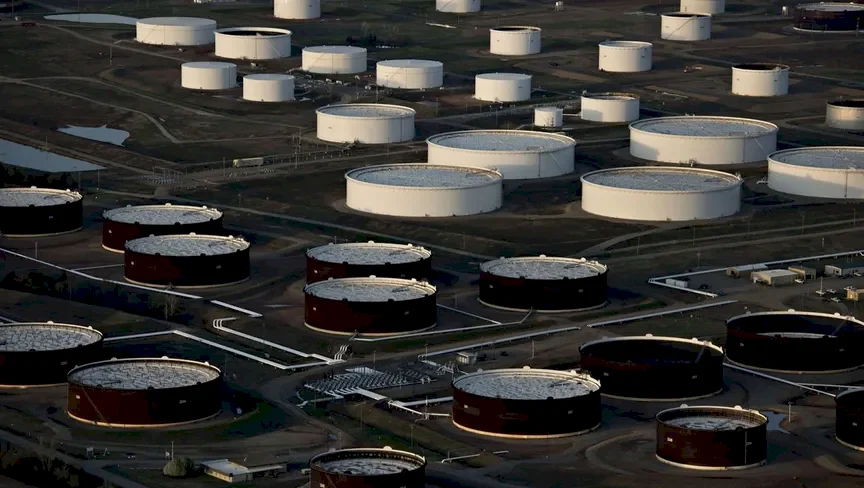
SadaNews - The International Energy Agency has agreed to pump 400 million barrels from emergency oil reserves in the largest withdrawal operation ever, as governments seek to contain rising energy prices driven by the war in the Middle East.
"The scale of the challenges facing the oil market is unprecedented," said the agency's Executive Director Fatih Birol in a statement on Wednesday. "The member countries of the International Energy Agency have responded with an unprecedented collective emergency action."
Birol clarified that the decision was made unanimously, without specifying the pace, duration, or locations of the planned fuel releases, details that will be crucial for the energy markets. Japan had previously announced that it would unilaterally release about 80 million barrels, starting from March 16 at the earliest.
Oil prices surged to nearly $120 a barrel in London earlier this week, as flows through the vital Strait of Hormuz in the Arabian Gulf were effectively halted, although futures contracts have since retreated, partly due to expectations that governments would tap into their oil reserves. Prices dropped following Wednesday's announcement, before rising again.
Birol added that the stability of energy markets primarily relies on the resumption of traffic through the strait.
Release surpasses the implications of the Russia-Ukraine war
The International Energy Agency's decision exceeds the 182.7 million barrels that member countries had released into the market in 2022 following Russia's invasion of Ukraine. That action was officially adopted in a meeting of the agency's governing board in March of that year and aimed to release two million barrels per day in the first month, before being extended and enhanced later.
However, the potential supply losses resulting from the current crisis could be much greater compared to 2022.
While global oil markets were experiencing a surplus at the beginning of this year, this scenario has been turned upside down with the effective closure of the Strait of Hormuz, through which about 20% of the world's seaborne oil typically passes.
Reduction in oil production
As storage tanks in the region fill up, major producing countries, including Iraq, the UAE, and Saudi Arabia, are deepening supply cuts, reducing about 6% of global production. The UAE also halted operations at its largest refinery, "Ruwais," on Tuesday as a precautionary measure after a drone attack in the region.
The International Energy Agency, which coordinates stock releases from OECD countries, stated that its 32 members have more than 1.2 billion barrels in strategic emergency stocks, including the largest reserve which is the U.S. Strategic Petroleum Reserve. Additionally, there are 600 million barrels of further industry stocks under government obligations.
These countries are required to maintain stocks equivalent to at least 90 days of their net oil imports, which can include stocks designated exclusively for emergencies or commercial stocks, in addition to stocks held under bilateral agreements.
The U.S. Strategic Petroleum Reserve currently holds about 415 million barrels of oil, slightly more than half of its capacity. This reserve was established in the 1970s following the Arab oil embargo and is stored in massive, deep caverns underground at four heavily fortified sites along the Gulf of Mexico.
However, some traders and analysts are skeptical about the ability of consuming governments to withdraw from the reserves quickly enough to close the substantial supply gap.
"Details are the critical factor," said Homayoun Falakshahi, a senior analyst at Kpler, prior to the International Energy Agency's announcement. "The main question is how quickly these quantities can be released."
U.S. oil reserves
Natasha Kaneva, head of commodity market strategy at JP Morgan, stated in a note on Tuesday that the U.S. "is likely to provide the largest share of any withdrawal operation."
Even if the maximum withdrawal rate from the U.S. strategic reserve is combined with flows from other member countries of the International Energy Agency, it may only cover a part of the supplies estimated to be lost daily from the Gulf, ranging from 11 million to 16 million barrels, according to Citigroup.
According to the U.S. Department of Energy's website, the maximum withdrawal capacity from the U.S. Strategic Petroleum Reserve is 4.4 million barrels per day, and it takes 13 days for oil from the reserve to reach the open market following a presidential decision.
The International Energy Agency has previously assisted in implementing five similar intervention operations: prior to the Gulf War in 1991, after hurricanes Rita and Katrina in 2005, following the outbreak of the civil war in Libya in 2011, and twice in 2022 in response to disruptions related to the war in Ukraine.
 Follow the latest Sada News via Google News
London Stock Exchange Enters the Era of 24/7 Trading

Shamaran Petroleum: Suspension of Oil Production in Duhok Fields in the Kurdistan Region o...

Dollar Steadies Near One-Week High Amid War Developments

Trump Imposes Tariffs on Canadian Imports... Ottawa Vows to Respond

Oil Prices Drop After Reports of Mediation Efforts Between the U.S. and Iran

Gold Price Rises Supported by Increased Buying Amid Lower Prices

Due to "Hazardous and Counterfeit Products".. Europe Fines "AliExpress" $627 Million
