
Aramco's 2025 Profits Fall Short of Expectations Amid Declines in Oil and Refined Product Prices
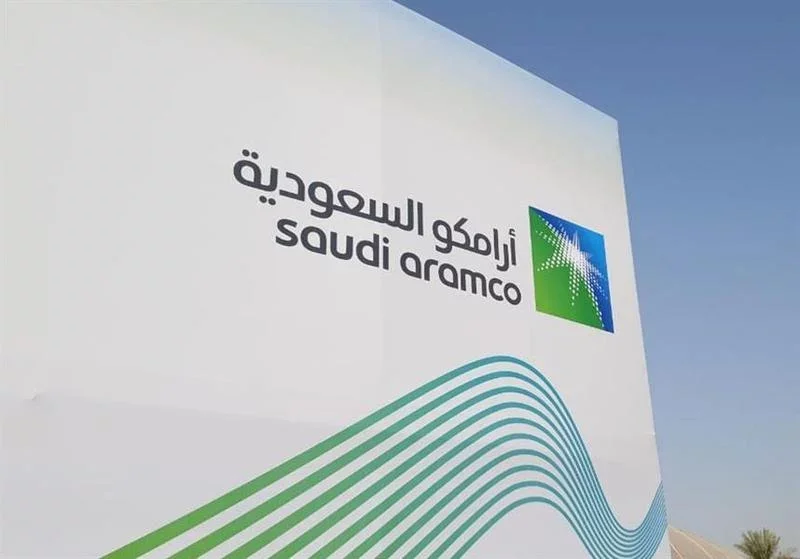
SadaNews - Saudi Aramco reported profits below expectations last year, affected by a decline in crude oil, refined products, and chemical prices, according to company data released on Tuesday.
The results showed a net income drop of 11.6% to approximately 348 billion riyals.
These results reflect the pressures faced by energy markets over the past year, with a relative decrease in oil prices and associated products, impacting the revenues of the world's largest oil company, which fell by 4.8% to 1.56 trillion riyals.
Impact of Energy Market Volatility
These results come as global energy markets continue to face volatility related to economic and geopolitical factors, alongside shifts in global demand for oil and petrochemical products.
Investors are likely to monitor developments in oil prices and the company's investment plans in the coming period, in addition to the impact of the share buyback program on stock performance and returns for shareholders.
The Iran war has sparked a wave of disruption in energy markets, particularly with the closure of the Strait of Hormuz, through which over 20% of global oil passes, leading to a sharp rise in energy prices, with Brent crude reaching nearly $120 per barrel yesterday, while prices currently hover around $94.
In his first public remarks since the conflict disrupted energy shipments in the Middle East, Aramco's CEO Amin Nasser indicated that the company could redirect more crude to an alternative route that avoids the Strait of Hormuz, referring to the Yanbu port on the Red Sea. However, the company cannot export its usual quantities due to capacity constraints.
Nasser stated, "There will be catastrophic consequences for the global oil market the longer the disruption lasts, and the repercussions will be more severe on the global economy." He added, "While we have faced disruptions in the past, this crisis is the largest to date that the oil and gas sector in the region faces."
Aramco has temporarily reorganized its crude oil shipments by redirecting quantities designated for the Yanbu port on the Red Sea, aiming to ensure supplies for its customers, especially amid challenges affecting some tankers' access to the Arabian Gulf following Iran's announcement of the closure of the Strait of Hormuz, the maritime outlet through which about one-fifth of the global oil supply is transported by sea to markets, and targeting energy assets east of the kingdom.
The company raised the price of its main crude for buyers in Asia for April shipments, marking the largest increase since August 2022, reflecting the disruption in energy markets as the conflict in the Middle East expands and oil flows are disrupted through the Strait of Hormuz.
The average price at which Aramco sold its crude oil last year was $69.2 per barrel, compared to $80.2 per barrel in 2024.
High Dividends and a Share Buyback Program
Despite the drop in profits, the company maintained a high dividend payout policy, announcing cash distributions of 82.08 billion riyals for the fourth quarter of last year.
Saudi Aramco remains among the largest companies globally in terms of dividend distribution, benefiting from its central position in the global oil market and its ability to generate strong cash flows despite fluctuations in energy prices.
The company also revealed a share buyback program worth 11 billion riyals, to be implemented over a period of 18 months.
Share buybacks are considered one of the financial tools companies use to return part of the liquidity to shareholders or to support the stock price in the market by reducing the number of shares outstanding, which may enhance earnings per share.
Aramco Exports Amid the Closure of the Strait of Hormuz
Investors are also monitoring the volume of oil exported by the company amid the halt of supplies through the Strait of Hormuz due to the Iran war, which has forced Gulf countries to fill their tanks in anticipation of securing the narrow maritime passage separating the region from Iran. Bloomberg reported sources indicating that Saudi Arabia, the UAE, Iraq, and Kuwait collectively reduced their oil production by as much as 6.7 million barrels per day.
"There are certain areas where we have medium and heavy crude that we are not utilizing currently because we have sufficient capacity to meet our needs," Nasser reported. He clarified that the company uses its global network, including storage locations outside the kingdom, to meet market needs.
The company's total capital expenditures reached approximately $50.785 billion last year, compared to $50.371 billion in 2024. At the same time, the company continues to advance towards its plan to increase gas production capacity by about 80% by 2030 compared to 2021 levels, with production beginning at the Jafurah field and operations commencing at the Tanajib gas plant, as mentioned in their financial report.
The company also commenced work on a program to increase crude oil production at the Marjan field, in addition to water injection operations under the output enhancement program at the Berri field, in a move that bolsters the company's flexibility and ability to respond to market fluctuations, according to the company.
The company's shares fell today by more than 2% after the announcement of the business results, but they have reduced their losses to currently trade around 26.7 riyals per share.
 Follow the latest Sada News via Google News
The World Bank Warns: "The Worst-Case Scenario" for Global Growth is Approaching

Trump Prepares to Impose New Tariffs on Dozens of Economies

Gold Surpasses $4,100 as Selling Pressure Eases

Oil Rises for the Fourth Day as Supply Risks Escalate

An Additional $8 Billion.. A New Account from the Pentagon on the Cost of the War with Ira...

London Stock Exchange Enters the Era of 24/7 Trading

Shamaran Petroleum: Suspension of Oil Production in Duhok Fields in the Kurdistan Region o...
