

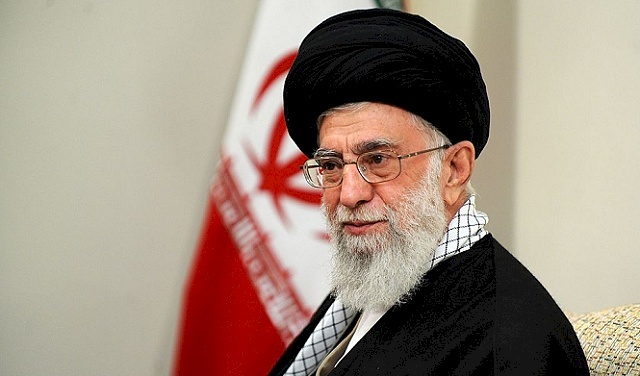
American Officials Doubt the Possibility of Regime Change in Iran After Khamenei's Assassination
SadaNews - Following the assassination of Iranian Supreme Leader Ali Khamenei on Saturday, concerns remain among senior U.S. officials regarding the potential for U.S. and Israeli military operations to lead to a change in the Iranian regime in the near future.
Although U.S. President Donald Trump has urged Iranians to seize the opportunity to reclaim their country, three U.S. officials familiar with intelligence indicated that the Iranian opposition is exhausted, and the likelihood of toppling the government in place since 1979 remains slim at present.
Intelligence reports revealed that in the event of Khamenei's death, he could be replaced by hardline figures from the Revolutionary Guard or rigid clerics, and that the regime enjoys a wide network of internal loyalties that prevent any voluntary surrender from military officials or the Revolutionary Guard.
No splits have emerged during the protests last January, making the success of any attempt to overthrow the regime dependent on ordinary soldiers siding with the people or aligning with them.
Two U.S. officials reported that Trump's special envoy, Steve Whitaker, has communicated several times with Reza Pahlavi, the son of the last Shah of Iran, raising questions about the extent of the administration's support for his installation in the event of the Iranian government's fall.
The officials added that senior U.S. officials have become pessimistic about the ability of any opposition figure backed by Washington to effectively control the country, especially after the resumption of U.S. and Israeli airstrikes.
Jonathan Panikoff, a former U.S. intelligence official, stated that the success of any popular movement to overthrow the regime relies on the support or alignment of ordinary soldiers with the opposition, otherwise the remnants of the armed regime will use available weapons to maintain power.
With U.S. and Israeli airstrikes continuing, officials noted that the Iranian people are in a state of self-defense, and that its armed forces were not the ones to initiate the attack, while provisional governing institutions manage the country amidst warnings of a harsh response to any separatist attempts, according to statements by Ali Larijani, Secretary of Iran's Supreme National Security Council.
U.S. intelligence agencies also discussed the impact of Khamenei's assassination on the Iranian nuclear negotiations and the ability of Washington-backed opposition figures to impose their control, emphasizing that the success of any opposition movement ultimately depends on its alliance with elements of the regular army and its possession of control over available weapons within the country.
 Follow the latest Sada News via Google News
The Lebanese Army Deploys in the South and Comes Under Gunfire; Israel Clarifies

Bezhkian: Directives from the Leader to End the State of No War, No Peace

Saudi Arabia condemns the Houthi threats to navigation and pledges to protect its ships

Global Warning to Americans Due to Rising Tensions in the Middle East

Houthi Movement Announces Ban on Maritime Navigation Against Saudi Arabia

Earthquake of 5.5 Magnitude Hits Western Iran

To Enhance His Support for "Increasing Children"... Vance Announces the Birth of His Fourt...
