
Oman: Oil Tanker Targeted Near Strait of Hormuz
SadaNews - Oman has announced that an oil tanker was targeted north of the port of Khasab in the Musandam Governorate, near the Strait of Hormuz, in a development that reflects the escalating risks surrounding maritime shipping movements in the region following a US-Israeli attack on Iran and Tehran's response by bombing countries in the region.
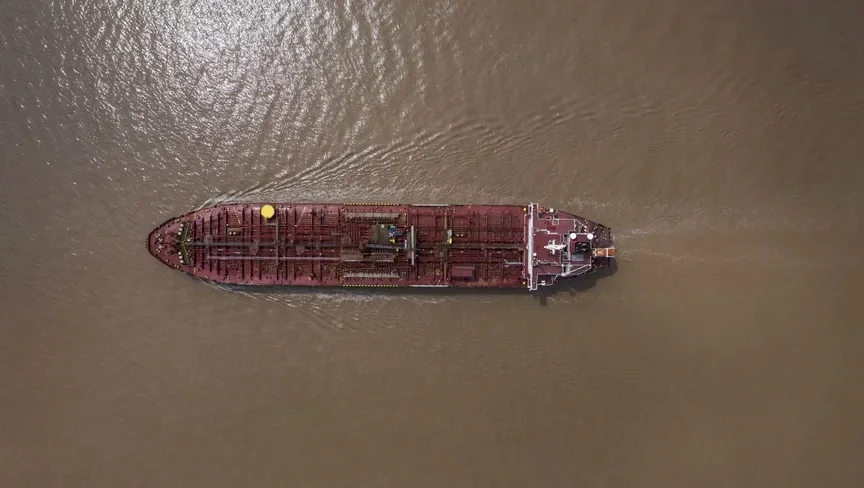
The Omani Maritime Security Authority said today, Sunday, in a post on the "X" platform, that the oil tanker "Skylight" was attacked in the waters north of the port.
The authority clarified that it evacuated the ship's crew of 20 persons, noting that four of them were injured. The crew included 15 Indian sailors and 5 Iranians. The cases of tanker avoidance of passing through the narrow Strait of Hormuz are increasing.
Oil Shipment Disrupted
Oil shipping movements have faced widespread disruption in the Strait of Hormuz, which connects the Arabian Gulf to the open seas, following the initial strikes on Iran, while Iranian media reported that the waterway has become "practically closed".
Reports indicated that ships picked up a wireless broadcast believed to be from the Iranian navy warning against crossing the strait. Although no official announcement was made by Tehran concerning its closure, several oil tankers that were en route to the strait redirected their courses yesterday, Saturday, while others preferred to halt near its entrance awaiting developments after the bombing began.
The impact of the disruptions extends to both crude tankers and container ships. The Strait of Hormuz is one of the most critical choke points in global energy markets, through which about one-fifth of oil transported by sea and large quantities of liquefied natural gas pass daily. To date, the duration of this disruption remains uncertain, while some vessels continue to pass, but in significantly fewer numbers than usual.
Marine insurance companies have started to increase coverage rates for vessels crossing the Arabian Gulf and the Strait of Hormuz by up to 50%, amidst rising risks.
Strait of Hormuz Vital for Gas Transit
Concerns also extend to natural gas shipments, as neighboring countries to Iran, such as Qatar, are among the world's leading suppliers of gas, and the region represents a vital corridor for supplies, with about 20% of liquefied natural gas exports passing through the Strait of Hormuz.
According to ship tracking data, the trade of liquefied natural gas via the waterway is nearly at a complete standstill. Shipments headed to Asia—and Europe—must pass through the Strait of Hormuz. So far, at least 11 LNG carriers headed to or coming from Qatar have halted their journeys to avoid passing through the strait, according to ship tracking data reported by Bloomberg.
Japanese Shipping Companies Avoid the Strait
This comes as Japanese shipping companies have suspended their vessels' passage through the strait. "Nippon Yusen KK" has temporarily halted its ships from passing through the Strait of Hormuz, according to a spokesman. Also, "Kawasaki Kisen Kaisha Ltd" has instructed its ships in the Gulf to remain on standby, while "Mitsui OSK Lines Ltd" has directed its ships to wait in safe waters, as reported by Bloomberg on Sunday.
The United States had previously warned ships to steer clear of the Gulf and the Arabian Sea, specifically within a 30 nautical mile range of US military assets.
Japan relies on the Middle East for approximately 90% of its crude oil imports. A spokesman for "Idemitsu Kosan Co" stated that there had been no impact on supplies to Japan until Saturday evening. He added, "The situation is changing rapidly, and we are closely monitoring it."
 Follow the latest Sada News via Google News
The World Bank Warns: "The Worst-Case Scenario" for Global Growth is Approaching

Trump Prepares to Impose New Tariffs on Dozens of Economies

Gold Surpasses $4,100 as Selling Pressure Eases

Oil Rises for the Fourth Day as Supply Risks Escalate

An Additional $8 Billion.. A New Account from the Pentagon on the Cost of the War with Ira...

London Stock Exchange Enters the Era of 24/7 Trading

Shamaran Petroleum: Suspension of Oil Production in Duhok Fields in the Kurdistan Region o...
