

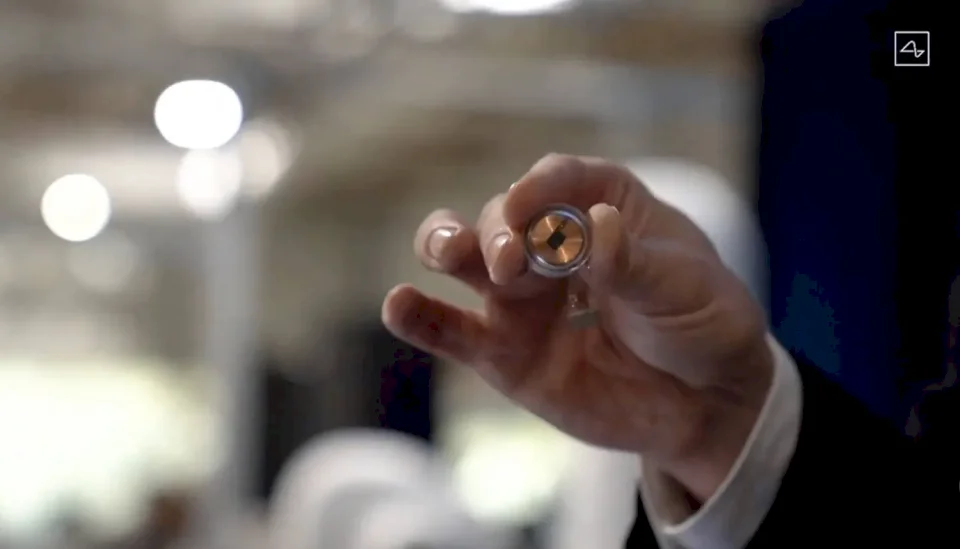
"Magic and New Hope"... Neuralink Chip Enables Paralysis Patient to Control Devices with His Mind
SadaNews - One of the first people in the UK to use the brain chip developed by Neuralink, owned by billionaire Elon Musk, said it "seems magical", noting that he believes it has the potential to change the lives of those with severe paralysis.
British network "Sky News" reported Sebastian Gomez-Pena, a volunteer in the first British trial of the chip, saying, "It's a radical change in your life when you suddenly lose the ability to move any of your limbs."
He added, "But this type of technology gives us a glimmer of new hope."
Gomez-Pena had just completed his first semester at medical school when an accident left him with quadriplegia.
He is one of seven people who have been implanted with the chip in the British trial designed to assess the device's safety and reliability.
The Neuralink chip, connected to 1,024 electrodes implanted in his brain, was inserted during a five-hour surgery at University College London Hospital (UCLH).
While British surgeons and engineers from Neuralink participated in the operation, Neuralink's "R1 robot" performed the implantation, a robot specifically designed to insert the microelectrodes into the sensitive brain tissue.
The electrodes were implanted approximately 4 millimeters deep in the surface of Gomez-Pena’s brain, in the area responsible for hand movements.
Nerve signals are transmitted through threads about ten times thinner than a human hair to a chip implanted in a circular hole in the skull.
The data from the chip is transmitted wirelessly to a computer, where an AI program learns to interpret the signals, translating Gomez-Pena’s instructions into movement on his computer or phone through his hands, which were amputated due to the accident.
In other words, the chip allows Gomez-Pena to control the computer and smartphone with speed and accuracy using only his thoughts.
He can now turn pages on the computer screen, conduct research, highlight texts, and study his medical school lessons at a speed equal to or exceeding that of someone using a mouse.
While this experiment focused on the areas of the brain responsible for movement, Neuralink also plans future tests and experiments to improve speech and the possibility of restoring vision.
Despite the promising potential, experts warn that the technology is still in its experimental stages. It took Neuralink nearly 20 years to develop the chip technology, electrodes, surgical robot, and the necessary AI tools to convince regulatory authorities that it was ready to test the device on humans.
The first device was implanted in an American volunteer two years ago. Now, it has been implanted in 21 individuals in the United States, Canada, the UK, and the UAE.
All of these individuals suffer from severe paralysis - either due to spinal cord injury, stroke, or neurodegenerative diseases such as amyotrophic lateral sclerosis.
 Follow the latest Sada News via Google News
After Deschamps' Departure... Zinedine Zidane Tops the Candidates to Lead France

Mbappe Surpasses Messi and Becomes the All-Time Top Scorer in the World Cup

England Defeats France and Achieves Largest World Cup Achievement Since 1966

Messi Refused to Play for Spain and Missed 3 World Cups

Publishers Sue Google for Allegedly Using Books to Train Artificial Intelligence

Google Expands Capabilities of Google Search Console to Support Social Media Accounts

The Mediterranean Table... An Ancient Diet Revealing Its New Secrets for Health and Longev...
