

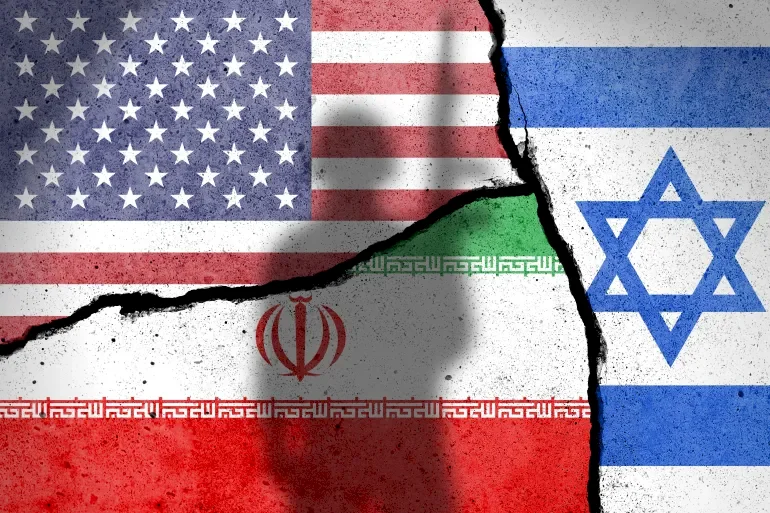
The Illusion of Military Success.. Is Washington Slipping into the Iranian Trap?
SadaNews - Nearly three weeks after the outbreak of the American-Israeli war on Iran, three American readings converge on a single conclusion: what has been achieved on the ground does not yet find a clear political translation.
Military superiority is one thing, and the ability to impose an end to the war is another. In light of this gap, these readings suggest that the American impasse is deepening, and Tehran may have succeeded in pushing Washington into a quagmire that cannot be resolved by strikes alone.
In an editorial, the New York Times states that President Donald Trump waged war without explaining to the Americans or the world a clear strategy, indicating that the course of the first weeks suggested -according to the newspaper- that he may not have put forth a coherent plan at all.
It adds that the administration raised the ceiling of war aims from weakening Iran to overthrowing the regime and preventing it from ever acquiring nuclear weapons, without showing how these goals could be achieved, or how it would deal with the expected repercussions of the war, primarily the disruption of oil markets and the global economy.
From another perspective, William Galston writes in the Wall Street Journal that the measure of success in wars is not in the impact of the strikes alone, but in their ability to achieve the political objectives for which they were launched.
Meanwhile, Nit Swanson contends in Foreign Affairs that the war has "backfired" on Washington, and that Tehran has become -following the initial strikes- closer to imposing costs and terms that make ending the war harder than the American administration imagined.
War Goals and the Impasse of Means
The New York Times notes that Trump spoke -since the beginning of the war- in a language that transcends deterrence and containment, calling on Iranians to take control of their government, demanding "unconditional surrender," and implying that he has a say in determining Iran's next ruler.
However, the newspaper believes that he has not yet provided a serious explanation of how to achieve these goals, especially since regime change from the air alone is rare, as changing a regime usually requires ground forces to seize power tools and reshape them.
In the same context, Galston believes that Tehran will not accept "unconditional surrender," nor will it voluntarily relinquish its stockpile of enriched uranium. He adds that any wager on forcibly seizing this stockpile opens the door to a complicated military operation with uncertain outcomes.
Swanson states that the American administration has built part of its calculations on the assumption that the strikes would open the door to internal collapse or popular movement weakening the regime from within.
But he believes that this perspective has always been closer to wishful thinking than to realistic assessment, especially in light of what the Iranian authority has previously demonstrated regarding its willingness to use "maximum levels of violence" for survival.
Strikes and the Limits of Resolution
The New York Times editorial acknowledges that the war has achieved significant tactical successes, as Iranian air defenses have been severely damaged, missile stockpiles have diminished, a number of commanders and nuclear scientists have been killed, and Iran's regional arms have weakened.
Galston also writes that the Iranian navy has experienced widespread destruction, and Tehran's capabilities to launch ballistic missiles have declined, with substantial damage inflicted upon the forces of the Revolutionary Guard.
However, the question in these readings is not whether Iran has been hit, but whether these strikes are sufficient to achieve a political outcome.
The New York Times states that the strikes have not toppled the regime, closed the nuclear file, or prevented Iran from retaliating. Galston concludes from this that the war reaffirms that military success -no matter how great- does not automatically translate into a political gain.
Swanson believes that the strikes have given the Iranian regime an opportunity to redirect attention away from its internal crises by rallying the country around the logic of "steadfastness against foreign aggression."
The Strait of Hormuz and the Costs of War
In all three texts, a picture emerges of what can be described as the Iranian trap. It does not imply Tehran's ability to militarily defeat the United States, but rather its ability to drag it into an open-cost war, the conclusion of which cannot easily meet pure American terms.
The New York Times states that one of the most prominent miscalculations lies in underestimating the possibility of closing the Strait of Hormuz.
The paper mentions that Trump received a warning -before the war- from the highest military leader in his administration that Iran might respond by disrupting navigation in the strait, but he assumed that Tehran would collapse before taking such action or that the U.S. Navy would be able to keep it open.
The newspaper states that this assessment proved to be incorrect, as evidenced by an increase in oil prices by over 40%.
Galston also believes that Iran's decision to close the strait reversed the table on the Trump administration, as reopening it is not an easy or low-cost task.
According to Galston, the U.S. Navy needs considerable time and resources to ensure the passage of tankers, while the strait itself remains vulnerable to becoming a dangerous quagmire amidst the threat of Iranian drones and missiles.
Swanson argues that Tehran does not need daily military victories to enforce its logic; it merely needs to inflict periodic damage that keeps markets, Washington's allies, and American public opinion in a state of persistent anxiety.
From this perspective, disrupting navigation in a passage through which one-fifth of the world's oil supplies flow becomes as much a political pressure tool as it is a military step.
The Nuclear File.. Post Bombing
One of the most revealing issues about the limits of military action in these texts is the issue of highly enriched uranium.
The New York Times states that this stockpile -which is believed to still exist in a tunnel complex near Isfahan- provides Iran with a potential pathway to the bomb if the war ends without it being seized.
The newspaper points out that what Tehran has endured from strikes and military humiliations may eventually drive it towards full nuclear option.
Galston affirms that seizing this stockpile -if it is a real goal- will not be possible from the air alone, but may require a broad and complex ground operation, with costs and risks difficult to predict its outcome.
Swanson argues that continued airstrikes yield diminishing returns, as most of the clear targets have already been hit, and the alternative would be either ground intervention, which Trump has repeatedly vowed to avoid, or limited operations related to maritime or nuclear security, which do not seem sufficient to compel Iran to yield.
The options narrow as the war expands, while Washington does not have the sole decision on how to end it (Associated Press)
Reluctant Allies and Narrower Options
The New York Times criticizes the American administration for -according to the newspaper- not seeking a mandate from Congress, not coordinating seriously with European or Asian allies, and not providing the American public with anything but superficial justifications for the war.
Galston adds that Trump's request for allies to send naval forces to help protect navigation in the Strait of Hormuz met with clear reluctance, citing cautious responses from Germany, Japan, and Britain. He believes that this hesitation is not surprising, as Trump started the war without any genuine consultation with these allies.
Swanson concludes that all the remaining options before the White House are bad: either continue an unpopular war or seek a ceasefire that includes concessions Iran could present as a political victory.
What Tehran has endured from strikes and military humiliations may eventually drive it toward the full nuclear option.
In Swanson's reading, Iran wants to impose a difficult equation on Trump: either continue a war that increases costs for the U.S., the Gulf, and global markets, or seek an end that limits Israel's freedom to resume strikes in the future.
He adds that Trump cannot, by unilateral decision, prevent Tehran from continuing to target American interests or Gulf states at a time when Iran seems more willing to engage in a long war of attrition with the United States now than to accept repeated wars with Israel in the coming years.
In conclusion, according to Swanson, Tehran seeks to push the American president into choosing between Israel's security interests and the stability of global markets.
Thus, the author believes that the war started by Trump is heading towards an unfavorable outcome, and that each additional day in it not only makes peace more difficult but also delays any better horizon for the Iranians.
Source: American Press
 Follow the latest Sada News via Google News
Bezhkian: Directives from the Leader to End the State of No War, No Peace

Saudi Arabia condemns the Houthi threats to navigation and pledges to protect its ships

Global Warning to Americans Due to Rising Tensions in the Middle East

Houthi Movement Announces Ban on Maritime Navigation Against Saudi Arabia

Earthquake of 5.5 Magnitude Hits Western Iran

To Enhance His Support for "Increasing Children"... Vance Announces the Birth of His Fourt...

Death of a Mosque Imam in Armed Attack in Southeastern Iran
