

Foreign Minister: Saudi Arabia Does Not Rule Out Resorting to Military Action Against Iran
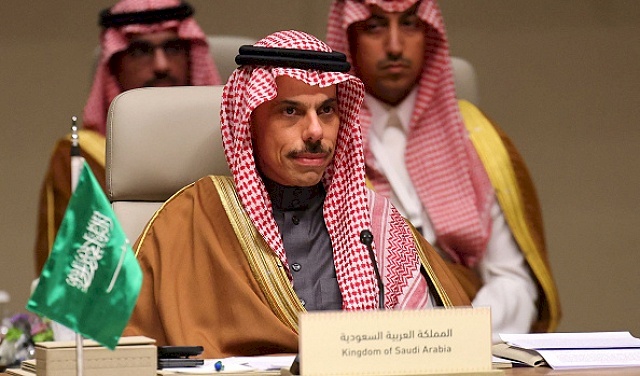
SadaNews - Saudi Foreign Minister Faisal bin Farhan confirmed on Thursday that the Kingdom does not rule out resorting to military action in response to missile and drone attacks carried out by Iran.
In statements to reporters following a meeting of the foreign ministers of Islamic and Arab countries in Riyadh, Faisal bin Farhan said that Iran "is trying to exert pressure on its neighbors" through these attacks.
He added, "The Kingdom will not succumb to this pressure; on the contrary, this pressure will reflect back on them (...) politically and morally, and certainly, as we have clearly stated, we reserve the right to take military action if we are compelled to do so."
Saudi Arabia had announced that it was targeted by more Iranian attacks on Wednesday, at the same time as the foreign minister welcomed his counterparts from around 12 Arab and Islamic countries to discuss the repercussions of the Middle East war.
Loud explosions were heard in the Saudi capital on Wednesday, according to reporters from the French Press Agency, while the Ministry of Defense announced the interception of ballistic missiles.
Prince Faisal said, "When I see the attack that targeted two oil refineries in Riyadh today, I cannot help but wonder: what is the goal of this? What is the military objective of targeting an oil refinery in a non-combat area?".
The minister condemned the repeated targeting of civilian sites across the Gulf, rejecting Iran's justification that it targets American interests in the region by saying, "Iran must realize that these actions have consequences."
He emphasized, "Saudi Arabia and the Gulf states will not accept... coercion, and escalation will be met with escalation."
In a joint statement, the ministers condemned "deliberate Iranian attacks with ballistic missiles and drones, which targeted residential areas and civilian infrastructure, including oil facilities, water desalination plants, airports, residential compounds, and diplomatic missions."
 Follow the latest Sada News via Google News
Trump: We will make great progress with Beirut.. Aoun: It is time for Lebanon to be stable

The Lebanese Army Deploys in the South and Comes Under Gunfire; Israel Clarifies

Bezhkian: Directives from the Leader to End the State of No War, No Peace

Saudi Arabia condemns the Houthi threats to navigation and pledges to protect its ships

Global Warning to Americans Due to Rising Tensions in the Middle East

Houthi Movement Announces Ban on Maritime Navigation Against Saudi Arabia

Earthquake of 5.5 Magnitude Hits Western Iran
