

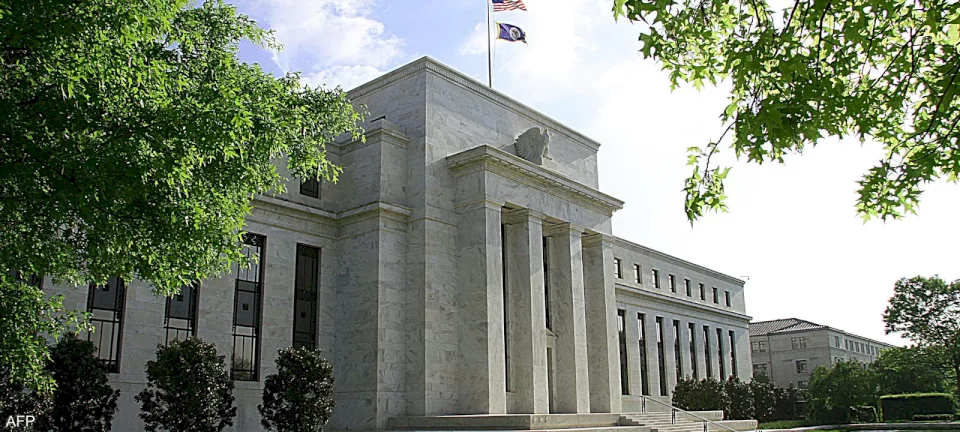
Federal Reserve Keeps Interest Rate Steady
SadaNews Economy - The Federal Reserve has decided to keep interest rates unchanged within a range of 3.50% - 3.75%, attempting to absorb the geopolitical shocks arising from the military fronts igniting in the Middle East. However, the most crucial issue at this juncture is not the decision itself, but the "state of uncertainty" that now looms over future prospects; as the central bank finds itself caught between its desire to curb stubborn inflation and fears of sliding into a stagflation fueled by spikes in energy prices and disruptions to international shipping.
This stabilization, the second of its kind this year, although it appears to be a temporary stability, essentially reflects a shift towards a "maximum hedging" policy; as the Federal Reserve's decisions have become hostage to developments on the military front as much as they are tethered to economic data, thereby opening the door to all scenarios in upcoming meetings, including the possibility of resuming interest rate hikes if the flames of regional crises continue to ignite global inflation indicators.
The decision to maintain rates was widely expected, with the Federal Open Market Committee voting 11 to 1 in favor of keeping the federal funds rate steady.
The committee issued a statement after its meeting where no significant changes were made to its economic outlook, with expectations for slightly faster growth and higher inflation for the entirety of 2026.
Despite the increasing uncertainty, officials reiterated that they still expect some interest rate cuts in the future.
The closely watched “dot plot,” which reflects the members' expectations for interest rates, indicated one cut this year and another in 2027, although the timing remains unclear.
Among the 19 members of the Federal Open Market Committee, seven indicated their expectations for interest rates to remain unchanged this year, an increase of one participant compared to the last update in December.
While the projections for the coming years showed a wide range, the average expectation indicates an additional cut in 2027 before settling the federal funds rate at around 3.1% in the long term.
The statement pointed to the uncertainty associated with the war with Iran that began about three weeks ago. The fighting and its impact on the Strait of Hormuz have disrupted the global oil market and threatened to keep inflation above the Federal Reserve's 2% target. The statement noted, "The repercussions of developments in the Middle East on the U.S. economy are uncertain."
Fed Governor Stephen Moore again opposed, advocating for a quarter-point cut amid rising concerns about the labor market. Meanwhile, Governor Christopher Waller, who joined Moore in calling for a cut in January, voted this time in favor of keeping the rate unchanged.
Before the conflict, markets were anticipating two rate cuts this year, with little expectation for a third cut. However, rising oil prices and a series of strong inflation indicators - including data prior to the energy shock - led to forecasts being revised down to a maximum of one cut in 2026.
In updates to their economic forecasts, Fed officials expect GDP growth of 2.4% this year, slightly faster than in December. The economy is expected to grow at a strong rate of 2.3% in 2027, an increase of 0.3 percentage points from prior forecasts.
Officials also raised their inflation expectations for this year. They now expect the Personal Consumption Expenditures price index to reflect an inflation rate of 2.7%, whether on a general inflation basis or core inflation. However, they expect inflation to return to near the Federal Reserve's 2% target in the coming years as the effects of tariffs and the war fade. Policymakers still expect an unemployment rate of 4.4% by the end of the year, despite a series of indicators showing job weakness.
The Federal Reserve's decision to keep interest rates comes against a backdrop of complex political circumstances. President Donald Trump continues to pressure Powell and his colleagues to cut interest rates. Earlier this week, Trump criticized Powell for not calling for an emergency meeting to ease monetary policy, despite rising inflation and the unclear impact of the war.
 Follow the latest Sada News via Google News
London Stock Exchange Enters the Era of 24/7 Trading

Shamaran Petroleum: Suspension of Oil Production in Duhok Fields in the Kurdistan Region o...

Dollar Steadies Near One-Week High Amid War Developments

Trump Imposes Tariffs on Canadian Imports... Ottawa Vows to Respond

Oil Prices Drop After Reports of Mediation Efforts Between the U.S. and Iran

Gold Price Rises Supported by Increased Buying Amid Lower Prices

Due to "Hazardous and Counterfeit Products".. Europe Fines "AliExpress" $627 Million
