

Former Israeli Officials: Assassination of Iranian Leaders May Backfire
SadaNews - Several former Israeli officials have expressed skepticism about the effectiveness of Israel's strategy centered around the assassination of the Iranian leadership. Some believe that this approach has limited impact and does not serve the declared goal of the war, which is to overthrow the regime. One warned of the dangers posed by the spread of chaos in Iran and the region.
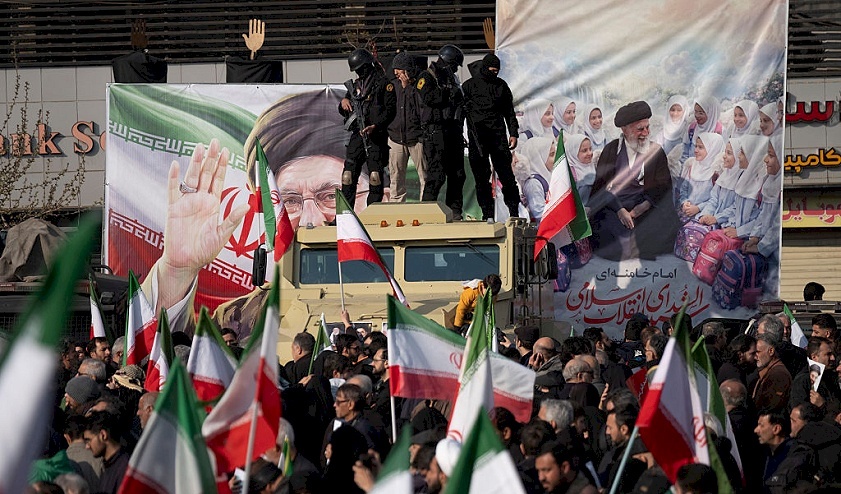
On Tuesday, several Israeli political and military officials praised the assassination of Iranian leader Ali Larijani, which coincided with the targeting of senior leaders in the Basij forces. This is considered the most significant damage inflicted on the Iranian regime since the assassination of the Supreme Leader, Ali Khamenei, on the first day of the war, describing it as a tremendous military and intelligence achievement.
The "New York Times" reported that these targeted assassinations of Iranian leaders underscore how much Israel relies on the assassination strategy in its efforts to achieve its war objectives, particularly the aim of destabilizing the regime and "creating the appropriate conditions" for an internal revolution by weakening internal security forces.
This was addressed by Israeli Prime Minister Benjamin Netanyahu in a video message directed at the Israeli public on Tuesday, where he stated, "If we continue like this, we will give them (the Iranian people) the opportunity to determine their own destiny."
Israel's commitment to this approach is supported by statements from Security Minister Israel Katz, who ordered the army to continue "hunting" the Iranian leadership and to "cut off the head of the octopus repeatedly."
Will the assassination of Iranian leaders help achieve the declared war goals?
Former Mossad officer and Iranian affairs expert, Sima Shine, believes that the assassination method could inflict damage on the Iranian regime that forces it to make concessions regarding its nuclear ambitions and missile capabilities. She cited the impact of the assassination of Nasrallah in weakening Hezbollah to the extent that it accepted a ceasefire agreement with Israel in 2024.
She stated, "They may be harmed to the point of saying 'this is beyond our capacity,'" but emphasized, "We have not reached that stage yet, and they are not saying this, but it could happen."
On the other hand, Shine warned that the assassinations could lead to counterproductive results, especially in the case of Larijani, who is considered a pragmatist and able to work efficiently with moderates in the regime and hardliners in the Revolutionary Guard. This means his assassination could pave the way for hardline leaders to fill his position, which would increase the ferocity of resistance and prolong the war.
"They are the ones leading the war now," she said regarding the Revolutionary Guard, adding, "Their increased influence in the regime by assassinating Larijani means continued resistance and war, presenting them with unacceptable conditions to the United States and Israel."
The regime is capable of replacing its leaders, and the war threatens to spread chaos in the region
Former head of the intelligence division specialized in Iranian affairs, Dani Citrinowicz, believes that the Iranian leadership has alternatives that make the regime's overthrow through their assassination an elusive goal.
He stated, "The assassination of high leaders has limited impact," adding, "I don’t think we have made significant progress in weakening the regime’s ability to find replacements for those who were assassinated."
He pointed to the limited impact by citing Hezbollah and Hamas, which remain capable of functioning well despite the assassination of many of their leaders, stressing that "our strategy cannot be solely limited to the assassination of leaders."
In the same context, former head of the Shin Bet (internal security service), Yami Ayalon, accused the American and Israeli leadership of failing to set clear and achievable goals for this war.
He described Netanyahu's vague and optimistic rhetoric regarding "creating the appropriate conditions (for toppling the Iranian regime)" as misleading and deceptive.
He warned of the spread of chaos throughout the region, saying, "We are very close to creating chaos in the entire Middle East, not just in Iran."
 Follow the latest Sada News via Google News
Morocco Hosts Formative Exercise for International Stabilization Force in Gaza

Sheikh Holds Meeting with Security Leaders to Follow Up on Current Developments

Hebrew Channels: The Likelihood of Israel's Participation in the Attack on Iran is Increas...

Netherlands Sets September Deadline for Ban on Settlement Products

12 Martyrs in Gaza Strip since Dawn Today

A Series of Important Decisions Taken.. The Cabinet Discusses Developments in the Deterior...

Organizations of the Temple Prepare for the Largest Raid on Al-Aqsa on What is Called the...
