

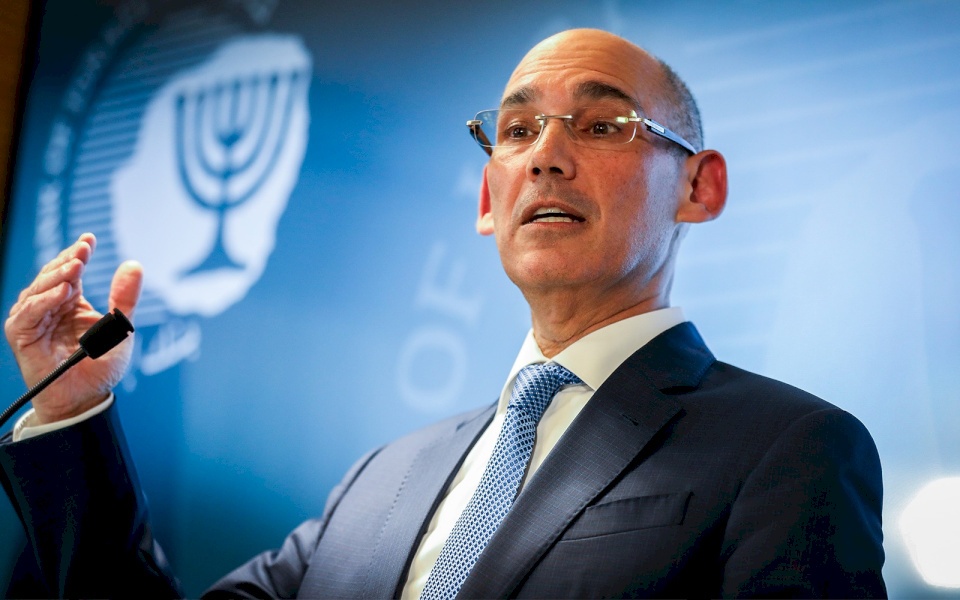
Bank of Israel Governor: The war is causing severe damage to economic activity and its continuation will create greater financial challenges
SadaNews Economy Translation - The Governor of the Bank of Israel, Amir Yaron, criticized the Israeli government's policies regarding the economic reality amid the ongoing war on multiple fronts, especially after the recent budget approval.
Yaron said, according to SadaNews Economy Translation, following the central bank's decision to maintain the interest rate at 4%, it would have been better to avoid approving measures that increase the deficit, such as coalition budgets and tax cuts included in the budget law.
He added: Given the approved budget and to enhance financial credibility, it is important to ensure that the reserve is used exclusively for the purposes designated for it, and not diverted to other purposes.
He continued: With the ongoing fighting and increasing security needs beyond the reserve, and to prevent an increase in the debt-to-GDP ratio, it will be necessary to make adjustments to the 2026 budget, and these adjustments should focus on items that do not support growth.
The Governor of the Bank of Israel pointed out that wars, especially prolonged ones, are accompanied by high inflation rates and severe damage to GDP, which can sometimes reach double digits. The GDP deficit at the end of 2025 was 3.4%, while the cumulative deficit throughout the war period reached a significant 8.5%.
He added: The economy shows resilience and strength, as has been evident throughout this period. Throughout the war, we adopted a balanced monetary policy that considers inflation developments, the potential for economic activity, and geopolitical risks.
Regarding inflation expectations, the Governor of the Bank of Israel said: In recent months, up until the eve of the war, inflation fell to around the midpoint of the target range, reaching 2% in February. However, it is important to note that the February index does not yet reflect economic developments, especially the rising energy prices, which will impact the months ahead. Consequently, experts raised their annual inflation expectations for the coming months by half a percentage point. Additionally, inflation expectations for the next year have risen according to forecasts, but they remain close to the midpoint of the target range. This increase is relatively low compared to other countries, partly due to Israel’s lower susceptibility to global energy prices affecting inflation.
Regarding the impacts of the war against Iran on economic activity, the Governor of the Bank of Israel stated: The fighting against Iran and Lebanon, along with the damage to the home front, severely harms economic activity, indicating a decline in credit card usage and tourism, which relates to demand. On the supply side, the labor supply has been affected due to workers' absences and supply chain strikes, and there has been a clear and sharp decline in credit since the outbreak of the war, similar to what occurred in the previous operation against Iran, but this time the recovery has been slower due to the ongoing war.
He predicted that there will be greater financial challenges as the war continues on the fronts of Lebanon and Iran.
The war affects the business activity and small and medium-sized enterprises. It is important for the government to take support measures, especially regarding financial liquidity. This will enable them to navigate this period and return to work as soon as the fighting ends. Regarding assistance to families, it is beneficial to ease the "Galat" program compared to the usual program as an alternative to the wages of absent employees, to prevent damage to their income, which could lead to a decline in consumption and business activity in the economy.
Regarding the side effects of the war on the global economy, the governor noted a high degree of uncertainty in the world about the expected impacts of the military conflict, indicating that the extent of damage to infrastructure and supply chains could disrupt economic growth and lead to a sharp rise in inflation.
According to the research department's forecasts at the Bank of Israel, as long as the war continues, the special situation on the home front and increased mobilization of reserves will continue to limit activity. Therefore, the Bank of Israel is lowering its growth expectations for the coming year.
The Governor of the Bank of Israel commented, saying: The baseline scenario is based on the assumption that the operation and the war in Lebanon will end by the end of April, and that their direct economic impact will continue as long as the war lasts. This expectation carries a high level of uncertainty regarding both the duration of the war and the level of geopolitical risks, which will reflect on the risk premium, exchange rates, energy prices, and their implications for economic activity.
 Follow the latest Sada News via Google News
Soaring Oil Prices Burn the Pockets of the Palestinian Citizen "The Poor"

Millions of Dollars in Losses.. "SadaNews" Reveals Shocking Figures for Traders from Pales...

The Problem of Shekel Overcrowding Worsens.. Fuel Station Owners Threatened with Closure o...

The Palestinian Economy at a Crossroads: 4 Files Awaiting Resolution

بنك إسرائيل يخفض توقعات النمو ويحذر من ارتفاع العجز

Exchange Rates of Currencies Against the Shekel on Tuesday (July 21)

Inflation Expectations in Israel Stabilize at 1.5%
