

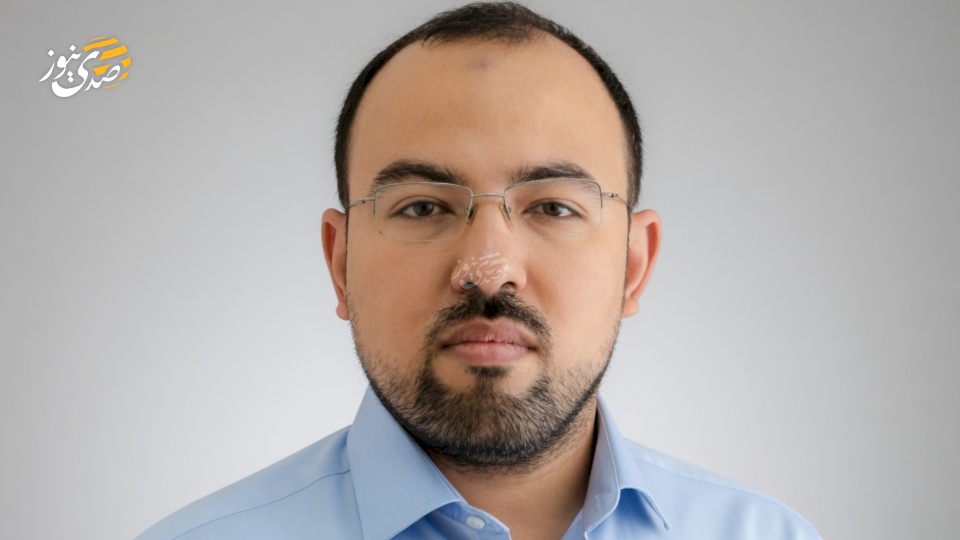
Khalil Al-Hayya as President of Hamas.. Continuation of the Founders' Approach
In a scene that carries implications beyond mere leadership transition, Hamas has elected Dr. Khalil Al-Hayya as head of its political bureau. This choice is not a fleeting organizational event, but rather a defining moment in the history of the movement and in the course of the struggle against occupation. It is a declaration of the identity of the coming phase and a confirmation that the blood of Gaza is what shapes the leadership map, not the corridors of hotels in distant capitals.
These elections did not take place at a routine moment. The movement is engaged in an open war of extermination, and its leaders are a visible target for an Israeli assassination machine that does not stop. In light of this scene, the achievement of this institutional requirement proves that Hamas is not just a passing idea, but rather an entity that has established its institutions under the most difficult circumstances. When Khalil Al-Hayya, the man who resides in the trenches of Gaza, and Khaled Mashal, the leader of the external arena, compete for the position, the voting result in Gaza, which was overwhelmingly in favor of Al-Hayya, was not merely a preference for one candidate over another, but a judgment from the battlefield itself.
Khalil Al-Hayya does not come from the womb of cold diplomacy; he is a man forged by fire. Born in 1960 in Gaza, he witnessed the occupation from a young age, but what truly distinguishes his path is the unmatched record of sacrifice. Between 2007 and 2026, he lost four of his sons (Osama, Hamza, Hamaam, and Azam) in separate Israeli raids. In 2008, his son Hamza was assassinated, in 2014, the Israeli forces bombed his son Osama's home, killing him along with his wife and three of his children. In 2025, his son Hamaam was assassinated in a raid on Doha, and in May 2026, just weeks before his election, his son Azam was killed in a raid east of Gaza. This man, who has repeatedly lost his family while saying goodbye to his sons, did not come out to scream or lament, but repeated the same message: "My family is part of the fabric of the Palestinian people who pay the same price." This is the difference; he is a leader who emerged from the depths of collective suffering.
When we search for Khalil Al-Hayya, this man exists only in the heart of the battle, and his name is inscribed on every stone in Gaza. When Al-Hayya bids farewell to his fourth son, he raises his head like a revolutionary who knows that the blood of his sons is not a personal tragedy but a burning fuel on the path to liberation. Ask the occupation: How can four sons of a leader be assassinated, and the leader returns to sit on the presidential chair? The answer is that Hamas elects those who have repeatedly paid the price of leadership until their bodies have become a field of patience, and their victory is a declaration that death does not defeat those who embrace the will to win and live for others. This is the struggle of Al-Hayya: it is not a speech at a conference, but the bodies of his sons turning into flags, and a personal pain that evaporates in a national moment.
Some see Al-Hayya's election as something ordinary, but in reality, the man who led the Hamas delegation in the Cairo negotiations of 2024 and managed the ceasefire file in previous battles is the same one who managed the ceasefire and prisoner exchange negotiations since October 2023. Al-Hayya is not only the voice of the mujahideen, but he is also the architect of field diplomacy, the link between political decision-making and field data, and the regional link that has kept negotiation channels open even in the midst of war.
What happened in the Hamas elections is more than just the choice of a leader. It is a message to the world that this movement, despite all the assassination attempts and physical elimination targeting its leaders from Ahmed Yassin to Ismail Haniyeh and Yahya Sinwar, is still capable of renewing its blood and legitimacy. It is a message to the Palestinian interior that the institutional and democratic approach, which takes place with this secrecy and professionalism despite the persecution, is the most effective model for renewing legitimacy, away from the politics of singularity and imposing facts on the ground. And most importantly, it is a message to the occupation that targeting leadership does not erase the movement, but rather produces new leaderships from the womb of pain itself. The election of Khalil Al-Hayya as president of Hamas is not just a change in the identity card of a leader, but rather a new concept of leadership in the Middle East.
This man who lost four of his sons in the raids of the occupation and saw his home collapse over his head repeatedly did not reach the chair through money, media coverings, or foreign allegiances; he reached it because Hamas chose him, and the resistance only chooses those who have paid the full price.
Al-Hayya symbolizes a radical transformation in Hamas. The movement, which presented itself as a national liberation movement, has today become an existential sacrifice movement, whose leader is not only a brilliant strategist but also a symbol of collective patience. He is redefining leadership: it is not about who has the solutions, but about who has the ability to endure with his people—not someone who manages crises from afar, but someone who lives them in his body and family.
This election carries three harsh messages.
The first is for the occupation: Assassination of leaders does not stop the movement but rather creates leaders of another type, more tenacious, less afraid, and deeper roots in the streets.
The second is for the Palestinian interior: Those who think Hamas is exhausted or preoccupied with its political survival are deluded; this movement constantly renews its blood and elects its leaders under the most difficult conditions, while others stumble in the conflicts of singularity and narrow interests.
The third message is for the Arab world: Anyone who wagers on the fragmentation of Hamas or its retreat needs to reconsider; this entity has proven to be more resilient and legitimate than many official regimes that collapse at the first shock.
Let us pause at the profound meaning of Al-Hayya's election; it is not just about him personally, but about the new logic of leadership that concrete realities enforce in an era rife with false conflicts. Al-Hayya does not come from the womb of political theorizing nor from Western diplomacy schools but from the womb of authentic Palestinian suffering.
Choosing Al-Hayya means that Hamas has clearly chosen to be a renewed movement. Al-Hayya was elected in a fully militant state that combines the field, negotiation, sacrifice, and popularity; this is a rare strategic gain at a time when national projects are splintering and resistance is reduced to mere slogans raised at conferences.
But the price paid by Al-Hayya's family reminds us that in this context, leadership is not merely a position but ongoing sacrifice, and Gaza pays a price daily that no Arab capital can afford. This is the difference between those who possess legitimacy because they have earned it and others.
If the world is wondering about the future of Hamas, the answer is clear: Hamas today is more steadfast than ever because it has chosen a leader who fears neither death nor assassination, who does not seek a media platform but seeks to liberate his homeland even if he remains alone on the field.
In conclusion, Al-Hayya's election means that Gaza today is not just a battlefield but a benchmark for Palestinian leadership. Anyone who wants to lead must pass through there, and anyone unwilling to pay the price should stay away from the path because the resistance elects only those who carry the banner of liberation in one hand and sacrifices in the other.
The victory of Khalil Al-Hayya is an acknowledgment from Hamas that its future is closely linked to the Gaza Strip, the battleground. He is the leader who combines negotiation experience and resistance expertise, political and media presence, personal sacrifice, and the ability to lead in extraordinary circumstances. When Al-Hayya emerges from the rubble of his destroyed home, and when he loses his sons one after another but continues his path, he provides a model of leadership that cannot be bought with money and is not manufactured by conferences; it is produced by shared suffering and iron will. Gaza today chooses its leadership, and the nation stands before a scene that encapsulates the meaning of resilience.
 Follow the latest Sada News via Google News
When Indicators Fail to Narrate the Palestinian Economy

The Tale of a People Who Refused to Believe the Well

What Does the Supreme National Interest Mean for Palestinians? And How Can It Be Achieved?

The Wronged Ramallah

Between Pragmatism and Survival Management: Where Does Hamas Go After the Election of Khal...

Khalil Al-Hayya as President of Hamas.. Continuation of the Founders' Approach

The Annihilation of Sportsmanship
