

Is the patience of the private sector running out?
The question today is no longer: How does the Palestinian private sector survive the crisis? But rather: For how long can it continue to carry the economy on its shoulders?
Over the past two years, the private sector has not only been a recipient of the repercussions of the economic crisis, but has also been the pillar that maintained the continuity of economic activity, preserved thousands of establishments, and kept tens of thousands of job opportunities alive despite severe contraction and a decline in economic activity. However, the ability of this sector to withstand is no longer boundless, and signs of exhaustion are becoming evident in the markets, in the behavior of investors, and in the decisions of companies which now tend to be more cautious than expansive.
The private sector constitutes the backbone of the Palestinian economy; it employs more than 80% of the workforce and leads the majority of production, commercial, and service activities. Data from the Palestinian Monetary Authority indicates that private sector deposits represent about 93.3% of the total deposits in the banking sector, reflecting a close link between the stability of the banking sector and the sustainability of private sector activities.
However, what this sector faces today is not a single crisis, but rather a series of intertwined crises. While around 17 billion shekels are stuck in the banking system due to Israeli restrictions on transferring surplus cash, the markets are suffering from a lack of operational liquidity necessary for continuing business activity.
The problem has become more than just a banking issue; it has turned into a daily dilemma for traders, industrialists, and investors. The difficulty of depositing cash has forced many companies to hold large amounts of money within their establishments, which accompanies increased costs of protection, insurance, and cash transport, disrupts part of the working capital, and delays payments to suppliers.
The crisis has also extended to payment tools themselves. Commercial checks, which represent one of the most important means of settlement between companies, have become more difficult for some traders due to stricter procedures imposed by some banks on issuing checkbooks or controls on their use amid a pileup of shekels. As a result, commercial activity has slowed, trust among traders has weakened, and reliance on cash has increased at a time when the banking system suffers from unutilized cash surplus.
Here lies the real paradox; the problem is no longer a lack of funds, but rather the disruption of the flow of money within the economy. The accumulation of shekels restricts deposits, and the difficulty of depositing disrupts liquidity management within companies, the disruption of payment tools slows down trade, and the rising cost of financing limits investment, while weak demand reduces production and employment. When these factors come together, the business environment becomes more costly, riskier, and less able to grow.
Amid these circumstances, the announcement of financing agreements worth 395 million US dollars through five Palestinian banks, as part of the European facility worth 400 million euros to support micro, small, and medium enterprises, has emerged. This important initiative deserves appreciation, but it requires distinguishing between two different objectives: enhancing liquidity in the banking sector on one hand, and improving access to financing for the private sector on the other.
The liquidity that reaches banks does not automatically translate into lower-cost loans for investors. The cost of financing will remain linked to global benchmark interest rates, risk margins, and operational costs, unless these initiatives impact interest rates, guarantee requirements, and lending conditions. Therefore, the success of these programs will not be measured by the amount of money infused into banks, but by their ability to enable companies, especially small and medium ones, to access affordable financing that helps them invest and grow.
However, even if financing conditions improve, the investor will not expand if he does not find a market that absorbs his production. Domestic demand has declined due to a decrease in purchasing power, delays in salaries, and a slowdown in consumer spending, which has driven many establishments to operate below their production capacity and postpone expansion plans.
Diminishing trust remains the most dangerous challenge. When an investor cannot predict the business environment, and traders hesitate to expand their activities, and industrialists postpone their investments, the economic cycle enters a contraction phase that is hard to break.
It cannot be overlooked that the banking system itself bears part of the burdens of this crisis. It holds large amounts of cash liquidity that cannot be utilized, while deposits in the banking system exceed 19 billion dollars, and the credit facilities portfolio is around 12 billion dollars, which confirms that the problem is not a lack of financial resources, but rather the inability of those resources to reach the real economy.
Protecting the private sector is no longer merely a demand for a specific economic group, but a national necessity. Every establishment that ceases operations means fewer job opportunities, less investment, lower tax revenues, and weaker economic growth.
Today, an integrated economic vision is required that begins with addressing the crisis of the shekel accumulation, ensuring the smooth flow of cash, developing loan guarantee programs, reducing financing costs, accelerating the transition to digital payments, stimulating local demand, supporting productive investment and exports, and rebuilding trust in the business environment.
The Palestinian private sector does not seek grants or exceptional privileges; rather, it calls for the removal of barriers that hinder its natural role in investment, production, and employment.
The question that should occupy decision-makers today remains: If the private sector loses its ability to lead the economy, who will lead the recovery phase?
Protecting the private sector is no longer an issue that concerns businesspeople alone; it has become a matter that affects every Palestinian family. Every establishment that continues to operate means a job opportunity being preserved, income being generated, and investment remaining within the homeland. The exhaustion of the private sector will not only be paid for by the investor, but will also be paid by the worker, the consumer, the public treasury, and the entire Palestinian economy.
Economies do not recover by merely increasing spending, but when their private sector regains its confidence and ability to invest and produce.
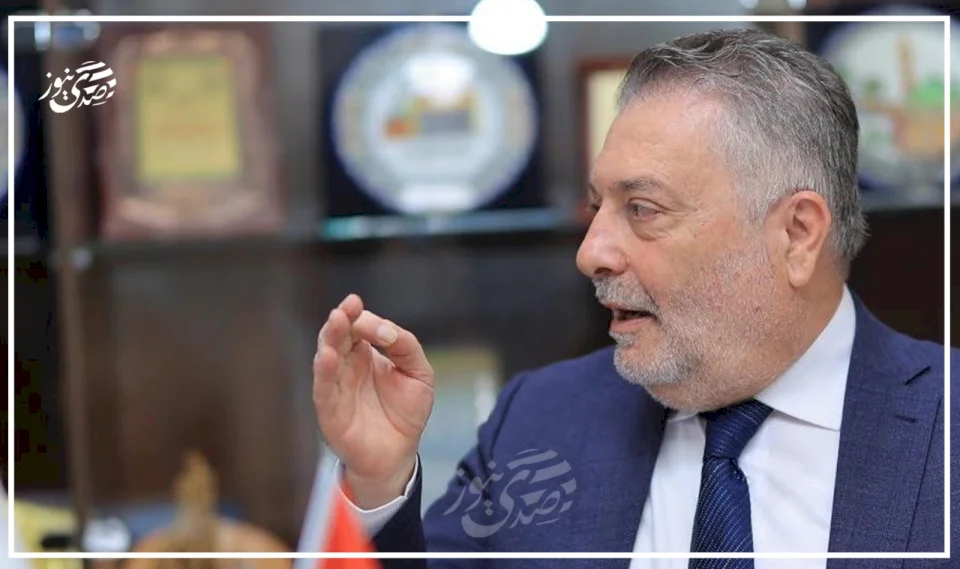
International Economic and Financial Advisor - Member of the International Committee for Transformation and Digital Economy - General Secretariat
 Follow the latest Sada News via Google News
Is the patience of the private sector running out?

Some Light Amidst the Darkness

Dr. Mustafa's Government ... Between Challenges and Requirements for Resilience

Whoever Owns the Land... Owns the Future

Granada Is Not the Last... When Cities Open Their Doors to Enemies..

"The Framework Agreement".. No One Learns from History!

Gaza: Restructuring Project and Palestinian Home Requirements
