

"American Forces on the Ground".. Leaks About Washington's Role in the Lebanon Agreement
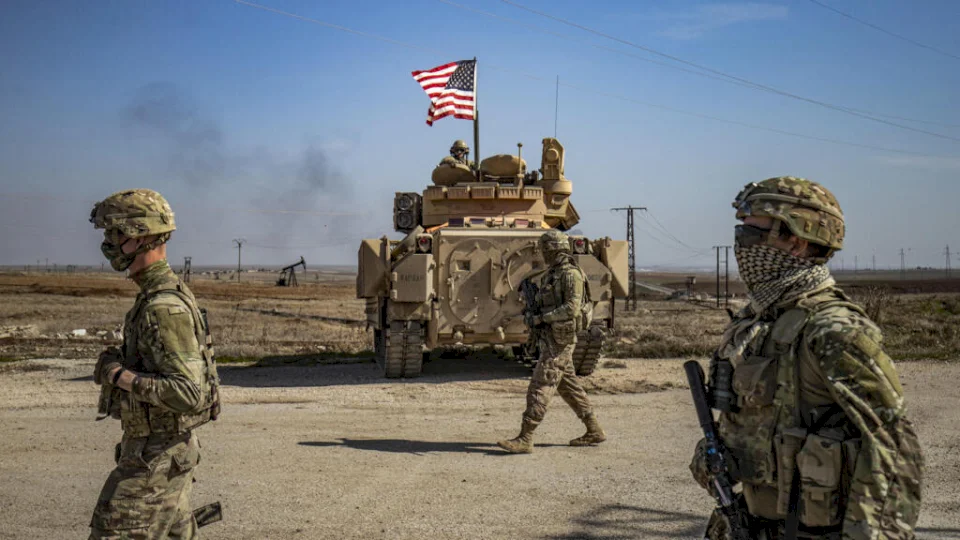
SadaNews - The Washington Post reported that an unnamed American official stated that the United States will play a direct role in monitoring the movements of the Lebanese and Israeli armies, including the use of American forces on the ground in Lebanon and Israel.
The official explained that the United States has forces in Lebanon that have been performing a monitoring role since the 2024 agreement, and that it will now oversee both parties to monitor any violations of the agreement.
The same source said that this operation will enable "our political leadership to exert the necessary pressure on either party to fulfill its commitments." He added that the commander of the U.S. Central Command will not take a direct role in monitoring either party, but officials in "CENTCOM" will inform the Trump administration of any violations so that it can intervene.
Under the framework agreement, the text of which was published by the U.S. State Department, the Lebanese army is required to regain "effective sovereign authority over all Lebanese territories", after "verifying the disarmament of non-governmental armed groups and dismantling the infrastructure associated with them, which will allow the Israeli army to gradually withdraw from Lebanese territories".
For his part, Lebanese President Joseph Aoun reiterated his determination to extend state authority with its armed forces up to the southern borders, during his meeting with the commander of the U.S. Central Command (CENTCOM), Admiral Brad Cooper, yesterday, just before starting to implement the framework agreement with Israel, while the Washington Post reported details about Washington's planned role in monitoring the implementation of the agreement.
The Lebanese presidency stated in a communiqué that Aoun discussed with Cooper "the preparations related to the commencement of implementing the framework agreement that was approved as a result of the Lebanese-American-Israeli negotiations in Washington". He assured him of the "Lebanese state’s determination to extend its authority through its armed forces up to the southern international borders".
Cooper also met with the commander of the Lebanese army, General Rudolf Hekel, according to what the army command announced, clarifying that the two sides discussed "the importance of successfully implementing the security annex of the framework agreement, in addition to ways to enhance future cooperation", noting that Hekel valued American support and emphasized the necessity of continuing cooperation between the two armies to preserve Lebanon’s security and stability.
For its part, "CENTCOM" stated in a post on "X" that Cooper discussed with Aoun and Hekel "ways to move forward in implementing the historic framework agreement", mentioning that Cooper also visited Israel where he met with the American forces stationed there.
The U.S. embassy in Beirut stated in a communiqué that "the meeting addressed the path for the next phase and the official launch of implementing the framework agreement, aiming to build – quickly and concretely – on the momentum generated by this agreement".
The embassy explained that "this agreement establishes a realistic path for exiting the ongoing conflict and lays the groundwork for a clear and organized process aimed at restoring Lebanon's sovereignty and disarming Hezbollah".
Cooper arrived in Beirut yesterday for the first time since signing the agreement with Israel to end the war, under which the Lebanese army is to take a central role in its implementation by deploying in the south of the country, following verification of Hezbollah's disarmament, which rejected the agreement.
Katz: No Withdrawal
In turn, Israeli Occupation Minister Israel Katz stated that he agreed with the commander of the U.S. Central Command on "not withdrawing from the security areas in Lebanon, Syria, and Gaza".
He added that there will be no further withdrawal after the two trial areas in southern Lebanon until Hezbollah's disarmament is completed.
Katz viewed that "the linkage between the Iranian and Lebanese fronts is an American interest, and without this linkage, Hezbollah would have collapsed". He explained that "after the American restrictions, we moved to the alternative plan, which is to deepen the yellow line area in southern Lebanon".
For his part, the Israeli ambassador to the United States, Yair Lapid, stated that Israel is making progress in Washington towards achieving "a future characterized by peace" with Lebanon. He added that "our actions on the battlefield and at the negotiating table carry one message, that there is no room for Hezbollah in Lebanon".
 Follow the latest Sada News via Google News
Rights Activists Demand to Ban Ben Gvir from Entering America

Occupation Closes the Headquarters of the Solidarity Charitable Association in Nablus for...

"American Forces on the Ground".. Leaks About Washington's Role in the Lebanon Agreement

American and Iranian Delegations in Doha as Tehran Threatens to Disrupt Alternative Routes...

Settlers Storm Citizens' Homes in Khirbat al-Ras al-Ahmar

Young man killed and his brother injured in a shooting crime in Silwan town, Jerusalem

Exchange Rates of Currencies Against the Shekel on Tuesday (June 30)
