

American and Iranian Delegations in Doha as Tehran Threatens to Disrupt Alternative Routes in Hormuz
SadaNews - Reports have conflicted regarding the holding of American-Iranian meetings in Qatar to discuss technical issues in the Islamabad memorandum of understanding, while Tehran has threatened to disrupt ships crossing outside specified routes in the Strait of Hormuz.
U.S. President Donald Trump stated that an American team is preparing to travel to the Qatari capital, Doha, to participate in a session of talks scheduled for today, Tuesday.
In statements from the White House, Trump added that the Doha meeting could be important and that this will be known later.
For her part, White House spokesperson Caroline Levitt stated that American envoys Stephen Wittycock and Jared Kushner will head to Doha for high-level meetings this week.
Politico reported, citing two informed sources, that Wittycock informed lawmakers in Congress that the technical team concerned with the nuclear negotiations is on its way to Qatar.
The sources added that Secretary of State Marco Rubio and Wittycock also assured lawmakers that the goal is to negotiate a final agreement that prevents Iran from retaining its stock of highly enriched uranium.
The Washington Post reported that the U.S. and Iran have already discussed technical issues, and that several American officials specializing in various aspects of the negotiations will be present in Qatar, with others participating remotely.
A diplomat familiar with the negotiations confirmed to Agence France-Presse that technical teams will meet in the coming days, and that channels of communication to contain issues "are still operational."
An American official informed the agency that "the technical talks concerning all areas of the memorandum of understanding are scheduled to continue."
In Tehran, the Iranian Foreign Ministry announced that an Iranian delegation will visit Doha to follow up on the implementation of the memorandum of understanding, stating that no negotiation meetings will be held at any level with the American side in the coming days.
The Iranian Foreign Ministry added that the Iranian delegation will follow up in Doha on the implementation by Washington of the two points concerning lifting oil sanctions and unfreezing assets.
The disagreement regarding the possibility of holding meetings between the two sides highlights the fragility of an agreement they signed on June 17, aimed at ending a war that disrupted global oil flows through the Strait of Hormuz, and posed a political dilemma for Trump ahead of the upcoming midterm elections in November.
There is a deadline of at least 60 days to implement the memorandum of understanding between the U.S. and Iran, which consists of 14 points, to extend the ceasefire that came into effect in April.
During this period, the two sides will also discuss Iran's nuclear program and its research programs, its stockpile of highly enriched uranium that Trump wants to relocate from Iran, and negotiations for a permanent truce. However, progress is facing obstacles as both sides exchange accusations of violating the terms of the agreement.
Hormuz Routes
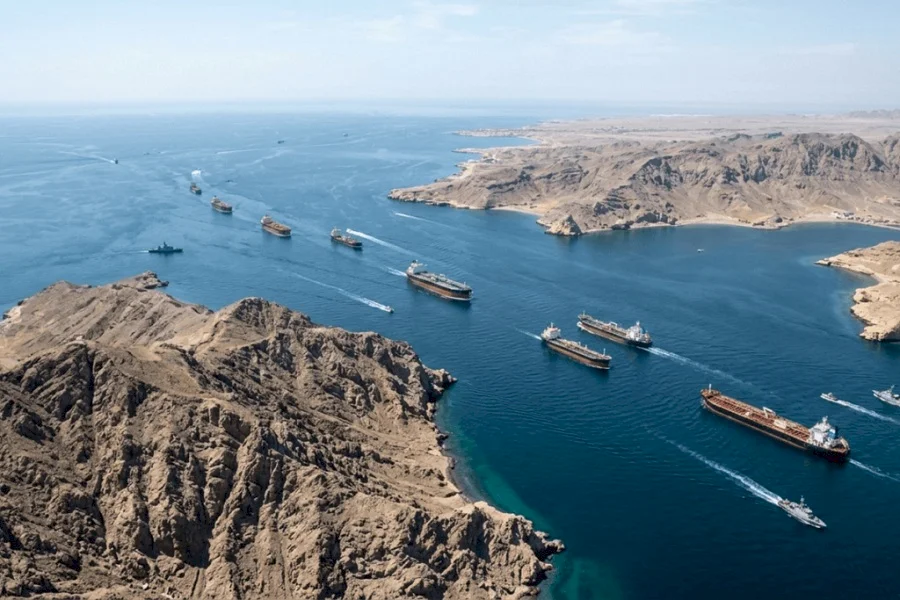
On another note, Kazem Gharibabadi, Iran's Deputy Foreign Minister, told state television on Monday that Iranian and Omani experts will initiate talks to determine crossing routes in the Strait of Hormuz in the coming days, adding that Iran will attempt to disrupt the passage of ships outside the specified routes.
Gharibabadi confirmed that they informed Oman of the necessity to change the routes in the Strait of Hormuz, and that the situation there will not return to what it was before the war.
In this context, CNN reported that Adam Smith, the top Democrat on the House Armed Services Committee, affirmed that the Trump administration appears optimistic that Iran will agree to open the strait and that things will go smoothly, and that Tehran will agree "to what they want her to agree to," while noting at the same time that he does not see much evidence to support that.
Tehran only allows the passage of ships through one route along its shores, threatening to target any vessel that violates instructions. Foreign Minister Abbas Araqchi emphasized on Sunday that "the exclusive responsibility" (for managing the strait) lies with Iran and no other entity or country.
Tehran has expressed its dissatisfaction with Muscat's announcement of the opening of an alternative and temporary maritime corridor, reported to be a coordinated initiative with the United Nations to evacuate stranded sailors and ships, which dozens of ships have used this week.
An Omani-French statement reaffirmed commitment to the United Nations Charter, international law, and maritime law, and the importance of reopening the Strait of Hormuz.
French President Emmanuel Macron also clarified that France and Oman are working -with their partners- to remove mines from the strait.
 Follow the latest Sada News via Google News
Rights Activists Demand to Ban Ben Gvir from Entering America

Occupation Closes the Headquarters of the Solidarity Charitable Association in Nablus for...

"American Forces on the Ground".. Leaks About Washington's Role in the Lebanon Agreement

American and Iranian Delegations in Doha as Tehran Threatens to Disrupt Alternative Routes...

Settlers Storm Citizens' Homes in Khirbat al-Ras al-Ahmar

Young man killed and his brother injured in a shooting crime in Silwan town, Jerusalem

Exchange Rates of Currencies Against the Shekel on Tuesday (June 30)
