

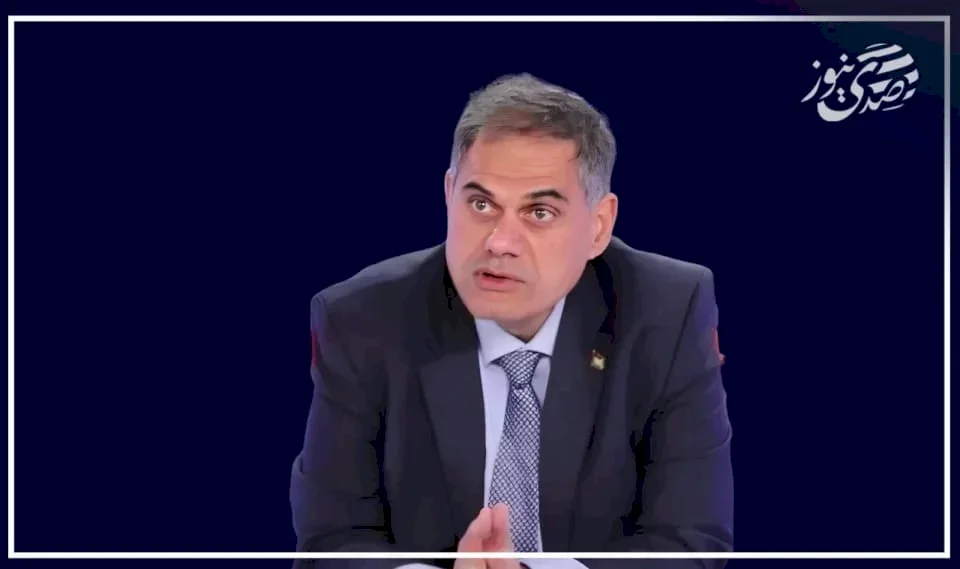
Bilingualism in Belgium: Between Political Legitimacy and Identity Conflict
The re-election of Boris Dilliès at the head of the Brussels regional government has reopened one of the most sensitive issues in Belgium: the question of language as a criterion of national legitimacy, not just a communication tool. The controversy surrounding his appointment, due to his apparent weakness in Dutch, went beyond his personal situation and raised a deeper question: Can a leader of an officially bilingual entity exercise authority without mastering the language of the other component?
A Federal State Based on Linguistic Balance
Belgium recognizes three official languages: French, Dutch, and German. However, federal political life practically operates on a French-Dutch duality. The country is divided into three regions (Flanders, Wallonia, and Brussels-Capital) and three language communities, resulting in a complex institutional structure based on the principle of linguistic equality, especially within the federal government.
Following the recent legislative elections, whether at the federal or regional level, the Brussels-Capital Region remained without a fully empowered government for over 200 days, due to delicate negotiations imposed by party and linguistic balances. This delay was not merely technical but reflected the sensitivity of the constitutional structure in a region that enjoys a special status: it is demographically Francophone but officially bilingual.
Brussels: A Capital of Dual Identity
Brussels is not merely an administrative region; it is the capital of the federal state and the headquarters of European institutions. Therefore, any disruption of the linguistic balance within its institutions is politically interpreted. The government's head's weakness in Dutch is not seen only as a linguistic issue but as a symbolic signal that may be interpreted in the Flemish North as a denigration of the Dutch-speaking component.
In Belgium, mastering the second language means:
• recognizing equality between the two communities,
• respecting the constitutional contract,
• and the ability to represent the state in all its diversity.
Thus, mastering both languages has become an unwritten requirement for high positions, especially the premiership or leadership of regional governments.
Language: A History of Conflict
The current sensitivity cannot be understood without going back to history. During the 19th century and a large part of the 20th century, French was the language of administration and the elite even in Dutch-speaking Flanders. The struggle of the Flemish movement gradually led to the full recognition of Dutch, culminating in a series of fundamental language laws (about eight key laws) that regulated the use of language in administration, education, and justice, and delineated linguistic borders in 1962-1963.
These laws were not merely organizational reforms; they resulted from deep political struggles that nearly threatened the unity of the state. Since then, linguistic balance has become the cornerstone of the Belgian system.
Language as a Test of Legitimacy
The experiences of previous government heads have shown that language is a constant criterion for judging political "nationality."
• Elio Di Rupo faced severe criticism for his accent and mistakes in Dutch despite his efforts to address the Flemish audience in their language.
• Yves Leterme, despite his proficiency in French, faced a symbolic crisis when he made a mistake in the national anthem.
• Guy Verhofstadt built his image on a seamless bilingualism, yet this did not exempt him from political interpretation of his linguistic choices.
• As for Herman De Croo, he represents an older generation of Flemish politicians who mastered French fluently, and he is seen as a model of what is called the "golden age" of bilingualism.
Today, with the spread of social media, a hesitation or linguistic error can escalate into a national issue, interpreted as a political stance rather than just a verbal slip.
The Current Issue
The issue is not merely individual linguistic weakness, but the structural question:
Is electoral legitimacy sufficient in a federal state based on linguistic balance, or does national representation impose a symbolic and cultural commitment that transcends the ballot boxes?
In Brussels specifically, where the majority is Francophone but the constitution imposes complete equality, any linguistic performance imbalance becomes an immediate political reading. Here, language is not only a means of communication but is a component of the Belgian social contract.
Conclusion
In multilingual countries, language can be a bridge between components. In Belgium, it has – and still does – also serve as a frontline.
Bilingualism is not a technical detail, but a cornerstone of balance between the Flemish North and the Walloon South, and between two visions of the state.
The issue of the Brussels government reveals that the Belgian project is still based on a delicate equation: political representation is not measured only by the number of seats but also by the ability of officials to address the state in both its languages, and to respect a long history of struggle and compromises.
In Belgium, every word carries constitutional weight... and every accent may be interpreted as a political choice.
 Follow the latest Sada News via Google News
When Indicators Fail to Narrate the Palestinian Economy

The Tale of a People Who Refused to Believe the Well

What Does the Supreme National Interest Mean for Palestinians? And How Can It Be Achieved?

The Wronged Ramallah

Between Pragmatism and Survival Management: Where Does Hamas Go After the Election of Khal...

Khalil Al-Hayya as President of Hamas.. Continuation of the Founders' Approach

The Annihilation of Sportsmanship
