

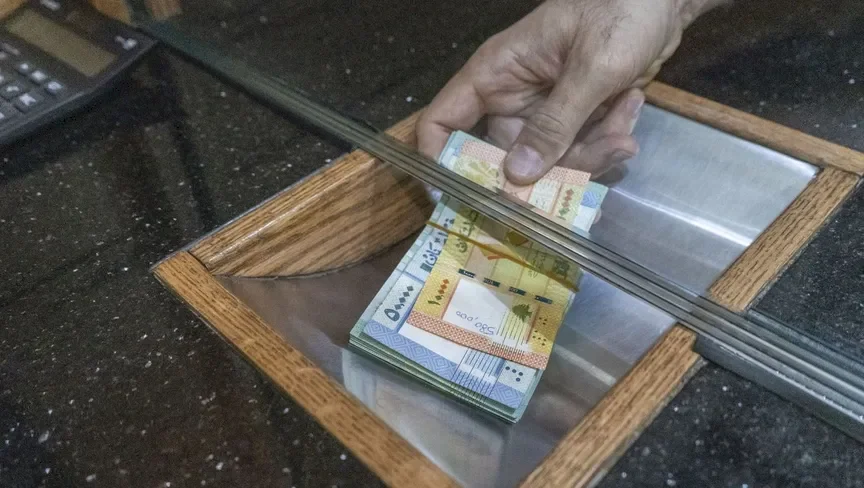
Lebanon Approves Increase in Public Sector Salaries and Raises Taxes
SadaNews Economy - The government in Lebanon has raised the value-added tax and the price of gasoline, aiming to contribute to boosting revenues to fund the salary increases approved for public sector employees and retirees.
Information Minister Paul Marqas noted while reading the cabinet decisions that the council approved "an increase of 6 salaries for public sector employees" (between 100 and 120 dollars monthly), adding that "this increase is a monthly compensation based on the salary and does not enter into the core salary," meaning it will not be included in the end-of-service compensation calculations for about 251,000 employees and retirees.
The estimated cost of this increase is about 800 million US dollars annually, according to Marqas, who pointed out that "to avoid any additional economic or monetary imbalance," these salaries will be paid "after the law increasing the value-added tax and the law opening the necessary additional appropriations have been issued."
Objections to the Tax Increase
Simultaneously, Marqas announced that the government approved raising the value-added tax by one percentage point to become 12%, in addition to an increase in the price of the gasoline canister by about 3.5 US dollars, and raised fees on shipping containers.
These increases triggered strong objections within the government and among deputies, as the "Development and Liberation" bloc, which Finance Minister Yassine Jaber was a member of, rejected the tax increase decision, and even Marqas himself opposed the decision.
The ministers of the "Lebanese Forces" also voted against the decision, refusing to "resort to the citizen's pocket as the sole source of revenues."
The bloc called for resorting to alternative solutions to fund the "justified" salary increases, such as "improving revenue collection, combating tax evasion, and restructuring the public sector."
Marqas also pointed out that the cabinet confirmed before approving the increases, the necessity of "improving revenue collection, looking into maritime and river properties, following up on the implementation of collection orders, and tightening control over crossings" to enhance revenues.
Reforms at the Top of the Government's Priorities
The economic crisis that has plagued the country since 2019 has led to a default on approximately 30 billion dollars of international bonds in 2020, triggering a phase of free fall for the currency, which lost its entire value, significantly impacting the salaries of public sector employees and wiping out billions of dollars from deposits.
Last year witnessed radical political changes in Lebanon, with the election of former army chief Joseph Aoun as president in January after a vacancy in the position since 2022, followed by the formation of a government led by Nawaf Salam in February, while the authorities placed financial and economic reforms at the top of their priorities.
Lebanon is looking to restructure its banking sector to regain trust in banks and the economy as a whole, and it is also seeking to implement comprehensive economic reforms to achieve a program with the International Monetary Fund that enables it to receive 3 billion dollars in support.
The fund requires the country to implement reforms to obtain this support, the most important of which is the approval of a law to restructure banks and a law addressing the financial gap estimated at 83 billion dollars according to government estimates.
 Follow the latest Sada News via Google News
The World Bank Warns: "The Worst-Case Scenario" for Global Growth is Approaching

Trump Prepares to Impose New Tariffs on Dozens of Economies

Gold Surpasses $4,100 as Selling Pressure Eases

Oil Rises for the Fourth Day as Supply Risks Escalate

An Additional $8 Billion.. A New Account from the Pentagon on the Cost of the War with Ira...

London Stock Exchange Enters the Era of 24/7 Trading

Shamaran Petroleum: Suspension of Oil Production in Duhok Fields in the Kurdistan Region o...
