

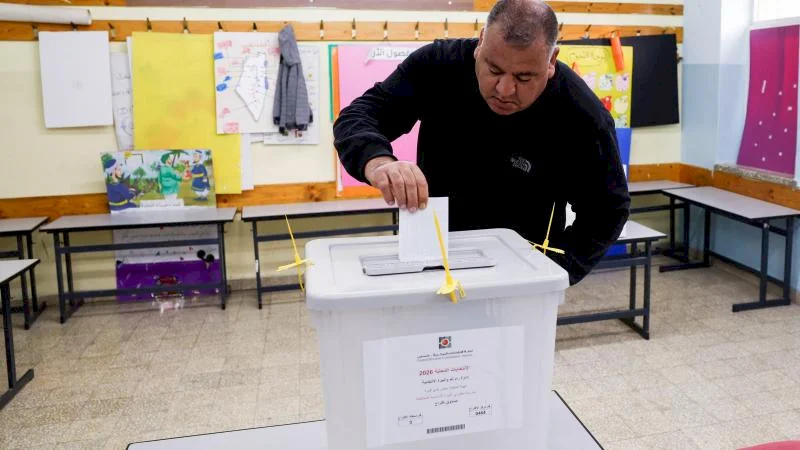
'Independence' Launches First Specialized Report on Monitoring Objections, Appeals, and Electoral Crimes in Local Authority Elections 2026
SadaNews - The Independent Authority for the Judiciary and the Rule of Law "Independence" held a conference to launch its specialized report titled "Monitoring Objections, Appeals, and Electoral Crimes in the Palestinian Local Authority Elections 2026", with the participation of the Head of the Electoral Affairs Court Judge Bashar Nemer, the Head of the Political Parties Department at the Central Elections Commission Anis Saba, the Deputy Head of the Bar Association Lawyer Ahmad Al-Asa, the Director of the Arab World Observatory for Democracy and Elections Aref Jafal, along with several judges, lawyers, academics, and representatives of civil society organizations and entities concerned with electoral affairs.
Researcher Jihad Harb opened the conference by presenting the objectives of the report and its significance, affirming that it represents the first specialized study addressing the system of objections, appeals, and electoral crimes in Palestinian local elections. The report aims to enhance oversight of the integrity of the electoral process and to develop the legal and procedural framework governing it. He clarified that the violations documented in the report did not affect the final election results, noting that preparing the report required exceptional effort due to the short legal durations governing the phases of the electoral process and the work of the Electoral Affairs Court.
The Executive Director of the "Independence" Foundation, Mr. Majid Al-Aarouri, highlighted the main findings of the report, explaining that it focused on three main axes: the objections submitted to the Central Elections Commission, the appeals before the Electoral Affairs Court, and electoral crimes. He confirmed that the report comes within the oversight role that the foundation plays in monitoring the performance of the justice system, praising the performance of the Central Elections Commission in managing objections related to the voters' register and candidates, as it is the first line of defense for electoral rights.
Al-Aarouri pointed out that the report documented (69) appeals, four of which were accepted while the rest were rejected, noting that the high percentage of rejected appeals reflects the need to enhance the specialized training for lawyers in electoral litigation procedures, especially with the upcoming electoral deadlines.
He explained that the report concluded with a series of recommendations, the most prominent of which are developing litigation procedures before the Electoral Affairs Court, enhancing the quality of judicial rulings, increasing procedural transparency, intensifying specialized training for lawyers, alongside strengthening the documentation of electoral crimes to limit impunity.
For his part, the Head of the Electoral Affairs Court Judge Bashar Nemer praised the oversight role carried out by the "Independence" Foundation, affirming that objective oversight contributes to the development of judicial performance. He reviewed the court's working mechanism, the geographical division of its bodies, the unified procedures manual, and the electronic linkage of cases through the "Mizan" program, clarifying that the court enjoys a special quality jurisdiction, and that its main criterion in adjudicating appeals is whether the violation affected the result of the electoral process.
He also addressed the main practical issues faced by the court, including appeals related to identity theft, mechanisms for considering appeals either meticulously or through advocacy, and the criteria for invalidating ballots, confirming that the court held advocacy sessions for cases that required it, while others were resolved based on their legal nature and documentation.
The Head of the Political Parties Department at the Central Elections Commission Mr. Anis Saba emphasized the importance of cooperation between all institutions related to the electoral process, indicating that clarity in legal procedures contributes to reducing disputes and appeals, and that the tight timelines stipulated by Law No. (23) of 2025 posed significant challenges for the Central Elections Commission and the Electoral Affairs Court.
The conference witnessed specialized interventions by the Director General of the Arab World Observatory for Elections and Democracy Aref Jafal, Palestinian Bar Association representative Ahmad Al-Asa, alongside several judges, experts, and academics, where the discussions addressed the most prominent issues arising from the recent local elections, including legislative amendments, identity theft, electoral crimes, women's quotas, the percentages of rejected appeals, and ways to develop electoral legislation and procedures.
The conference concluded by emphasizing the importance of utilizing the findings of the report to develop the Palestinian electoral system, accelerating the referral of electoral crimes to the public prosecution, enhancing specialization in electoral litigation, improving the quality of judicial rulings and their justifications, and developing procedures before the Electoral Affairs Court, contributing to enhancing the integrity of elections and establishing trust in the judiciary in preparation for the upcoming electoral deadlines, notably the legislative elections.
 Follow the latest Sada News via Google News
'Independence' Launches First Specialized Report on Monitoring Objections, Appeals, and El...

Raids in the West Bank and Jerusalem, Arrests and Clashes in Several Areas

Occupation Launches Extensive Raids and Arrests in the West Bank and Jerusalem

Gaza Health: Remaining Vehicles No Longer Fit for Daily Needs

More than 35,000 travelers crossed the Al-Karama crossing last week

Police and security forces deal with explosive device under vehicle in Qalqilya

Weather Conditions: Extremely Hot Weather
