

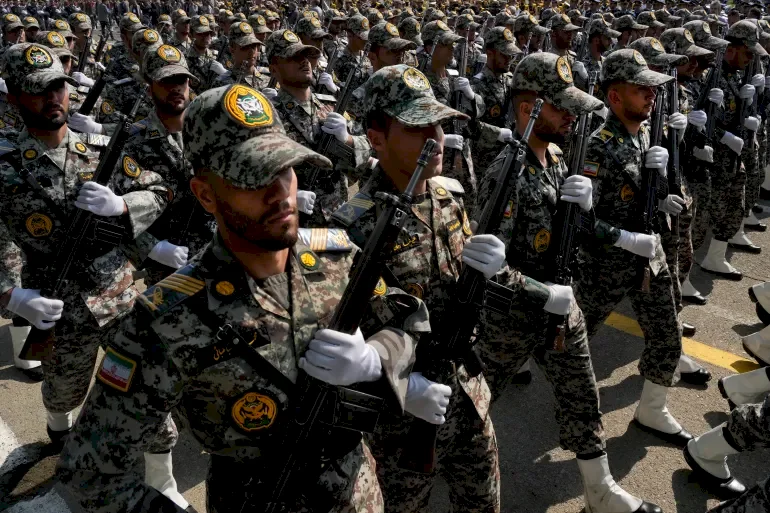
Britain Classifies the IRGC as a Threat to National Security
SadaNews - The British government has classified the Iranian "Revolutionary Guard" as a threat to national security, and will use the new powers granted by the National Security Act (State Threats) to prohibit its support, in a move that makes supporting or assisting it a crime punishable by up to 14 years in prison, according to British media reports.
The decision was announced by British Home Secretary Suella Braverman, while Minister of State for Security Angela Eagle stated in a written statement to Parliament that the United Kingdom has detected "activities associated with the (Revolutionary Guard) that pose threats to life and acts of intimidation on British soil."
Eagle added that the "(Revolutionary Guard) is a cornerstone of the Iranian security apparatus and is directly accountable to the Iranian Supreme Leader," noting that its role "goes beyond being a conventional military force to include intelligence activities, the use of proxies, and the expansion of influence to serve the goals of the Iranian state."
Under the decision, calling for support for the "Revolutionary Guard", expressing pro-IRGC views or beliefs, helping it carry out activities related to the United Kingdom, or engaging in any behavior that would provide material support for it, or accepting or retaining any material benefit offered by it or on its behalf, are crimes punishable by law by up to 14 years in prison.
The British government also announced the inclusion of the "Islamic Movement of Rightful Owners" (IMCR), linked to Iran, on the list of banned entities, following a series of attacks targeting the Jewish community in Britain.
The decision also included the "Volunteer Corps" belonging to the Russian military intelligence (GRU), against the backdrop of what the government described as sabotaging actions and other activities targeting the United Kingdom and Europe.
This decision comes after the government rushed to pass the national security law concerning state threats, fulfilling a pledge made by the Prime Minister last April.
Jonathan Hall, the independent reviewer of counter-terrorism and state threats legislation, concluded in a report published in May 2025 that there are "strong reasons" for establishing a classification authority akin to the embargo system outlined in the Terrorism Act of 2000, as an additional tool alongside existing measures, including sanctions.
The government stated that the aim of these powers is to "thwart the activities of individuals promoting the interests and goals of classified entities", and to enhance the authorities' ability to respond to threats associated with foreign states within the United Kingdom.
 Follow the latest Sada News via Google News
Britain Classifies the IRGC as a Threat to National Security

Airstrikes Target Sanaa Airport, Houthis Blame Saudi Arabia

Sudan.. Death Sentence Issued Against Hemetti and the Defense Council Welcomes Mediation E...

Zelensky is Moving to Change the Prime Minister; 4 Killed in Russian Attacks

Record Heat Wave in Europe Causes Over 10,000 Deaths

More than 10,000 deaths in Europe due to heatwave

Trump: My Approval Rating Stands at 59% as Prices Decline
