

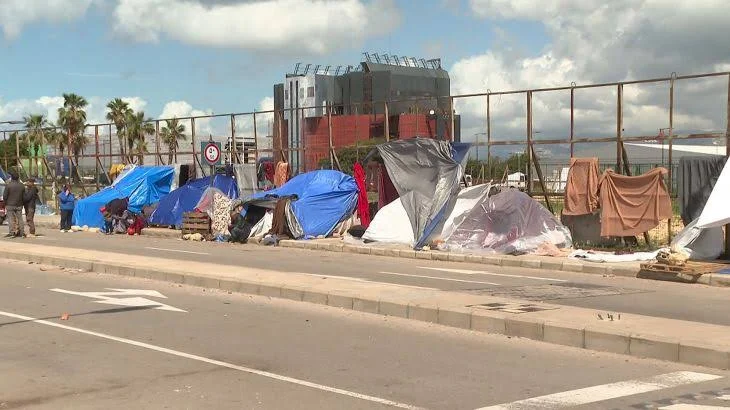
Water and Food Shortages Threaten Displaced People in Southern Lebanon
SadaNews - Thousands of Lebanese displaced individuals in schools in Southern Lebanon are suffering from a severe shortage of humanitarian aid, following a significant decline in the operations of charities and relief organizations after Lebanon and Israel signed a "framework agreement" under American sponsorship on June 26, 2026, which aims to end the conflict between them and address its root causes.
Field reports have revealed that the displaced are living in deteriorating conditions, with a complete lack of clean drinking water, declining food supplies and medications, amid official neglect and escalating cries for help.
According to a report aired on Al Jazeera Mubasher, the Omar Al-Fakhouri school complex in Southern Lebanon has turned into a shelter for hundreds of families whose homes were destroyed in border areas with Israel.
Relief coordinators confirm that the numbers have not decreased despite the cessation of hostilities, as all displaced individuals have completely lost their homes and have no other option but to remain in the schools while waiting for a fatal decision regarding their future.
Around 90% of charities and relief organizations have halted their activities after the ceasefire, citing that the schools have been evacuated, a claim that the displaced individuals vehemently deny.
Individual Efforts
The report reveals that the displaced are currently relying on limited individual efforts to secure their basic needs, especially drinking water, which has become almost nonexistent after distribution companies stopped supplying it.
The report highlights the suffering of the displaced in securing their daily needs, as they rely on a water well inside the Omar Al-Fakhouri complex, which suffers from repeated technical malfunctions, and they are forced to seek assistance from firefighters to deliver water to the upper floors.
Moreover, testimonies from the displaced confirm the complete lack of basic children's supplies such as milk, diapers, and cleaning materials, which were provided previously by organizations like UNICEF.
Parents also warn that the absence of cleanliness and sterilization in schools, along with poor sanitary facilities, exposes children to serious diseases, especially since some children are still in the breastfeeding stage and require continuous healthcare.
An elderly woman recounts her daily struggles, pointing out that she suffers from heart and blood pressure diseases, while her husband is diabetic, and they face difficulties in obtaining essential medications.
Drinking Water Crisis
The woman describes how her hands have been harmed due to the poor quality of water she uses for bathing and cleaning, forcing her to heat water in small pots on sterilization stoves for bathrooms and rooms, which increases the risks of disease transmission.
The elderly woman urges officials and charitable organizations to visit the school to see the conditions for themselves. She mentions that her young child has suffered from repeated vomiting episodes due to contamination and the lack of clean water to sterilize the feeding bottles.
Since March 2, Israel has been attacking Lebanon, resulting in the deaths of 4,322 individuals and wounding 12,203 others, in addition to the displacement of more than one million people, according to the latest statistics from the Lebanese Ministry of Health.
During this period, the Israeli occupation army has destroyed dozens of border towns and villages in Southern Lebanon, and established what it calls a security zone covering an area of approximately 700 square kilometers, according to Israeli Defense Minister Israel Katz.
Source: Al Jazeera
 Follow the latest Sada News via Google News
What Do Syrians Expect from the New People's Assembly?

Water and Food Shortages Threaten Displaced People in Southern Lebanon

Between De-escalation and Bab el-Mandeb.. How Does Tehran View the Escalation in Yemen?

Russia Bombs Kyiv Following Announcement of European Alliance to Enhance Support for Ukrai...

Britain Classifies the IRGC as a Threat to National Security

Airstrikes Target Sanaa Airport, Houthis Blame Saudi Arabia

Sudan.. Death Sentence Issued Against Hemetti and the Defense Council Welcomes Mediation E...
