
Financial and Banking Expert: Markets Perceive Gulf Tensions as 'Unusual Escalation Within Containment Ceiling'
Exclusive to "SadaNews" - Financial and banking expert Mohamed Salama confirmed that global financial markets perceive the U.S.-Iranian skirmishes in the Gulf region as an "unusual escalation," but it remains within a containment ceiling.
Salama told "SadaNews" that the impact of military escalation in the Arabian Gulf on global markets has so far been natural and absorbed, as it has led to a reasonable rise in oil prices and the value of the dollar.
He pointed out that markets are practically in a state of anticipation regarding whether events in the Gulf are likely to escalate further or if this is just a round of escalation that will soon end.
He noted that the general mood in the markets currently is to minimize the impact of this escalation in accordance with its size, indicating that further escalation would mean an additional rise in dollar and oil prices, adding, "If the escalation is significant, it will be accompanied by a substantial rise in oil and dollar prices; however, if the escalation is limited, the range of increases will remain so."
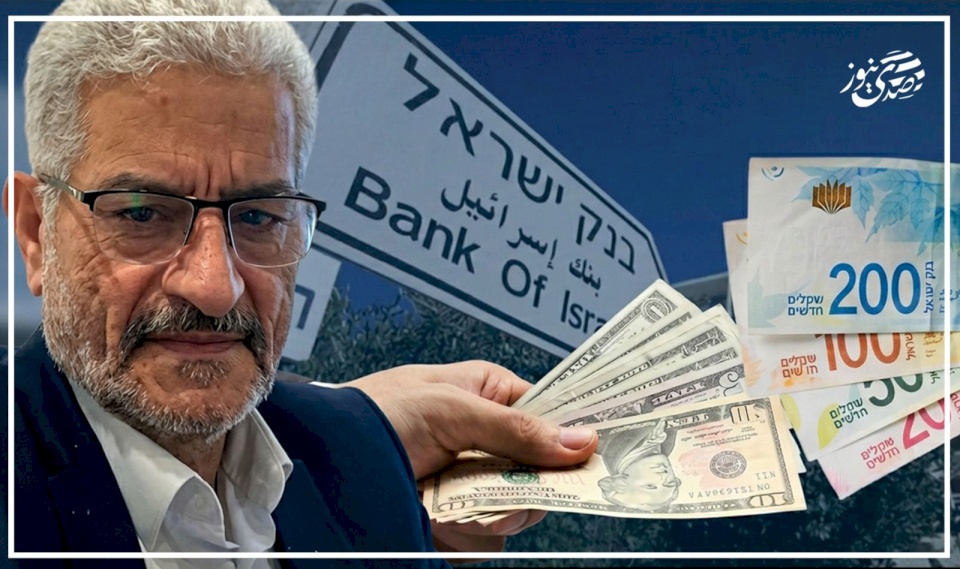
Regarding the relationship between the dollar and the shekel, Salama confirmed that the exchange rate is generally trending towards a stronger dollar against the shekel. He added, "This rise is gradually accelerating according to the pace of events, but markets tend to minimize the impact of the internal political situation in Israel and its effect on the economy, in addition to tracking U.S. stock indicators and how much they decline due to the escalation and the possibility of the escalation affecting Israel."
He continued, "This time, markets are not taking strong real directions, but they are reacting to events, especially since we are in summer vacation, and usually, large positions are not taken at this timing."
As for gold, Salama pointed out that the yellow metal is under pressure from technical decline, and this escalation enhances the downward trend, although the pace of decline is slow and ongoing.
Salama concludes by stating that if the conflict in the Gulf escalates and military tensions lead to a complete closure of the Strait of Hormuz, we will face a new wave of rising oil and dollar prices and a decrease in gold. Regarding the shekel, it will follow the indicators of U.S. stocks and the extent to which the Israeli economy may be affected by the war if it reaches Israel.
 Follow the latest Sada News via Google News
Financial and Banking Expert: Markets Perceive Gulf Tensions as 'Unusual Escalation Within...

New European Support Worth 41.7 Million Euros for the Palestinian Authority

Oil Surges Following New U.S. Strikes on Iran

Gold and Silver Prices Decline as Rate Hike Bets Grow Due to the Middle East

China Keeps Fuel Production High as Iran War Threatens Oil Shipments
Gold prices reach nearly $4,121 per ounce

Decline in Oil Prices and Rise in Gold Prices Globally
