

Paul's Initiative in Libya: A Real Settlement or a New Division of Influence and Resources?
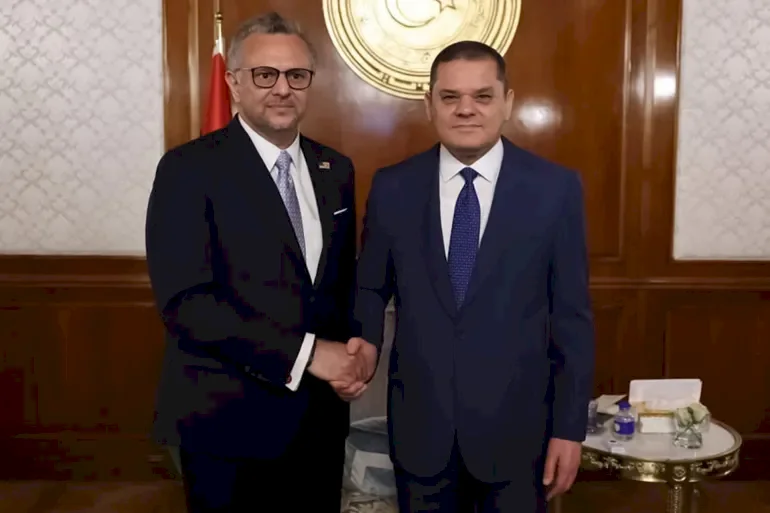
SadaNews - The discussion about an American initiative to resolve the Libyan crisis, led by American advisor for Africa and the Middle East, Musaad Pauls, has brought the Libyan file back into the forefront of political attention after years of stagnation following the collapse of the "Sakhirat" and "Geneva" processes.
The American approach to the Libyan file relies on gradual economic and security measures that the administration of President Donald Trump believes pave the way for ending the division and unifying state institutions, rather than starting with resolving constitutional and electoral disputes.
According to advisor Pauls, the plan focuses on unifying the government and sovereign institutions, ensuring stability in the oil sector, and encouraging American investments, alongside building channels of cooperation between military and security leaders in the east and west.
Pauls indicated that work on the initiative began more than a year ago, and several understandings have moved to implementation, including the approval of the first unified national budget in 13 years, conducting joint military exercises, and establishing a security operations room that includes representatives from both sides.
The arrangement of these steps reveals that Washington prioritizes managing state resources and stabilizing institutions before moving to more complex political issues.
While Washington talks about efforts to unify institutions and end division, several Libyan forces look at the initiative with caution, amid the absence of any published official document revealing its details.
According to Pauls, work on this path began more than a year ago, with the first meeting between representatives from eastern and western Libya held in the Italian capital, Rome, last September, with Washington expected to host the Libyan parties to sign a final agreement if final understandings are reached.
What Has Been Achieved?
Supporters of the initiative rely on a number of recent developments as indicators of progress in the American track, the most notable being:
The approval of the unified national budget for the first time since 2013.
Conducting joint military maneuvers in the city of Sirte under the supervision of the U.S. Africa Command (AFRICOM).
Additionally, the establishment of joint operations rooms between the east and west of the country.
Ali Al-Soul, a member of the House of Representatives, stated in a statement to Al Jazeera Net that the initiative started with a "successful launch" through the agreement on the unified budget and supporting the development path, as well as demonstrating seriousness in working to unify the executive authority and security and military institutions.
Al-Soul emphasized that the House of Representatives welcomes any initiative that serves the national interest and supports stability leading to elections.
Initiative Without a Document
Despite the political momentum surrounding the initiative, there is still no written copy or official document published outlining the proposed settlement or the nature of the next executive authority.
Naima Al-Hami, a member of the Supreme Council of State, stated in a special interview with Al Jazeera Net that most of what has been circulated so far "is based on media statements and press leaks," stressing that any vision for restructuring the executive authority must be subject to official negotiation between Libyan institutions and based on the political agreement and constitutional rules.
Al-Hami added that the initiative differs from its predecessors due to direct American political involvement and its linkage between political, security, and economic files, but she asserts that its success remains contingent on national consensus and respect for political legitimacy.
The nature of the proposed executive authority remains unclear, amidst questions as to whether the initiative is heading towards a unified government or a new executive council or a formula for sharing powers between competing forces.
There is also no clarity regarding the expected role of the Prime Minister of the National Unity Government, Abdul Hamid Dbeibeh, or that of the commander of the Libyan National Army, Khalifa Haftar, and his son, Saddam Haftar, despite Pauls describing Dbeibeh as a "key partner" in this path.
Reservations in Western Libya
Mousa Faraj, Vice President of the Supreme Council of State, stressed in a special statement to Al Jazeera Net that any international initiative cannot be a substitute for the Libyan-Libyan political process, but should be an assisting and complementary factor.
He asserted that any settlement will not gain legitimacy and sustainability without a broad consensus among various political and social components, reiterating the commitment to the principles of a civil state, peaceful transfer of power, and safeguarding national sovereignty.
The stance of the city of Misrata stands out as a significant factor influencing the fate of the initiative; the Misrata Council declared in April that it rejects any political settlement that leads to totalitarian rule or militarization of the state, demanding adherence to the constitutional path and conducting elections based on a clear constitutional basis.
Opposition voices within the city have also emerged, including Anwar Suwan, a member of the Misrata Shura Council, who declared his rejection of the initiative, while members of the Supreme Council of State and dignitaries from the city met with UN envoy Hanna Teiti to express their concerns about the lack of transparency in the proposed political initiatives.
However, political analyst Elias Al-Baroni believes that the scene within Misrata is not unanimous, suggesting that the closest position is "conditional acceptance"; some forces fear that any new arrangements may grant the military institution in the east additional political or security gains without mutual guarantees.
Oil and Stability
Al-Baroni stated that the American initiative represents an attempt to reshape the Libyan political system, while international relations expert Abdul Hamid Al-Naimi believes that American interest primarily relates to oil, gas, and energy security, in addition to the desire to prevent Libya from becoming an open arena for international competition.
In contrast to the "Sakhirat Agreement," which focused on creating new political institutions, and the "Geneva Process," which concentrated on forming a temporary executive authority, the American approach attempts to combine political, security, and economic tracks simultaneously.
Amid cautious welcome and increasing reservations, three scenarios seem to be presented to the initiative:
Its success in producing an agreement to be signed in Washington.
Or introducing amendments that accommodate the objections of the Libyan forces.
Or its failure, transforming it into a new attempt to manage division instead of ending it.
Until then, the stance of influential forces in the western region, particularly Misrata, remains one of the key factors in determining the fate of the American path and the future of the settlement in Libya.
Money: An Entry Point for Unification
Frank Talbot, a senior non-resident researcher at the Atlantic Council's North Africa Program, who previously worked as the Libya file officer at the U.S. State Department, asserts that Washington is not alone in considering the unified budget and appropriate spending as a prerequisite for stability.
Talbot explained in an interview with Al Jazeera Net that the World Bank, the International Monetary Fund, and the Central Bank of Libya have warned that uncontrolled spending in the east and west is one of the drivers of the economic crisis.
He said that executing the budget with integrity could curb the deficit and parallel spending accumulated by the authorities, alleviating inflationary pressures and exchange rate fluctuations, in addition to providing funding for the oil sector. However, he warned that the absence of oversight and accountability could turn the agreement into mere resource distribution between the two divisions, entrenching existing structures instead of unifying them.
According to Talbot, the American strategy is based on the assumption that gradual steps and building trust may achieve greater progress towards unification than negotiations over a comprehensive political settlement. Given the centrality of energy in the Libyan economy, stabilizing production and attracting foreign investment becomes a key test for the success of the approach.
In this path, Washington is relying on a combination of financial and diplomatic pressure, benefiting from the dominance of the dollar in Libya's foreign transactions. Talbot believes this gives the Treasury Department leverage over the resources that both authorities depend on, as well as the potential to reactivate sanctions against those obstructing the settlement under Executive Order 13726.
This is linked to a presidential decree issued by President Barack Obama in April 2016, primarily aimed at blocking the property of individuals and entities threatening peace, security, or stability in Libya, as well as suspending their entry to the United States.
Unequal Parties
In parallel with the financial track, the U.S. military command in Africa is working to enhance communication between military formations in the east and west. Libya hosted part of the "Flintlock 2026" exercises, presented by Washington as a step towards enhancing coordination and supporting the integration of military institutions in Libya.
However, Frederick Weary, a senior researcher at the Carnegie Endowment for International Peace in Washington, believes that the novelty of the American move lies in Washington's shift from supporting UN efforts remotely to direct intervention led by a presidential advisor to mediate between the eastern and western camps.
Weary told Al Jazeera Net that the unification of the budget is presented as a step towards political unification, but he warned that the plan deals with two unequal parties, as Haftar's camp has a more cohesive military structure and greater influence over oil resources, while the armed formations in the west are marked by more "fragmentation and division."
The researcher believes that presenting the initiative as a power-sharing agreement could conceal a trend towards granting Haftar's camp a more dominant role, which might push excluded armed forces and leaders to resist it.
Weary adds that unifying security institutions remains extremely challenging due to the imbalance of power between east and west, and the continuing foreign military presence, especially Russian in the east and Turkish in the west.
Weary does not yet see sufficient indicators that the initiative will lead to a genuine institutional unification, warning against reproducing the usual model of creating new councils and bodies comprising the same elites.
He concludes that granting ruling families and powers more authority in the hope that it will later transfer to a more inclusive government involves a fundamental issue, as there is no guarantee these parties will relinquish their influence once solidified.
Source: Al Jazeera
 Follow the latest Sada News via Google News
The General Secretariat of the Organization of Islamic Cooperation Affirms the Role of UNR...

Paul's Initiative in Libya: A Real Settlement or a New Division of Influence and Resources...

The Ghost of El Fasher Haunts El Obeid.. A Funding Gap Threatens the Lives of 20 Million H...

Dozens Dead and Injured in Russian Missile and Drone Attack on Kyiv

8 Dead and Injured.. Russia Launches Deadly Attacks on Kyiv

Aoun calls on those opposed to the "framework agreement" to present an alternative

The Organization of Islamic Cooperation Welcomes the UN Report on Occupation Against Child...
