

American Warning to Iran Against Undermining the Memorandum of Understanding Due to Hormuz Fees
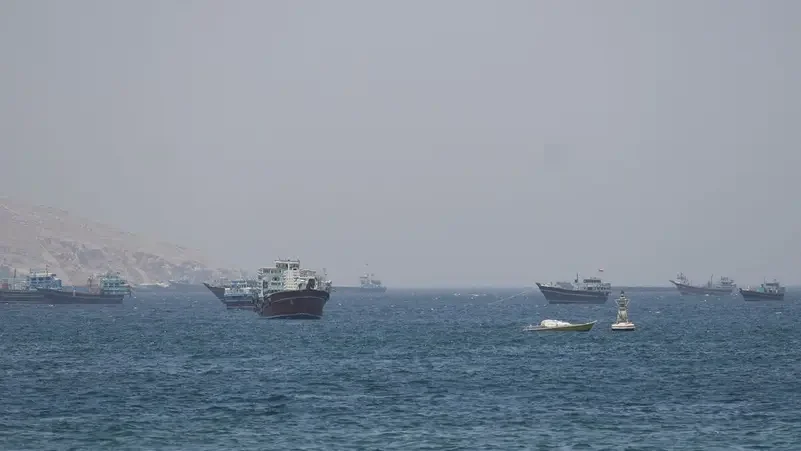
SadaNews - Axios reported that U.S. officials, including White House envoys Steve Witkoff and Jared Kushner, are trying to convey a message to Iran that its demand for tolls in the Strait of Hormuz could lead to the collapse of the agreement between Tehran and Washington.
According to the American official, Washington’s message to Tehran was that the amounts it could earn from oil sales, after lifting sanctions, would be much greater than imposing tolls.
Axios confirmed that the indirect meetings in Doha have gone well, and there was an understanding to keep matters calm over the next week to allow progress to be made in various areas.
Majid Al-Ansari, the spokesperson for the Qatari Foreign Ministry, announced the conclusion of separate meetings held by Qatari and Pakistani mediators on Wednesday in Doha with U.S. and Iranian negotiators.
Al-Ansari stated in a post on his X account: "The Qatari and Pakistani mediators concluded today in Doha separate meetings with the U.S. and Iranian negotiators, where positive progress was made regarding the issues related to the memorandum of understanding signed in Islamabad, based on the outcomes of the Lake Lucerne summit."
He added: "The parties agreed to continue discussions in the upcoming period, with a date for the next meeting to be set as soon as possible after the end of the funeral processions for the former Iranian leader."
On Wednesday, indirect technical talks began in Doha between U.S. and Iranian officials through mediators, as part of diplomatic efforts and attempts to ease tensions after strikes exchanged by the two sides.
Since mid-June, Washington and Tehran have been engaged in negotiations set to last for 60 days, renewable, under the memorandum of understanding they signed through Pakistani and Qatari mediation, aimed at ending the war that erupted in the Middle East following a U.S.-Israeli attack on Iran on February 28.
After exchanging attacks over control of the Strait of Hormuz, the United States and Iran announced on Tuesday that they would send officials to Qatar to hold meetings as part of implementing the terms of the memorandum of understanding.
The memorandum contained several provisions, the most significant of which include an end to hostilities on all fronts, reopening the Strait of Hormuz, lifting the U.S. blockade on Iranian ports, releasing a portion of Tehran's frozen assets, and conducting negotiations to reach a final agreement within a 60-day deadline, extendable.
U.S. President Donald Trump praised the progress made in the negotiations on Wednesday, noting that there were "very good meetings" between the two sides.
Trump explained that "based on how things are going, the denuclearization of Iran is going well. They have had very good meetings, and we will see what happens," adding, "We hit them very hard... but we get along very well."
 Follow the latest Sada News via Google News
Occupation begins demolishing inhabited house in Tuqu' south of Bethlehem (Video)

Qatar Announces "Positive Progress" in Talks Between America and Iran

American Warning to Iran Against Undermining the Memorandum of Understanding Due to Hormuz...

The Disappearance of "Kidnapping Suspicion" in Mukhmas Village and the Discovery of the Se...

Weather: Hot Conditions in Mountainous Areas, Very Hot in Other Regions

Israeli Poll: A Triumvirate Joint List Comprised of the Joint List, the Front, and the Ara...

Report: Israel Prepares Plans to Resume War on Gaza
