

The Ghost of El Fasher Haunts El Obeid.. A Funding Gap Threatens the Lives of 20 Million Hungry People in Sudan
SadaNews - In a military and chronological sequence reminiscent of the scenario of the fall of the city of El Fasher under the control of the Rapid Support Forces in Sudan, UN officials are warning of the possibility of repeating the scene of El Fasher in the city of El Obeid, the capital of North Kordofan.
In this context, the UN Humanitarian Coordinator Tom Fletcher issued a warning about the rising violence and deteriorating humanitarian situation in North Kordofan state, Sudan.
He added - on his account on the X platform - that increasing drone attacks have resulted in the deaths of civilians in North Kordofan and stressed that El Obeid must not become another version of El Fasher.
During an intervention on Al Jazeera, Acting Executive Director of the World Food Programme, Carl Skau, expressed his concern over the alarming humanitarian conditions in El Obeid due to the deterioration and disruption of basic services such as electricity and water, alongside the decline in food security, especially since the city is home to tens of thousands of civilians.
Skau talked about the urgent humanitarian situation that El Obeid is suffering from amid the challenges faced by the organization in delivering relief supplies into El Obeid.
He noted that access to the city requires passing through only one road, making it difficult to deliver a larger quantity of food, explaining that aid has reached nearly 100,000 people so far, alongside the organization’s efforts to support 250,000 civilians.
The situation has gone beyond access issues to also involve a funding shortfall, according to Skau, pointing out that the funding shortage for the World Food Programme has reduced the number of assistance that the organization could provide, as instead of helping 8 million people, it could only deliver food and relief items to 5 million.
In addition to 20 million Sudanese living in hunger hotspots, which relief organizations are unable to provide aid and food to, suffering from acute food crises, alongside 10 million displaced persons, including children suffering from malnutrition, according to Skau.
Referring to the repercussions of the funding shortage on assistance, Skau stated that the food the organization used to provide to families was sufficient for a month, but now it barely lasts for a few weeks.
Field Escalation
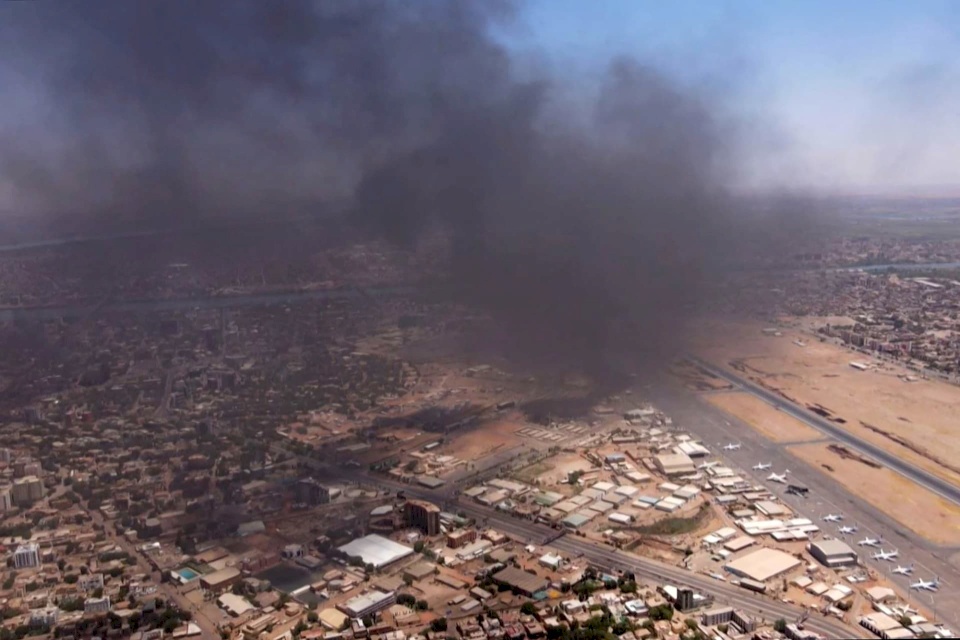
The city of El Obeid, the capital of North Kordofan state in western Sudan, has witnessed a significant field escalation during the first half of 2026, with the expansion of drone attacks and shelling by the Rapid Support Forces targeting health, educational, service facilities, residential areas, and displaced persons' camps.
El Obeid holds 80% of the total global production of gum arabic, which is used in all food and pharmaceutical industries, and the city's importance is not limited to this aspect, as it is considered the capital of Greater Kordofan and the dividing line between the east and west, according to the editor-in-chief of Al-Wasat newspaper, Fathi Abu Ammar, who previously spoke to Al Jazeera.
In a simple comparison between the fall of El Fasher and what is happening in El Obeid now, Abu Ammar links the two as the fall of El Fasher occurred after a series of atrocities committed by the Rapid Support Forces since the war erupted in April 2023, similar to those currently occurring in El Obeid.
Abu Ammar believes that the Rapid Support Forces will not relent from besieging El Obeid due to their ability to encircle and cut off roads, in addition to the lack of a peace horizon and the inflexible stance of the army, citing statements from the head of the Transitional Sovereign Council, Abdel Fattah Al-Burhan, who conditioned his rival's surrender and disarmament.
It seems that the situation in El Obeid is deteriorating day by day, politically and humanitarianly, as Al Jazeera’s open-source unit recorded targeting 16 civilian and service sites with drones and airstrikes between January and June 2026, including health and educational facilities and displaced persons' camps.
While analysts believe that the Rapid Support Forces will not relent from besieging the city, other perspectives highlight security threats related to air and artillery shelling, despite some roads (such as the Kosti-Tendleti road) remaining partially open for civilian movement, according to writer and political analyst Abdel Majid Abdel Hamid.
Abdel Hamid asserts that El Obeid will not be another El Fasher "without a doubt," as El Fasher fell due to suffocating siege and hunger, while the roads of El Obeid are completely open from Kosti and Tendleti, and citizens are leading their lives safely.
Source: Al Jazeera
 Follow the latest Sada News via Google News
The General Secretariat of the Organization of Islamic Cooperation Affirms the Role of UNR...

Paul's Initiative in Libya: A Real Settlement or a New Division of Influence and Resources...

The Ghost of El Fasher Haunts El Obeid.. A Funding Gap Threatens the Lives of 20 Million H...

Dozens Dead and Injured in Russian Missile and Drone Attack on Kyiv

8 Dead and Injured.. Russia Launches Deadly Attacks on Kyiv

Aoun calls on those opposed to the "framework agreement" to present an alternative

The Organization of Islamic Cooperation Welcomes the UN Report on Occupation Against Child...
