

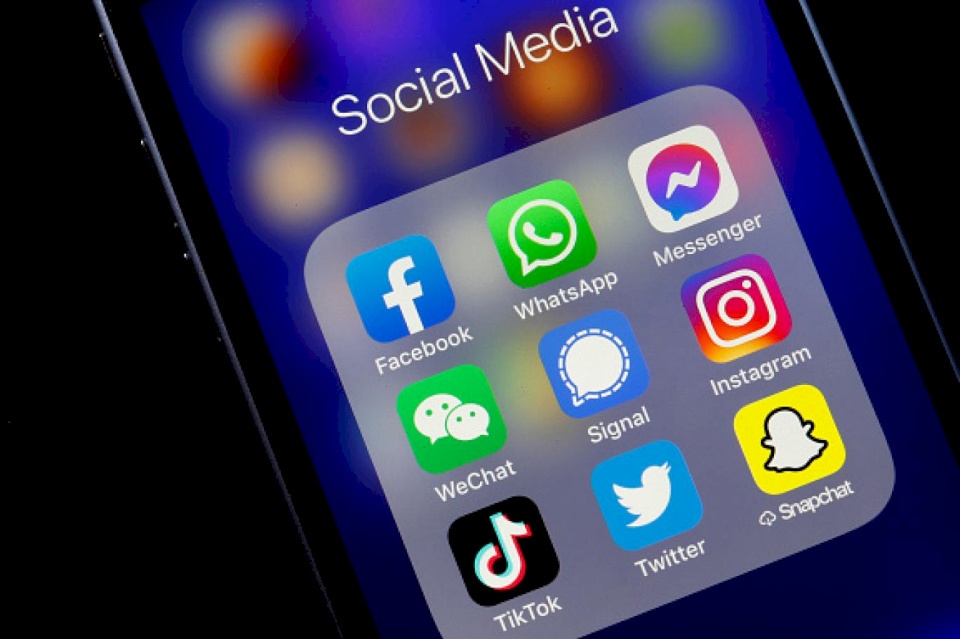
A Scientific Review Questions... Avoiding Social Media Does Not Improve Mental Health
SadaNews - Many people resort to taking a temporary break from social media applications like "Facebook" and "Instagram" in hopes of improving their mental health and reducing stress, but a new scientific review revealed that completely stepping away from these platforms does not necessarily lead to a noticeable improvement in mental health or life satisfaction.
The results of the analysis showed that this withdrawal or cessation of social media usage did not exhibit a clear impact, neither positive nor negative, according to PsyPost, quoting the journal Scientific Reports.
Benefits and Drawbacks at the Same Time
It is noted that in an increasingly digital communication-driven world, social media has become an integral part of daily life, providing users with opportunities to connect and receive social support, but at the same time, it can also cause stress, distraction, and continuous comparison with others.
Psychologists sometimes describe this situation as the "digital connection paradox," where smart devices provide constant access to information and people, but also immerse users in an unending spiral of notifications, messages, and continuous follow-ups.
Detoxing from Digital Toxins
To face these pressures, the idea of "digital detox"—or temporarily abstaining from social media usage—has spread in recent years as a means to regain focus, improve mood, and reduce anxiety.
This idea is based on the assumption that stepping away from the internet gives the mind a chance to recuperate from the pressure caused by social comparisons and the exaggerated ideal images portrayed by digital platforms.
Some theories also suggest that reducing screen time gives individuals more opportunities for exercise or face-to-face interactions, which are often linked to improved mental health.
Mixed Results
However, previous studies on this idea have provided contradictory results. While some research showed improved mood after stopping the use of applications, other studies indicated that some individuals felt isolated and lonely, while additional research noted no significant changes.
To understand the picture more clearly, researcher Laura LeMayhieu from the University of Antwerp, in collaboration with researchers from Ghent University, conducted a scientific review and meta-analysis of a large number of previous studies.
When analyzing the data, the researchers found no statistically significant effect of stopping social media on positive feelings like enthusiasm and energy, nor on negative feelings like anxiety, sadness, and anger.
The results also did not show any noticeable improvement in overall life satisfaction, even among individuals who refrained from using the applications for periods reaching up to a whole month.
The researchers indicated that the potential benefits of stepping away from the internet might be balanced by certain negative effects, such as feelings of social disconnection or loss of communication with others.
Balanced Use is Better
The study concluded that a sudden and complete withdrawal from social media may not be the optimal solution for improving mental health, suggesting that balanced use might be more effective and sustainable.
The researchers proposed focusing in the future on more realistic strategies, such as setting daily times for app usage or disabling some notifications, instead of a total disconnection from the digital world.
 Follow the latest Sada News via Google News
You Are No Longer Bound to Your Computer.. OpenClaw Reaches Mobile Phones Amid User Compla...

Senegal and Congo as Examples: Why Do Teams Collapse in the Final Minutes?

Heat Waves: Why Do Some People Die While Others Survive?

How 'The Last Miracles' Was Born from Naguib Mahfouz's Story? The Film Director Reveals th...

Hollywood Enters the 'Microdrama' Race, Betting on Smartphone Audiences

6 Surprises Await You at Samsung's Upcoming Conference.. What Will the Company Reveal?

Combining the Flavor of Coffee with the Calm of Tea.. Can Hojicha Become a New Competitor...
