

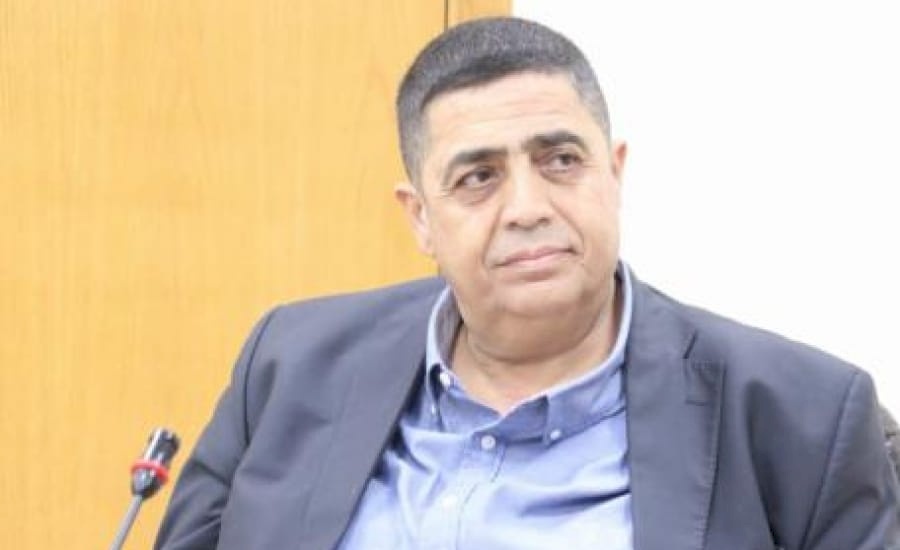
Al-Natsheh: The Palestinian issue is going through a critical phase, and Jerusalem is at the eye of the storm; we bet on the eighth conference to correct the struggle's compass
SadaNews - The Secretary-General of the National Popular Conference for Jerusalem, Major General Bilal Al-Natsheh, stated that Jerusalem today is experiencing one of its most complicated and dangerous phases, amid escalating Israeli policies aimed at changing its demographic, geographical, and historical character. He pointed out that the Palestinian issue is also going through a critical phase, but it has not lost its centrality, explaining that the eighth general conference of Fatah Movement, scheduled to be held on the 14th of this month, represents a real opportunity to reevaluate the organizational and political experience of the movement and to elevate the national cause, making it a top priority on the international, Arab, Islamic, and regional levels.
The Major General was responding to press questions directed to him ahead of the eighth conference of the movement, as follows:
Q: First, how do you read the overall scene in the city of Jerusalem at this sensitive stage?
A: Jerusalem today is experiencing one of its most complex and dangerous phases, amid the escalation of Israeli policies aimed at altering its demographic, geographical, and historical identity. What we are witnessing in terms of rapid settlement activity, demolitions, and attempts to Judaize the holy sites reflects the determination of the occupation to impose new realities on the ground. Nevertheless, the steadfastness of our people in Jerusalem is a genuine safety valve and confirms that the city remains alive with its Arab and Islamic identity.
Q: What are the most prominent challenges currently facing the people of Jerusalem?
A: The challenges are multiple and intertwined, starting from economic restrictions and imposing exorbitant taxes, and not ending with identity revocation and deprivation of citizens from their basic rights. There is also a direct targeting of the education sector, and attempts to impose the Israeli curriculum, in addition to the restrictions on worship in Al-Aqsa Mosque. All of this comes as part of a comprehensive strategy aimed at pushing Jerusalemites toward forced migration.
Q: How do you assess the overall situation of the Palestinian issue in light of regional and international developments?
A: The Palestinian issue is going through a critical phase, but it has not lost its centrality. It is true that regional transformations have affected the level of interest, but the Palestinian people still cling to their national rights. What is needed today is to rearrange the internal house and promote national unity to confront the political and field challenges.
Q: In light of the discussions about the convening of the eighth general conference of Fatah Movement, what is the importance of this conference?
A: The eighth general conference is a pivotal moment in the history of Fatah Movement, and it is a real opportunity to reevaluate the organizational and political experience of the movement. We need to inject new blood, enhance institutional work, and develop the political discourse to align with the current phase. Fatah has been and still is the backbone of the Palestinian national project, hence the importance of this conference.
Q: What are the main issues that should be discussed at the conference?
A: There are several key files, foremost among them are renewing the leadership, activating organizational frameworks, and strengthening the role of youth and women in the movement. It is also necessary to consider the political performance, the relationship with other factions, and ways to confront the challenges posed by the current stage, especially in Jerusalem and the Gaza Strip.
Q: How can Fatah Movement regain its momentum on the Palestinian street?
A: Regaining momentum requires a comprehensive review, starting from the organizational base, enhancing communication with the masses, reaching realistic programs that meet people's needs. Fatah must be close to the concerns of the citizen, and reflect his aspirations, which can only be achieved through diligent and sincere work.
Q: What role is expected from the international community regarding Jerusalem?
A: The international community must move from mere statements to real action. There are clear international resolutions affirming the rights of the Palestinian people, but the problem lies in their non-implementation. Jerusalem needs international protection and a firm stance to halt Israeli violations.
Q: A final word you would like to convey?
A: My message to our people, especially in Jerusalem, is that your steadfastness is fundamental, and we will continue to support you by all means possible. I also call for strengthening national unity, as it is the only way to achieve our people's aspirations for freedom and independence. Today, Jerusalem faces complex challenges that touch upon every detail of life therein, from housing and education to health, economy, and preserving national identity. The city's needs have become urgent entitlements requiring organized and responsible intervention. We are talking about the necessity of supporting the steadfastness of Jerusalemites by providing housing projects that protect them from destruction and displacement policies, enhancing the educational sector that is exposed to attempts of Israelization, as well as supporting the health sector, which suffers from a severe lack of resources.
He adds: These responsibilities do not fall only on one party, but are a collective national, Arab, and Islamic responsibility. At the forefront comes the Palestinian leadership and its official institutions, alongside a pivotal role for Arab and Islamic countries, which are expected to translate their political decisions into real financial and developmental support on the ground. The international community also has a legal and moral responsibility to protect the city and its residents according to international resolutions, emphasizing that Jerusalem needs not only positions but also a genuine commitment that translates into projects protecting the human, land, and identity. This is the challenge we all must face.
It is worth noting that Major General Bilal Al-Natsheh is considered one of the prominent political and security figures on the Palestinian scene, and his name is associated with national and organizational work in Jerusalem in particular. He joined the Palestinian National Liberation Movement (Fatah), where he progressed through its ranks and held multiple organizational tasks, especially within the frameworks of the movement in Jerusalem. He is known for his active role in defending the national identity of the city and confronting Judaization policies, in addition to his role in strengthening the steadfastness of Jerusalemites. Al-Natsheh has been arrested by the Israeli occupation authorities several times and spent many years in Israeli prisons, as well as facing restrictive measures that included exile or movement restrictions within Jerusalem. These experiences have enhanced his presence in the Palestinian street as a prominent militant figure. His name is also associated with work in the Palestinian security apparatuses, where he contributed to developing security and organizational work within the framework of the Palestinian Authority while maintaining his political presence within Fatah Movement. He currently holds the position of Secretary-General of the National Popular Conference for Jerusalem, a national framework concerned with the issues of Jerusalem and defending it against Israeli policies. Through this position, he has played a role in coordinating popular and official efforts to protect the city and enhance the steadfastness of its residents. Al-Natsheh is known for his leadership style and ability to work within collective frameworks, as well as his media presence in addressing Jerusalem issues. He is viewed as one of the figures who combine national, organizational, social, and political efforts in the context of the ongoing Palestinian struggle until achieving freedom and independence.
 Follow the latest Sada News via Google News
Sheikh Offers Condolences for the Martyrdom of Citizens in Deir Jareer

Ministry of Labor Calls for Registration in Licensed Private Vocational Training Centers a...

Occupation Forces Storm the Home of Major General Bilal Al-Natsheh in Jerusalem

The Working Group on Palestine of the Permanent Independent Human Rights Commission Issues...

Arrests in Occupation Attacks in the West Bank and Jerusalem

Ramallah and Al-Bireh Forces Mourn Al-Mughayer Martyr and Emphasize Popular Solidarity to...

More than 38,000 travelers crossed through the Karama crossing last week
