

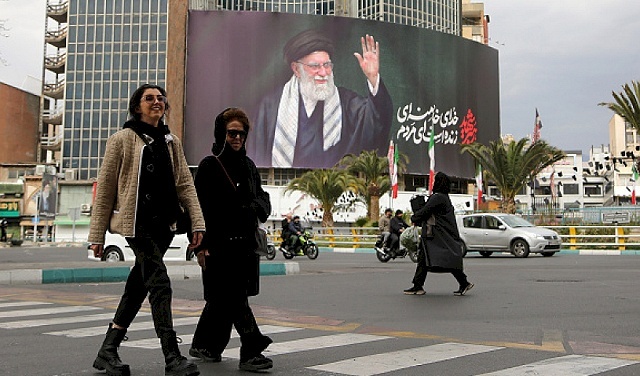
Analyses: Trump's Ending of the War Without an Agreement Could Strengthen Iran and Leave the Gulf More Vulnerable
SadaNews - Analyses suggest that US President Donald Trump risks allowing Iran to tighten its grip on energy supplies in the Middle East if he decides to end the war without reaching an agreement. This would consequently leave oil and gas producers in the Gulf states grappling with the aftermath of a war in which they played no role in igniting or shaping its course.
According to Reuters, this "could strengthen the power of Iran's clerical rulers, rather than crush them," after they "gained courage" from withstanding ongoing US and Israeli attacks since February 28, and firing at Gulf states and destabilizing global energy markets by effectively closing the Strait of Hormuz.
Trump stated in an interview conducted before a scheduled address to the nation that the US would end its war against Iran "very quickly," hinting on Tuesday that he might do so even without an agreement.
Ending the war without clear guarantees of what would happen next poses a great danger to the Gulf states, as it would leave the region susceptible to the consequences of a war whose results favor Iran.
Mohammad Bahron, director of the Dubai Center for Public Policy Research, stated that "the problem is ending the war without a real outcome... Trump may stop the war, but that does not mean Iran will do the same."
He added that Iran will continue to threaten the region as long as US forces remain stationed in their bases in the Gulf.
The essence of Gulf countries' fears lies in this imbalance, which is Iran exiting the war unscathed and with enhanced influence, as per Reuters, meaning being able to threaten shipping lanes, energy flows, and regional stability, while Gulf states bear the economic and strategic costs of an unresolved conflict.
Bahron stated that undermining freedom of navigation in the region would be a major concern for the Gulf.
He added that Iran may begin to "exploit the card of territorial waters" and impose its rules in the Strait of Hormuz, which is a vital artery for global energy supplies. He continued that "this goes beyond Hormuz. Iran has laid its hands on a pressure point in the global economy."
He considered that Tehran's ability to disrupt energy flows sends a clear message that anyone considering launching future attacks on Iran should rethink carefully.
This logic helps explain why Gulf states have avoided being dragged into the Israeli-American war.
Officials in the region told Reuters that their biggest concern is to prevent the war, which began as US-Israeli attacks on Iran, from escalating into something much more dangerous, a confrontation that reshapes the Middle East for decades to come.
Fundamental Miscalculation
The potential for escalation is exacerbated by what political analysts describe as a fundamental miscalculation by the United States and Israel regarding how Iran would respond to the unprecedented attacks targeting its leadership.
The assassination of Iran's Supreme Leader, Ali Khamenei, at the beginning of the war, which was intended to deliver a knockout blow, has reshaped the rules of engagement. His son, Mojtaba Khamenei, succeeded him, and what was supposed to topple the regime turned into a provocation for the Iranian rulers that calls for resistance and revenge.
Fawaz Gerges, a Middle East scholar, noted that "with one blow, Trump and Israeli Prime Minister Benjamin Netanyahu turned a geopolitical conflict into a religious and civilizational one. They elevated Khamenei from a controversial ruler to a martyr."
Regional analysts believe that the assassination of Ali Khamenei contributed to cementing the legitimacy of more hardline religious leadership and united the religious establishment and the Revolutionary Guard around the narrative of existential resistance, where surrender is impossible and resilience is sacred.
They say that the assumption that ousting top leaders would lead to the regime's collapse ignores Iran's multi-layered institutions and parallel power structures and its long track record of resilience, from eight years of war with Iraq to decades of US sanctions.
Analysts point out that the outcome is not Iran's surrender but rather its hardening, as Iran has become angrier and bolder, leaving the region to bear the consequences.
The Iranian Oil Weapon
Terrorism expert Magnus Ranstorp stated that decision-makers in the US and Israel had not entered the war unaware of Iran's ideological power, but it seems they underestimated Iran's capacity for resilience.
He added that the perception was that air superiority, achieved through destroying missile launch platforms and command centers and assassinating high-profile figures, would provide freedom of movement and strategic containment, but the Iranian regime has become more cohesive instead of breaking apart, partly because it is supported by parallel institutions designed to regenerate under pressure.
Political analysts in the region also say that Washington miscalculated Iran's ability for asymmetric response. They assert that Tehran does not need to win an air war, but its goal is to impose a cost on it. For decades, Iran has invested in identifying pressure points instead of confronting force with force, and considers energy assets and the Strait of Hormuz as central elements in its strategy.
By bombarding energy infrastructure and threatening the Strait of Hormuz, Iran has pushed oil prices and inflation worldwide to rise and shifted the pressure onto the US and its partners.
Analysts also state that Iran’s goal is not to win on the battlefield, but to impose economic suffering. They say that if the war becomes economically unbearable, mere survival becomes a victory for Iran.
Ending the war quickly without security guarantees would leave Gulf states exposed, with the likelihood that any future Iranian response would not be confined to the region.
Tehran retains the capacity to activate long-standing global networks using channels developed over decades to target the interests of Israel, the US, and their allies far beyond the battlefield.
Ranstorp stated that "they have not begun yet, but they have the enormous capability to punish the US and Israel," describing Iran as a multi-faceted threat whose arms can extend beyond the Middle East.
This threat looms over any US withdrawal. If the US withdraws and Israeli operations rely heavily on US support, Tehran will not consider this outcome a defeat.
Analysts from the region indicate that the theocratic (religious) system will have withstood and that the balance of power will not change drastically, and Iran will be viewed in the region as more dangerous than before.
 Follow the latest Sada News via Google News
Trump: We will make great progress with Beirut.. Aoun: It is time for Lebanon to be stable

The Lebanese Army Deploys in the South and Comes Under Gunfire; Israel Clarifies

Bezhkian: Directives from the Leader to End the State of No War, No Peace

Saudi Arabia condemns the Houthi threats to navigation and pledges to protect its ships

Global Warning to Americans Due to Rising Tensions in the Middle East

Houthi Movement Announces Ban on Maritime Navigation Against Saudi Arabia

Earthquake of 5.5 Magnitude Hits Western Iran
