

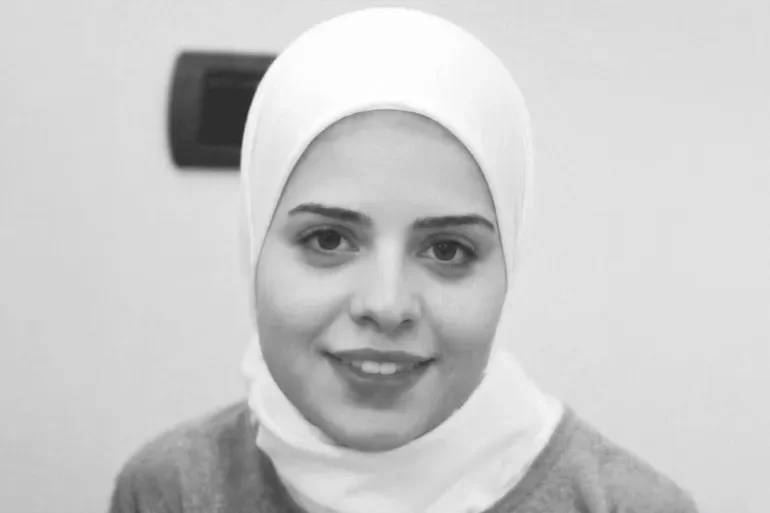
Who is Majdolin Al-Qadi who disappeared with Rania Al-Abbasi in Assad's prisons?
SadaNews - For more than 13 years, all news about Majdolin Al-Qadi has completely stopped following her arrest alongside Dr. Rania Al-Abbasi by Syrian military security forces in March 2013 during the rule of ousted Syrian President Bashar Al-Assad. This incident remains shrouded in mystery to this day and is classified among the most prominent cases of enforced disappearance in Syria.
While the case of Al-Abbasi and her family has become one of the most notable enforced disappearance cases in Syria, the fate of her secretary and assistant Majdolin Al-Qadi remains unknown, making her one of the thousands of Syrians who were swallowed by prisons during the years of war, leaving behind only unanswered questions and endless waiting.
Majdolin Al-Qadi worked as a secretary and assistant to Dr. Rania Al-Abbasi and was professionally close to her, before finding herself at the heart of one of the most controversial enforced disappearance cases in the country.
In March 2013, Al-Qadi was arrested with Al-Abbasi under circumstances that remain unclear to this day, and since that moment, no news about them has emerged, as neither family could obtain any reliable information about their detention site or fate.
Despite the extensive media and human rights attention given to Rania Al-Abbasi's case in recent years, Majdolin Al-Qadi's name has remained less prominent in the public sphere, despite her disappearance occurring under the same circumstances on the very same day.
Lack of Information and Conflicting Records
According to Syrian media, Majdolin Al-Qadi's name appeared only once in one of the air force intelligence files, without any additional details regarding her detention site or fate, while her family has remained without any news clarifying what happened to her over the years.
Media reports indicated that her name did not resurface later except once in a limited security record with the air force intelligence, without any indication of her fate or location of detention.
With the fall of ousted President Bashar Al-Assad's regime and the reopening of the file of missing and forcibly disappeared individuals, Majdolin Al-Qadi's name has returned to the forefront amid increasing demands to reveal the fate of thousands of Syrians who have gone missing within detention centers and security prisons throughout the years of war.
Widespread Reaction and Demands for Truth Disclosure
Her story has once again brought attention to the issue of enforced disappearances in Syria, as it garnered widespread engagement on social media platforms, where activists and journalists shared her case extensively, demanding to uncover her fate after more than 13 years of her disappearance.
These individuals affirmed that her name is directly linked to one of the most prominent enforced disappearance cases connected to Dr. Rania Al-Abbasi, in one of the most mysterious files during the years of war, pointing to the suffering of thousands of Syrian families who are still waiting to know the fate of their children.
In the same context, Hassan, the brother of Dr. Rania Al-Abbasi, stated that Majdolin "had no connection to any political activity, and was just an assistant in the clinic," adding that the absence of her name in this manner reflects the extent of the mystery surrounding cases of enforced disappearance in Syria.
Circulated testimonies indicate that Majdolin was not a political activist but worked as a secretary and assistant to Dr. Rania Al-Abbasi in her clinic in Damascus before disappearing with her on the same day in March 2013, under circumstances that remain unclear to this day.
Social media platforms circulate painful questions about the fate of the missing, as bloggers see that what happened to Majdolin Al-Qadi reflects a broader pattern of arrests affecting civilians, some of whom were detained due to suspicion or name similarities, only to end up with the fate of many of them remaining unknown.
Bloggers noted that the story of Dr. Rania Al-Abbasi in her clinic, alongside her assistant Majdolin Al-Qadi, evokes years of humanitarian and professional work before it transforms into one of the most painful cases in Syrian memory, confirming that what happened does not encapsulate the fate of just two individuals, but reflects the suffering of thousands of victims who have been absent from their families.
They added that Majdolin Al-Qadi was merely an employee in Dr. Rania Al-Abbasi’s clinic without any political activity or known reason for her arrest, questioning the fate of her and thousands of similar cases that remain unknown.
Bloggers concluded that this story represents an example of the extended suffering of thousands of missing persons whose cases remain open to this day.
 Follow the latest Sada News via Google News
Saudi Arabia condemns the Houthi threats to navigation and pledges to protect its ships

Houthi Movement Announces Ban on Maritime Navigation Against Saudi Arabia

Earthquake of 5.5 Magnitude Hits Western Iran

To Enhance His Support for "Increasing Children"... Vance Announces the Birth of His Fourt...

Death of a Mosque Imam in Armed Attack in Southeastern Iran

Rubio Reveals Circumstances Surrounding the Death of an American Soldier in Iraq

Reliable Threat.. US Embassy in Jordan: Evacuation of International Airport and Port in Aq...
