

Energy Shock Brings Coal Back to the Forefront and Hinders Emission Reduction Efforts
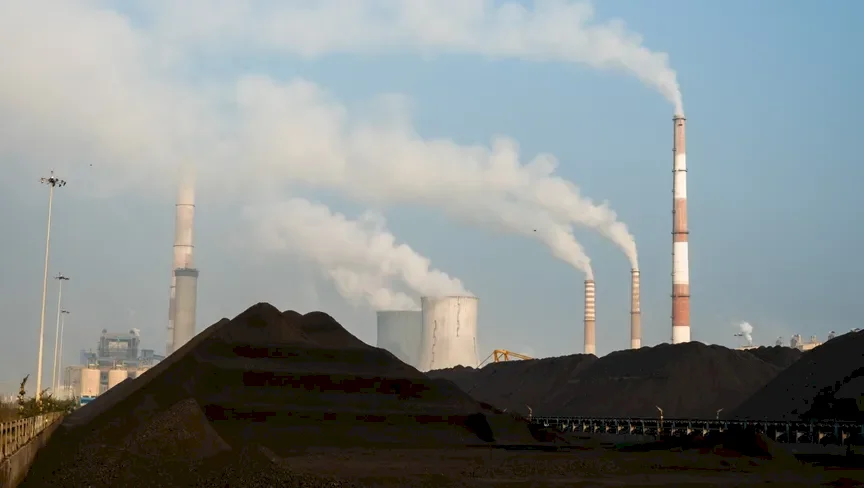
SadaNews - The escalation of conflict in the Arabian Gulf has led to turmoil in oil and gas markets. However, it may have given coal, the most polluting fossil fuel, its biggest boost in years.
Climate negotiators have been trying for decades to end the era of coal. This task was already challenging even before last month due to increasing energy demand in Asia, a growing focus on domestic self-sufficiency, and stalled programs aimed at transitioning emerging economies to cleaner energy sources.
However, the second gas supply crisis in just over four years is now pushing countries in Europe and Asia back to this fuel, seen as a readily available alternative.
With the addition of U.S. political support, the end of the coal era seems further away than ever, in a reversal that threatens to undermine years of progress in reducing harmful emissions.
Japan, one of the world’s largest gas importers, announced on Friday that it will expand the use of less efficient coal plants as part of its efforts to diversify electricity generation capabilities. In Bangladesh and India, coal plants are already bearing the burden of shortages from other sources.
Coal’s Comeback Under Gas Crisis Pressure
Even in Europe, where a significant amount of polluting energy sources have been phased out, both the Netherlands and Poland, as well as the Czech Republic, may see increased coal usage if gas prices remain high. Germany is considering restarting idle coal plants as a means to curb electricity prices.
Samantha Dart, co-head of global commodity research at Goldman Sachs, stated: “We are now witnessing a significant second shock in energy supplies.”
She added: “If you are in Asia and facing this situation again, it is possible that you will change your long-term strategy to rely more on coal for a longer period, while accelerating the build-out of renewable energy sources and reducing exposure to natural gas.”
Gas has long been promoted in the emerging world as a transitional fuel and a cleaner alternative to coal, as it is affordable, reliable, and a step towards generating energy without emissions.
However, sustaining this narrative has become more difficult after the disruptions following the Russian war on Ukraine, with rising prices and consequent declines in industrial demand. Then came the U.S. and Israeli strikes on Iran, along with the retaliatory attack on the giant Ras Laffan facility in Qatar, potentially leading to years of turmoil.
Gas prices in Europe and Asia remain below 2022 levels but have already risen sharply, leading many emerging economies to be excluded, as industrial customers across Asia are significantly affected.
Fatih Birol, the head of the International Energy Agency, stated: “High energy prices will prompt governments, industries, and households to seek other options.” He added: “I wouldn’t be surprised if we witness, even temporarily, upward pressures on coal use for both electricity generation and in the industrial sector.”
Europe Between Renewable Energy and Coal's Return
Europe's shift towards renewable energy has helped reduce the need for fossil fuel-based power generation, easing the shock. Additionally, the number of coal plants has declined, limiting the option of reverting to them. In fact, coal production capacity in Europe has fallen by 45% since 2015, according to BloombergNEF data.
However, with renewable energy sources unable to meet full demand, high gas prices may drive some consumers back to coal. Analysts at the London Stock Exchange Group estimate that European countries could generate about 20% more electricity from coal this summer compared to last year if the average price of the European benchmark gas reaches around 50 euros per megawatt-hour. This figure currently stands at about 54 euros.
Tony Knutson, global head of thermal coal markets at Wood Mackenzie, said: “This disruption is larger than the Russian war,” given its broader impact on more countries. He added that nations lacking enough gas will be forced back to coal. He stated: “I don’t think they have a choice.”
Asia at the Heart of the Transition to Coal
The largest transition toward coal is likely to occur in Asia, where heavy reliance on oil and gas from the Middle East, combined with limited capacity to absorb high costs in many cases, is already putting severe pressure on energy supplies.
Coal futures in Newcastle, the benchmark used for power plant fuel in Asia, have risen by about a third this year, reaching their highest level since 2024 earlier this month.
Major economies like Japan, South Korea, and Taiwan are significant importers of liquefied natural gas and have large fleets of coal plants, giving them the ability—and in some cases the incentive—to burn more of the dirtier fuel as gas supplies dwindle.
Japan will allow more coal plants in capacity auctions, and South Korea has indicated that it is considering rolling back restrictions on more polluting energy sources.
As for major consumers who are also large producers, such as India, the war-driven fuel shortages enhance the rationale for relying on coal, especially with rising temperatures ahead of summer increasing demand.
Authorities plan to request postponement of voluntary maintenance work on coal plants until after the peak demand period, and Tata Power’s four-gigawatt plant in Gujarat, which has been idle for months, has been instructed to operate at full capacity until June when the rains typically begin to cover the country.
Shares of Coal India, the world's largest coal producer, rose to their highest level since 2024 earlier this month.
Anandji Prasad, technical director at Western Coalfields, a subsidiary of Coal India, stated: “This crisis has given renewed momentum to coal in India.”
He added: “We have been intensively developing coal for power generation, but this crisis has highlighted the need to replace oil and gas products with coal.”
Cement plants in the country, which have long depended on petroleum coke, a byproduct of oil refining, are among those that had to reconsider as prices began to rise.
Harry Mohan Bangur, head of Shree Cement, stated: “We are increasing our coal stocks for the coming months, but this cannot be a long-term solution,” pointing to the lower ash content and higher calorific value of standard fuel. He added: “The cement industry needs petroleum coke.”
Global Impact Variability
The new government in Bangladesh has been forced to seek $2 billion in loans to import enough fuel to get through the summer.
The country is also expected to run its coal plants at maximum capacity in the near term, due to rising liquefied natural gas prices and worsening power shortages, according to Shafiqul Alam, the country’s lead analyst at the Institute of Energy Economics and Financial Analysis.
China, the world's largest coal consumer, is theoretically vulnerable to impact. However, it has actually benefited from a long-term campaign to diversify energy sources, and after a series of power outages in 2021 and 2022, it has boosted local coal production.
Nonetheless, it seems that the most fortified large economy is the United States. Massive shale oil production, alongside export capacity that was at peak levels even before the war, has kept gas prices relatively stable since the onset of the conflict, reducing the incentive to shift to coal.
However, political support from the Trump administration gave this fuel an additional boost. Earlier this month, Terra Energy announced a $1 billion investment in a project that will be the first new coal-powered energy project in the country in over a decade.
Increase in Coal Consumption
Globally, demand for coal was expected to start declining this decade. In December, the International Energy Agency stated that consumption in 2025 had risen to 8.85 billion metric tons, and it was expected to decrease by 1.4% by 2027.
However, this scenario now seems much less likely, within a trajectory that will ultimately push countries toward more clean energy, even if the current setback proves to be temporary.
Doug Arent, a senior researcher at the Paulson Institute for Global Energy Transformation at the Global Resource Institute, stated: “My intuition tells me that by 2026, energy consumption will not decline in line with pre-war assumptions.” He added: “The important thing is to keep the lights on and maintain productivity.”
(Michael Bloomberg, founder and majority owner of Bloomberg LP, the parent company of Bloomberg News, has pledged $500 million to the "Beyond Carbon" initiative, a campaign aimed at closing the remaining coal plants in the U.S. by 2030 and halting the development of new natural gas plants. He has also launched a campaign to close a quarter of the remaining coal plants in the world and all proposed plants by 2025.)
 Follow the latest Sada News via Google News
London Stock Exchange Enters the Era of 24/7 Trading

Shamaran Petroleum: Suspension of Oil Production in Duhok Fields in the Kurdistan Region o...

Dollar Steadies Near One-Week High Amid War Developments

Trump Imposes Tariffs on Canadian Imports... Ottawa Vows to Respond

Oil Prices Drop After Reports of Mediation Efforts Between the U.S. and Iran

Gold Price Rises Supported by Increased Buying Amid Lower Prices

Due to "Hazardous and Counterfeit Products".. Europe Fines "AliExpress" $627 Million
