

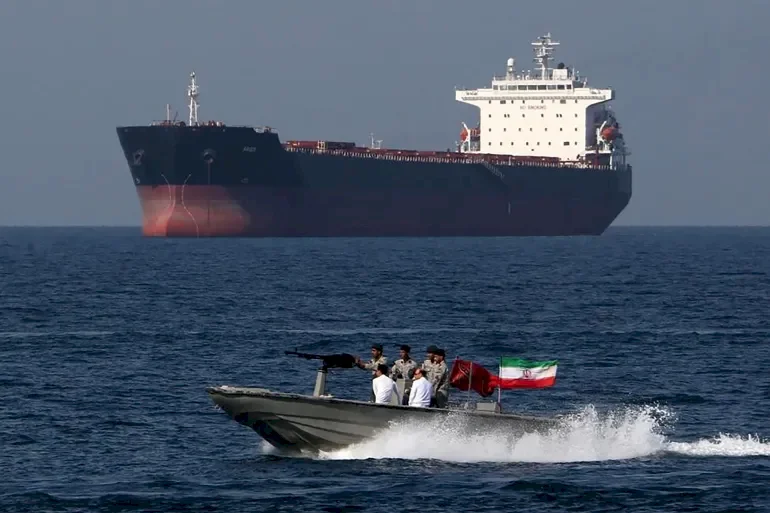
A Complex 3-Stage Plan: Possible Details for the Battle to Reopen the Strait of Hormuz
SadaNews - The Economist magazine warned that any attempt to forcibly reopen the Strait of Hormuz would require a long and complex military operation that passes through three main stages, each with its own challenges and dangers.
However, each stage involves significant risks, especially with Iran possessing various means of attack, including missiles, drones, fast boats, and naval mines.
The difficulty of the mission lies in the deployment of these capabilities along the Iranian coasts inside caves, tunnels, and fortified positions, making complete elimination extremely complex, even with intensive air strikes.
Stage One: Neutralizing Iranian Threats
The operation begins by targeting military capabilities that threaten navigation, such as fast boats, missiles, drones, and mines.
This phase primarily relies on air strikes, with the possibility of involving ground forces later, aimed at reducing Iran’s ability to attack ships. However, the deployment of these weapons in concealed locations along the coast makes complete eradication a difficult task.
Stage Two: Clearing Naval Mines
After reducing direct threats, the operation moves to sweeping the strait of mines, which is a complex and dangerous task due to the variety of mines and the potential for them to be planted using various means, including civilian ships.
The available capabilities for mine clearance are relatively limited, which could extend this phase for weeks.
The U.S. fleet currently has 14 destroyers in the region, but 6 of them are occupied protecting aircraft carriers, and it may take weeks to bring more destroyers to the Gulf, diverting additional U.S. forces from other areas of the world, such as Asia.
Although America's allies may be willing to help, most of them are hesitant to send ships while the war continues. Whoever executes this mission will face high costs and will drain more of the dwindling stock of anti-missile munitions of the U.S. and its allies.
The geography of the strait also presents additional challenges, as its width does not exceed 50 kilometers at its narrowest point and it is surrounded by mountains, meaning that American warships will have only a limited time to detect and respond to incoming missiles and drones. They will also need to execute precise maneuvers in strong currents to maintain close formation with escorting ships, all while assuming that commercial vessels are willing to face these dangers.
Stage Three: Escorting Ships and Securing Navigation
In the final stage, naval forces begin escorting oil tankers and merchant ships through the strait, and this step is considered the most dangerous, requiring intensive air and naval protection, with the continued risk of missile or drone attacks, making the operation continuous and costly without guaranteeing the complete elimination of threats.
The magazine concludes that carrying out these three stages will keep the participating forces in a state of danger for a long time in a complex combat environment with Iranian capabilities that can persist, making the success of the mission uncertain despite its high costs. Therefore, reopening the strait by force is an option with uncertain outcomes.
Source: Economist
 Follow the latest Sada News via Google News
Washington Investigates Possible Russian Role in Iranian Attacks on Its Sites

Mossad Chief Visited Washington to Discuss Iran and Its Nuclear Program

Report: Washington Informed Israel It Is Preparing to Intensify Attacks on Iran and Use St...

Organization of Islamic Cooperation Condemns Nauru's Decision to Open an Embassy in Occupi...

Video:: Nablus: Settlers Evict Tubasi Family from Their Home in Jaloud and Take Over It

Netanyahu: I Intend to Form a Broad National Unity Government

Syrian Foreign Minister Meets with Yasser Abbas in Damascus
