

Top News
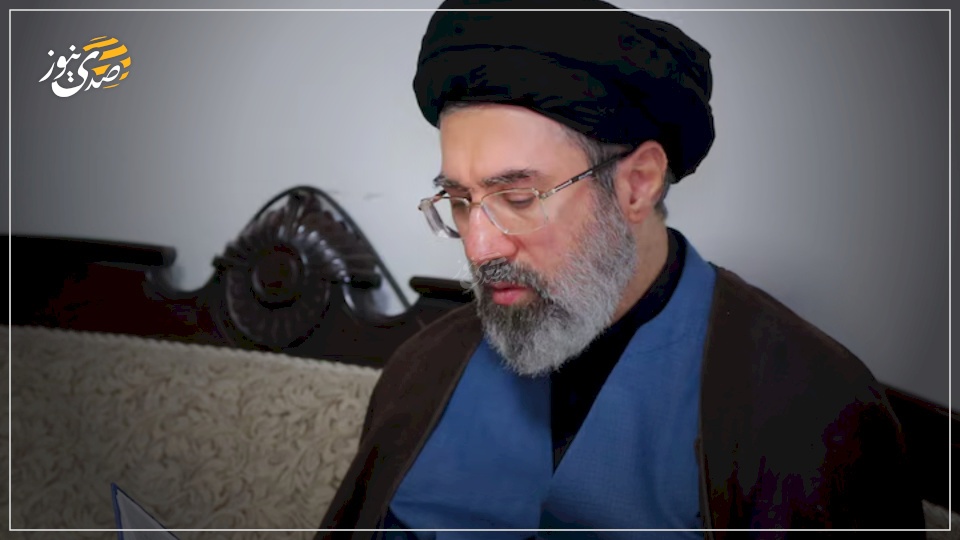
Report Reveals the Behind-the-Scenes of Choosing Mojtaba Khamenei as Iran's Leader
Translation SadaNews - The election of Mojtaba Khamenei as Supreme Leader may seem like a natural step, but behind this election is an intense power struggle between the political and military camps at the top of the regime. For nearly a week, a fierce political battle erupted over who would lead the Islamic Republic, which ultimately was decided by the camp supported by the Revolutionary Guards, but only after strong opposition from more moderate elements.
According to testimonies from senior Iranian officials, religious figures, and members of the Revolutionary Guards, the decision was made after a series of internal consultations and power struggles among various factions in the regime, as translated by SadaNews.
On March 3, the Assembly of Experts held a secret online meeting. Earlier that day, Israel bombed the assembly's headquarters in Qom, where many of its members reside and work in Shiite seminaries, resulting in the deaths of several officials. Since the assassination of Ali Khamenei, various factions within the Iranian leadership have been working to support their candidates and ensure the continuation of their influence.
The hardline faction sought to continue Khamenei's approach and respond firmly to domestic and foreign calls for a change in the regime. In contrast, the more moderate faction believed that Iran needed a new leader with a different leadership style and a change in policy, potentially including an end to the confrontation with the United States.
Mojtaba Khamenei had strong allies. Among his most prominent supporters were the Revolutionary Guards and its new commander, General Ahmad Vahidi, as well as General Mohammad Ali Jafari, considered one of the strategists of the current war. His appointment was also supported by the Parliament Speaker Mohammad Baqer Qalibaf, a former commander in the Revolutionary Guards. Joining this faction was Hossein Taab, the former head of the Revolutionary Guards' intelligence agency.
In contrast, opposition emerged from unexpected quarters. Ali Larijani, then Secretary of the Supreme National Security Council and the de facto ruler of Iran, told Assembly of Experts members that the country needed a more unifying and moderate leader, warning that Mojtaba Khamenei could be a controversial figure. President Masoud Bezhakian and a number of clerics and senior officials joined the opposition.
The moderate camp proposed several alternative candidates, including former President Hassan Rouhani, who was involved in the 2015 nuclear deal negotiations with the U.S., and Hassan Khomeini, the grandson of the founder of the Islamic Republic and close to reformist parties. Ali Reza Arawi, a cleric and jurist, a member of the Assembly of Experts and the interim leadership council, was also nominated as a consensus candidate.
However, as discussions continued, some members of the Assembly of Experts increasingly felt the need to choose a leader who would continue Khamenei's approach and avenge his death, especially amid public anger against Trump and Netanyahu.
In the first round of voting, which took place on March 3, Mojtaba Khamenei managed to secure a two-thirds majority, the required majority for election. As a result, authorities began preparing for the official announcement of his appointment at dawn on March 4.
However, the announcement was halted at the last minute. Ali Larijani ordered a delay on the grounds that it could endanger Khamenei's life, following threats from the United States and Israel to eliminate any successor to the position.
According to the translation by SadaNews, this postponement gave the moderate camp a final opportunity to overturn the decision. Larijani argued that the vote was invalid because the constitution requires in-person voting, not electronic. At the same time, the assembly was also informed that Mojtaba Khamenei himself was unwilling to assume the position.
However, his close aides claimed that this was merely a formal rejection, following the tradition among Shiite clerics to express reluctance for power before accepting the position.
Later, two of Ayatollah Khamenei's closest aides provided additional evidence. According to them, the late Supreme Leader had told them that he did not want his son or any other family member to succeed him, as familial succession contradicts the spirit of the Islamic revolution that overthrew the monarchy. They also presented a written will containing a similar message and requested the assembly to annul the vote.
This move puzzled the members of the Assembly of Experts and heightened tensions. At the same time, it raised concern among the Revolutionary Guards generals who supported Mojtaba Khamenei.
The conflict escalated further when President Bazakhian announced on March 7 that Iran would halt its attacks on Arab countries in the Persian Gulf and even apologized.
According to SadaNews, the Revolutionary Guards generals who led the war and supported Khamenei strongly condemned this decision, pressing the Assembly of Experts for a final vote and immediate announcement of the new leader.
Hossein Taab, the former head of the Revolutionary Guards' intelligence agency, summoned all 88 members of the Assembly of Experts and urged them to vote in favor of Khamenei. According to Iranian sources, he told them that supporting the son of the Ayatollah was a moral, religious, and intellectual duty.
On March 8, the Assembly of Experts convened again online, where its members discussed the demands of the moderate faction, the issue of respecting the will of the late leader, or exercising their independent authority.
Ultimately, it was agreed that the conditions of war allowed for considering electronic voting as valid. Each member of the assembly wrote the name of the candidate on a paper, placed it in a wax-sealed envelope, and then the delegates delivered the envelopes to a committee that sorted and certified the votes.
The result was clear, but it was not unanimous. Mojtaba Khamenei received 59 votes out of 88, the two-thirds majority required for election.
Just before midnight, official media announced that Iran had a new Supreme Leader. Shortly thereafter, congratulatory messages and declarations of loyalty began to pour in, including from parties that had previously attempted to obstruct his rise to power.
Source: The New York Times
 Follow the latest Sada News via Google News
Read Also

Washington Investigates Possible Russian Role in Iranian Attacks on Its Sites

Mossad Chief Visited Washington to Discuss Iran and Its Nuclear Program

Report: Washington Informed Israel It Is Preparing to Intensify Attacks on Iran and Use St...

Organization of Islamic Cooperation Condemns Nauru's Decision to Open an Embassy in Occupi...

Video:: Nablus: Settlers Evict Tubasi Family from Their Home in Jaloud and Take Over It

Netanyahu: I Intend to Form a Broad National Unity Government

Syrian Foreign Minister Meets with Yasser Abbas in Damascus
