

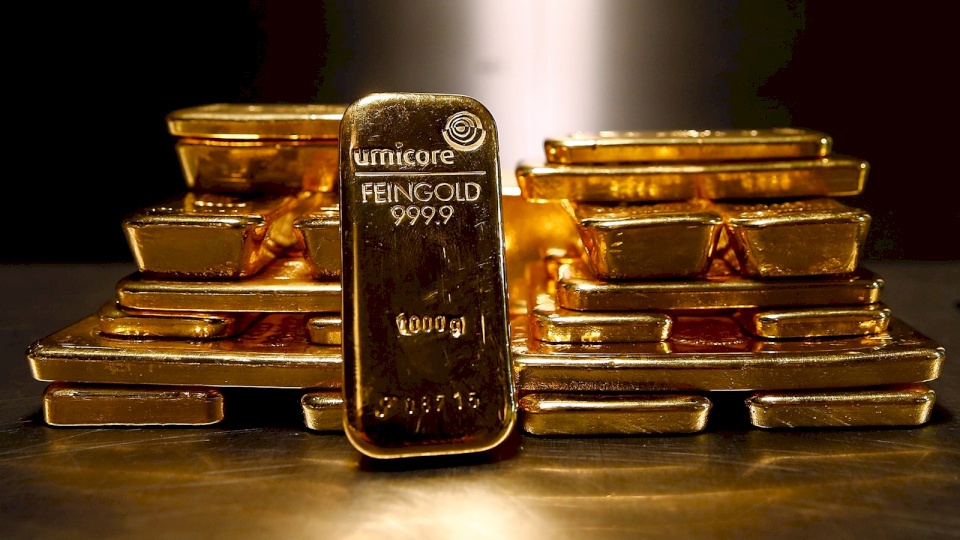
Gold Prices Rise Above $5,200 Amid Expectations for Iran War Path
SadaNews - Gold prices rose after a report indicated that the International Energy Agency is proposing the largest withdrawal from oil reserves ever, in order to mitigate the demand shock caused by the war in the Middle East.
Gold surpassed the $5,200 per ounce level after gaining 1% in the previous session.
The proposal by the "International Energy Agency," reported by the "Wall Street Journal," involves releasing quantities exceeding 182 million barrels that were pumped into the market following the Russian war on Ukraine in 2022.
Oil prices surrendered their previous gains, while an index measuring the performance of the U.S. dollar fell by as much as 0.1%.
With the U.S.-Israeli war against Iran entering its twelfth day, investors were also processing conflicting messages from U.S. officials.
The White House stated that the United States has not escorted any oil tankers through the Strait of Hormuz, contradicting a social media post by Energy Secretary Chris Wright that was later deleted. Shipping traffic has nearly halted through this waterway, which typically handles about one-fifth of the world’s oil and liquefied natural gas trade.
Price Fluctuations Heighten Inflation Fears
For gold, rising energy prices have increased fears about inflation, which in turn diminishes expectations that the Federal Reserve and other central banks will cut interest rates.
High borrowing costs are a negative factor for non-yielding precious metals. Additionally, gold, which has risen by about one-fifth this year, serves as a source of liquidity that investors use to support other parts of their portfolios.
David Wilson, the commodity strategy manager at BNP Paribas, stated: "The metal has suffered somewhat from the strength of the U.S. dollar and the drop in U.S. stocks last week, as gold was sold to cover stock margin requirements."
He added: "Demand for physical gold, especially in Asia, provided support at around $5,000 per ounce."
Since the outbreak of the war, the amount of gold held in exchange-traded funds has declined. Total holdings dropped by about 30 tons last week, marking the largest weekly sell-off in over two years, according to data compiled by Bloomberg.
However, the precious metal has managed to maintain its trading above the $5,000 per ounce level, benefiting from some support as a safe-haven asset during a period of geopolitical and trade upheaval.
Alexander Carrier, portfolio manager at DNCA Invest Strategic Resources, stated: "Overall, I believe it makes sense to buy gold on dips."
War Pressures Energy Markets
At the same time, the war continues to disrupt crude oil production and refining operations across the Middle East.
The United States and Israel have conducted their most intense attack days yet against Iran, and will not back down until it is defeated, according to statements from the Pentagon on Tuesday, in a more hardline tone after President Donald Trump previously hinted that the conflict may end soon.
Traders have also reduced their expectations regarding the amount of monetary easing the Federal Reserve may provide this year, prior to the release of anticipated data on Wednesday, which is expected to show that inflation in February remained well above the central bank's target, even before the outbreak of the war.
Gold rose in spot transactions by 0.5% to reach $5,217.5 per ounce as of 9:39 AM in Singapore. Silver also rose by 0.4% to $88.67, while platinum and palladium increased.
In contrast, the Bloomberg Spot Dollar Index, which measures the performance of the U.S. currency, fell by 0.1%.
 Follow the latest Sada News via Google News
London Stock Exchange Enters the Era of 24/7 Trading

Shamaran Petroleum: Suspension of Oil Production in Duhok Fields in the Kurdistan Region o...

Dollar Steadies Near One-Week High Amid War Developments

Trump Imposes Tariffs on Canadian Imports... Ottawa Vows to Respond

Oil Prices Drop After Reports of Mediation Efforts Between the U.S. and Iran

Gold Price Rises Supported by Increased Buying Amid Lower Prices

Due to "Hazardous and Counterfeit Products".. Europe Fines "AliExpress" $627 Million
