

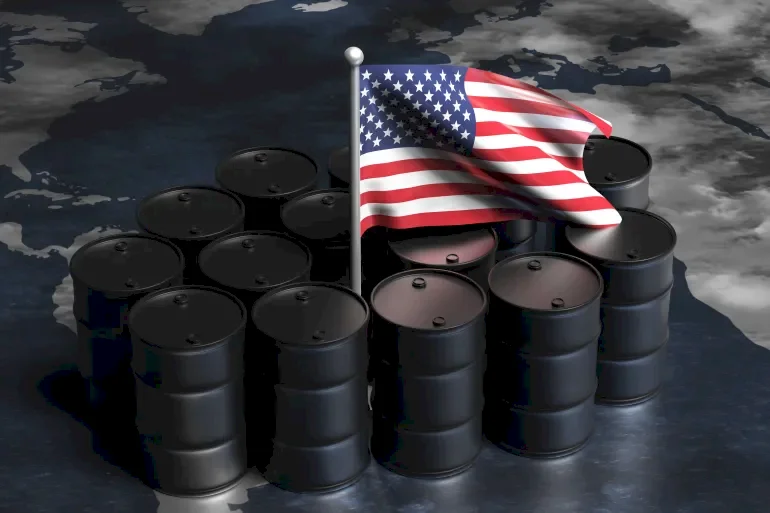
Warning of Rising Gasoline Prices in America Due to War on Iran
SadaNews - Analysts expect that the average retail gasoline price in the United States will exceed $3 per gallon today, Monday, for the first time in more than 3 months, as the war on Iran, a major crude oil producer, disrupts global oil flows.
This poses a significant risk to President Donald Trump and his Republican Party ahead of the midterm elections in November, as inflation remains a major concern for voters.
Trump has repeatedly claimed – often inaccurately – that he is the reason for the drop in gasoline prices since returning to office last year.
Reuters quoted Patrick De Haan, an analyst at GasBuddy, which tracks retail prices, saying that the average gasoline price may exceed $3 per gallon today for the first time this year.
Data from the company shows that the last time prices exceeded $3 nationwide was in November 2025, but they dropped to $2.85 in February.
De Haan stated on a blog after the strikes on Iran, "Oil will move first. Gasoline will follow – but gradually."
Iran is one of the largest oil suppliers in the world, and the Iranian Revolutionary Guard has announced that passage through the Strait of Hormuz is currently not safe.
The strait is of great importance in the Gulf as about one-fifth of the world's oil passes through it.
At least 3 tankers have been damaged in the region, and major shipping companies have announced they will avoid the strait.
Oil Prices Surge
Oil prices jumped by 13% to their highest levels in months today, Monday, as Iran and Israel escalated their attacks, resulting in damage to oil tankers and disruption of shipping in the Gulf region.
Brent crude futures rose to $82.37, the highest level since January 2025, in the first trading of futures contracts after the U.S. and Israel attacked Iran and assassinated Iranian leader Ayatollah Ali Khamenei on Saturday.
Brent crude prices surged on Sunday by 8-10% to around $80 per barrel in off-exchange trading, amid rising tensions in the Middle East.
Bob McNally, head of the Rapidan Energy Group consultancy, stated that it seems the U.S. administration is now willing to accept the political risks resulting from rising crude prices to achieve its foreign policy goals.
McNally added, "They are fully aware of these risks, and I expect they will focus on reducing the duration of Iran's control over energy flows through the Strait of Hormuz."
McNally explained that the White House may also announce its readiness to draw from the U.S. Strategic Petroleum Reserve to prevent prices from rising significantly, according to SadaNews monitoring.
Former President Joe Biden had authorized a historic withdrawal from the Strategic Petroleum Reserve in 2022 to combat rising prices after the outbreak of the Russian-Ukrainian war, a move that Trump and other Republicans heavily criticized.
Seasonal Demand
De Haan noted that gasoline prices in the U.S. were already rising before the U.S. attack on Iran, as refineries began in recent weeks to produce summer-grade fuel, which is more expensive, as required by environmental regulations to reduce air pollution in warm weather.
Gasoline demand tends to peak in the U.S. during the summer holiday season.
Tom Kloza, chief oil analyst at the fuel supply company Gutt, stated, "We expected gasoline prices to rise to between $3.10 and $3.25 per gallon under stable conditions in the Gulf. But we will reach this level quickly."
Kloza added, "The events we've seen over the past 48 hours will lead to greater increases."
This price rise follows declines that lasted for months since the middle of last year, primarily driven by high inventory levels and weak demand growth.
Large inventories may provide protection against global market disruptions and mitigate current price hikes.
Gasoline inventories in the U.S. stood at 254.8 million barrels as of February 20, a level close to its highest since the COVID pandemic, according to the latest available government data. These inventories are sufficient for 30 days.
A report from the Washington Post warned that rising oil prices in global markets could lead to a general rise in prices in the United States.
The newspaper stated that the rising fuel price is the biggest concern for U.S. consumers, warning that rising inflation rates in America will make it difficult for the Federal Reserve (the central bank) to lower interest rates.
The newspaper also noted that the widening scope of the war could negatively impact the New York Stock Exchange and erode the investment gains that Trump recently mentioned in his State of the Union address.
 Follow the latest Sada News via Google News
London Stock Exchange Enters the Era of 24/7 Trading

Shamaran Petroleum: Suspension of Oil Production in Duhok Fields in the Kurdistan Region o...

Dollar Steadies Near One-Week High Amid War Developments

Trump Imposes Tariffs on Canadian Imports... Ottawa Vows to Respond

Oil Prices Drop After Reports of Mediation Efforts Between the U.S. and Iran

Gold Price Rises Supported by Increased Buying Amid Lower Prices

Due to "Hazardous and Counterfeit Products".. Europe Fines "AliExpress" $627 Million
