

Iran War: 3 Scenarios for Oil and the Economy
SadaNews - The level of uncertainty intensifies in the early days of the war, expanding the circle of potential scenarios for Iran, oil prices, and the global economy alike.
On one side, a ceasefire opens a window granting Iran the opportunity for reconstruction, which could bring oil prices back to a level near $65 per barrel, the prevailing average before the war talks added a geopolitical risk premium to the market.
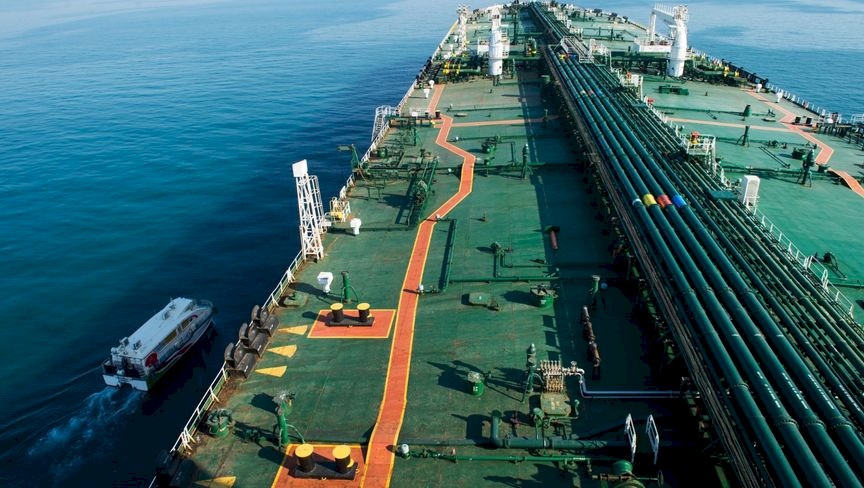
Read more: The Strait of Hormuz under the pressure of war... Oil and gas tankers reduce passage
On the other hand, escalating conflict, with regional oil infrastructure being targeted and the closure of the Strait of Hormuz, could drive prices up to around $108 per barrel, spiking global inflation and stifling growth.
What just happened?
A joint U.S.-Israeli attack on multiple sites in Iran began on Saturday morning local time and is ongoing. The attack resulted in the death of Iran's Supreme Leader and several senior leadership members and other officials.
Iran is currently being managed by a temporary committee including the president, the head of the judiciary, and a cleric from the Guardian Council. Iran's response to the strikes was quick and broad-reaching. Tehran launched missiles at Israel and several other countries in the region.
The attacks have largely spared oil so far. Iran has warned ships not to cross the strait. Three tankers in the region were targeted, but the strikes did not affect regional production capacities otherwise.
Bloomberg Economics Assessment
The U.S. and Israel have adopted an aggressive strategy, striking Iran amidst ongoing negotiations and killing several prominent leadership figures. They have carried out extensive and intense airstrikes.
Iran, in turn, has raised the stakes of confrontation, responding more swiftly and broadly compared to previous conflicts. However, so far it has not reached the level of maximum response, which could include targeting oil infrastructure and officially closing the Strait of Hormuz.
What will happen next?
Three main scenarios appear possible over the next three to four weeks:
First: The U.S. and Iran agree to a ceasefire since neither wishes to prolong the conflict. The Islamic Republic remains intact. The ceasefire would eliminate the threat of oil supply disruptions, gradually easing the risk premium on prices, bringing oil back to its pre-escalation level of about $65 per barrel.
Second: The war leads to a change in the Tehran government, which may also reduce threats to energy supplies, while over time the risk premium associated with Iran fades. Of course, if the change results in chaos, Iranian production could be jeopardized. However, the wider region might avoid the fallout, which is more significant for global oil prices.
Third: The war continues, either at the current level or with Iranian escalation by targeting energy infrastructure in the region or oil tankers, or increasing disruptions to the Strait of Hormuz. Iran's partners in Iraq, Lebanon, or Yemen may join the fighting.
What happens to oil prices depends on the trajectory of the war:
If the war continues without attacks on oil installations and avoids disrupting the Strait of Hormuz, prices may hover around $80 per barrel.
However, if the closure of the Strait of Hormuz continues, it could push oil prices to around $108 per barrel.
How do lost barrels affect prices?
The law of supply and demand states that prices rise when supply decreases. Our rough rule of thumb, drawn from historical cases, academic research, and market behaviors during the Iran-Israel War in June 2025, indicates that a loss of 1% of supplies raises oil prices by about 4%.
Iran supplies about 5% of the world's oil supply. A complete halt of its production could raise prices by around 20%.
Approximately 20% of the world's oil supplies pass through the Strait of Hormuz. Closing the strait means a spike of about 80% in prices, thus reaching the scenario of $108 per barrel.
The decision by the "OPEC+" alliance to add around 0.2% of world oil supplies seems more symbolic than practical and will not compensate for losses in case the strait is closed.
Who wins and who loses from rising oil prices?
Rising oil prices create winners and losers. Higher prices transfer income from oil-importing countries to oil-exporting countries.
In the United States, expensive oil may remain negative but to a much lesser degree than in the past. Shale oil has transformed the U.S. from a major oil importer into an exporter, sharply reducing the impact of rising prices on growth.
American consumers remain losers with rising fuel costs, pressuring disposable income and curbing spending in other areas. For the Federal Reserve, whether this calls for a policy response largely depends on whether inflation expectations remain stable.
China, Europe, and India - unlike the U.S. - are large oil importers, making them more susceptible to slower growth and increasing inflation.
The main beneficiaries will be exporters like Russia, Canada, and Norway, who are oil producers geographically distanced from the conflict zone.
For oil producers in the Middle East, the price surge driven by disruption represents a double-edged sword. Exporters like Saudi Arabia, Iraq, and the UAE normally benefit from higher prices, but only if disruptions do not affect them. Economic blows will exacerbate the security costs they face in response to Iranian retaliation.
What to watch? 3 Indicators
1) Attacks on energy infrastructure: additional strikes on oil tankers, or any more disruptions to the Strait of Hormuz. These factors are crucial for the continuation of oil supplies to the world. Any severe spike in crude prices might drive President Donald Trump to seek an early end to the war.
2) Iran's ability to continue its attacks: Iran launched a large number of missiles during the first two days of the war, depleting a significant part of its stockpiles. While it is also using drones, which are cheaper and easier to produce, their effectiveness is lower and do not cause the same level of destruction. This pace may not be sustainable for long.
3) The status and levels of air defense stockpiles in Israel and the Gulf Arab states: likely caught off guard by the scale and intensity of the Iranian attacks directed against them.
 Follow the latest Sada News via Google News
Soaring Oil Prices Burn the Pockets of the Palestinian Citizen "The Poor"

Millions of Dollars in Losses.. "SadaNews" Reveals Shocking Figures for Traders from Pales...

The Problem of Shekel Overcrowding Worsens.. Fuel Station Owners Threatened with Closure o...

High-level sources reveal to SadaNews: Washington seeks to hold a Gaza Reconstruction Conf...

The Palestinian Economy at a Crossroads: 4 Files Awaiting Resolution

Washington Investigates Possible Russian Role in Iranian Attacks on Its Sites

Mossad Chief Visited Washington to Discuss Iran and Its Nuclear Program
