

From Deal to Regime Change: American Experts Predict Outcomes of War with Iran
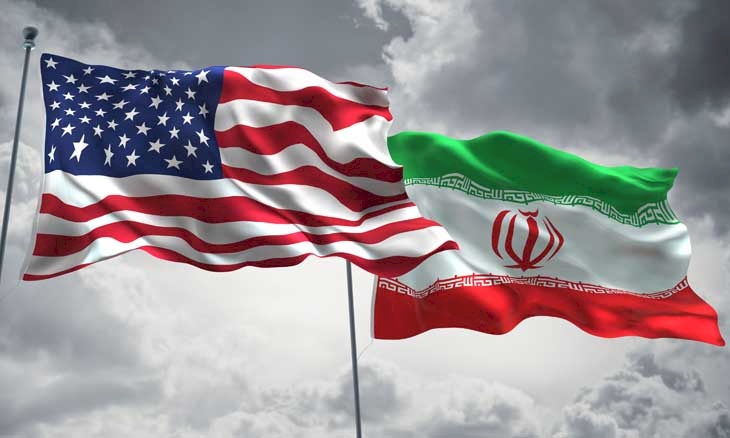
SadaNews - The United States stands once again on the brink of war with Iran, as President Donald Trump intensifies pressure on Tehran to abandon its nuclear program by deploying a massive military fleet of aircraft and warships to the Middle East, the likes of which the region has not seen since the Iraq War.
The American website Politico surveyed the opinions of seven American experts regarding Trump's recent moves, the potential gains and risks of possible military action against Iran, and they agreed that President Trump might be on the verge of taking unpredictable risks that are more severe than his previous maneuvers.
Below is a summary of the key predictions from these experts, who combine diplomatic expertise, academic credentials, and security and intelligence backgrounds.
Ryan Crocker: No Retreat This Time
Ryan Crocker, a former ambassador to Afghanistan, Iraq, Pakistan, Syria, Kuwait, and Lebanon, does not believe that Iran will respond to Washington's demands to stop uranium enrichment, restrict ballistic missiles, and halt support for its proxies in the region, stating that compliance with those conditions would mean the end of the Islamic Republic.
Crocker, who is currently an expert in diplomatic and security affairs at the Rand Corporation, asserts that President Trump will not back down, and if an agreement with Iran is not reached, he will initiate military actions, perhaps limited at first, in an attempt to force Iran to accept a deal.
Should that fail, Crocker adds, Trump will expand operations by targeting Iran's missile capabilities to weaken the regime, including its religious and military leadership. In the event of the regime's collapse, Crocker expects unknown military officers to seize power, leading to widespread internal violence.
Jonathan Panikoff: No Clear Strategy
Jonathan Panikoff, an official at the Atlantic Council and a former deputy national intelligence officer for the Middle East, states that President Trump is moving without clear goals or a defined strategy, emphasizing that military action carries significant risks and will not result in the arrest of Iranian Supreme Leader Ayatollah Ali Khamenei.
Panikoff adds that if the Iranian regime feels threatened, its response could be widespread, not limited to firing ballistic missiles at Israel or U.S. bases and personnel in the region, but could also include terrorist and cyber attacks worldwide.
He noted that President Trump is in a precarious position after promising Iranian protestors assistance but failing to deliver, which may embolden the Iranian regime to doubt future threats from Trump.
Dennis Ross: The Brink of the Abyss
Dennis Ross, a former U.S. special envoy to the Middle East, described the current escalation in the region as paradoxical, as neither side desires a broader war.
Ross explained that President Trump does not want a war that would be hard to stop and could lead to a sharp rise in oil prices, while the Iranian regime is acutely aware of its weakness in air defenses and its lack of control over the populace in the event of escalating war.
Therefore, Ross believes that neither side wants a wider war or escalation that could spiral out of control, with each side thinking the other might retreat from their red lines, leading to a game of brinkmanship.
Ray Takeyh: A Vortex of Retaliation
Ray Takeyh, a senior fellow at the Council on Foreign Relations in Washington, believes that the United States could bomb Iran, but the ruling regime there may retaliate and could kill American soldiers in the process, necessitating further U.S. bombing.
Takeyh adds that the situation could develop into a vortex of retaliation, as the potential military operation lacks coherent strategic objectives or a clear rationale in the absence of accountability from Congress.
Arash Azizi: The Potential Deal
Arash Azizi, a writer for The Atlantic and author of the book "What Iranians Want: Women, Life, Freedom," believes that what he calls Trump's excessive arrogance regarding military action could be dangerous, as it could lead the Iranians to escalate the conflict, destabilizing the region.
Under this scenario, Iran may face severe consequences, but its military leaders are capable of pursuing a confrontational path to secure their hold on power; however, Azizi does not rule out that the Iranian leaders might prefer to reach a new agreement with Washington.
Robin Wright: Widespread Opposition to War
Robin Wright, a foreign affairs analyst and author of several books on the Middle East, thinks that President Trump does not recognize the growing local and international opposition to war with Iran, or he makes superficial assumptions about how things may evolve going forward.
Wright stated that Trump tends to favor regime change in Iran but does not provide a clear vision of who or what might come next, recalling the historical blunders made by the previous four administrations in Afghanistan and Iraq.
Ian Bremmer: Determined for War
Ian Bremmer, president and founder of the Eurasia Group for security affairs, observes that President Trump appears more confident this time about launching military strikes against Iran, referencing the assassination of General Qassem Soleimani during his first term and the 12-day war last year, as well as his military operation in Venezuela last month.
Bremmer clarified that the likelihood of U.S. limited strikes against Iran is high and the risks will be relatively low, citing what he describes as Israel's control over the initiative in the region against Iranian proxies.
According to Bremmer, the American threat to target Iranian leadership on a larger scale would be a different matter that could lead to Iranian attacks on American military targets in the region, as well as on critical energy infrastructure and disrupt the Strait of Hormuz.
Source: Politico
 Follow the latest Sada News via Google News
Smotrich: Israel Has No Interest in Joining the War Against Iran

Occupation Issues Military Order to Seize 5 Dunams of Land in Jaba'

Axios: Proposal for a 10-day Ceasefire Between Washington and Tehran and Two Options for M...

In a Rapid Pace.. The Occupation Builds a Huge Earth Barrier Inside Gaza

Meeting Between Aoun and Trump Expected Alongside 'Experimental Areas'

Gaza Health Warns of Collapse of Oncology Services Due to Depletion of Treatments and Susp...

The Occupation Demolishes a House in the Town of Sa'ir near Hebron
