

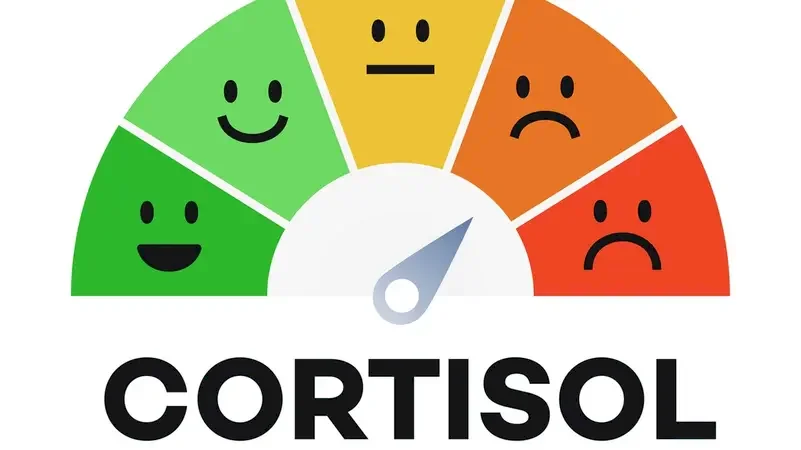
The "Cortisol" Lie Takes Over Social Media.. and Tops the Trends
SadaNews - Cortisol, known as the "stress hormone", has become a hot topic on the internet lately, topping the "health" trends on social media.
Many influencers have warned in recent weeks and days about the various symptoms of chronic elevated cortisol, including waking up at 3 AM, facial swelling, or what is known as "cortisol face", in addition to an accumulation of fat in the abdomen.
Many of them also provided diets and exercises that they claimed help reduce this hormone.
Supplements and Influencer Advice
But do you really need supplements and influencer advice to control cortisol?
According to doctors and specialists, it resembles a fake trend, and they cautioned that it is highly unlikely.
Doctors also warned against hastily labeling this hormone as evil, according to the Associated Press.
It Keeps You Alive.. True Disorders Are Rare
Moreover, they clarified that cortisol is an essential hormone that one cannot live without. They noted that it is secreted by the adrenal glands above the kidneys, and it is one of several hormones that function during stress.
Cortisol can also affect inflammation, immunity, metabolism, blood pressure, and many other functions.
Cortisol is highly sensitive to the body's state and environment, increasing in the morning upon waking and decreasing at night before sleep, and it also rises during illness or stress, according to doctors.
In this context, Dr. Roberto Salvatore, an endocrinologist at Johns Hopkins University, stated: "Our cortisol level is regulated minute by minute... It is very sensitive." He emphasized that "it is rare for a person to have a disorder caused solely by cortisol. If cortisol levels are chronically low, adrenal insufficiency is diagnosed, including Addison's disease (an autoimmune disorder that attacks the adrenal gland).
Cortisol Testing
Cushing's syndrome, on the other hand, is caused by overly high cortisol, often resulting from tumors—usually benign—in the adrenal or pituitary glands. It is treated with medications, surgery, or both.
Furthermore, specialists advise talking to a patient's doctor before undergoing cortisol testing.
This is especially important because the likelihood of experiencing symptoms of high or low cortisol is very broad and overlaps with other diseases. Adrenal insufficiency can cause fatigue, unexplained weight loss, low blood pressure, as well as loss of appetite.
Additionally, Cushing's syndrome may lead to weight gain, high blood pressure, osteoporosis, as well as fat accumulation in the face and abdomen, excessive hair growth in women, sleep issues, and others.
Doctors have confirmed that diagnosis requires time, multiple tests, and a comprehensive understanding of the patient's health. Dr. Katie Guttenberg, an endocrinologist in Houston, stated: "There are many fine details in interpreting cortisol... This makes me concerned that patients may request tests on their own without medical supervision."
She added that a single blood cortisol test is not beneficial for most people and may lead to unnecessary anxiety.
Ashwagandha and Magnesium
Additionally, endocrinologists explained that there are no proven over-the-counter treatments for high or low cortisol, although some promote supplements like ashwagandha and magnesium as "lowering cortisol".
Dr. James Findling emphasized that the concern about chronic high cortisol is understandable, but treatments need more research.
He also warned against taking unregulated supplements, stating: "These products are not innocent." He confirmed that lowering cortisol too much can also cause serious health issues.
“Pseudo-Cushing’s Syndrome”
Additionally, Salvatore pointed out that there is a condition called "pseudo-Cushing’s syndrome", which is milder but causes some of the same symptoms without a tumor. He added that it "may result from alcohol addiction or other chronic issues."
Doctors concluded by advising to return to the basics of stress management, rather than focusing on one obscure hormone, to eat healthily, get enough sleep, consider physical movement and activity, and seek psychotherapy when needed.
 Follow the latest Sada News via Google News
After Deschamps' Departure... Zinedine Zidane Tops the Candidates to Lead France

Mbappe Surpasses Messi and Becomes the All-Time Top Scorer in the World Cup

England Defeats France and Achieves Largest World Cup Achievement Since 1966

Messi Refused to Play for Spain and Missed 3 World Cups

Publishers Sue Google for Allegedly Using Books to Train Artificial Intelligence

Google Expands Capabilities of Google Search Console to Support Social Media Accounts

The Mediterranean Table... An Ancient Diet Revealing Its New Secrets for Health and Longev...
