

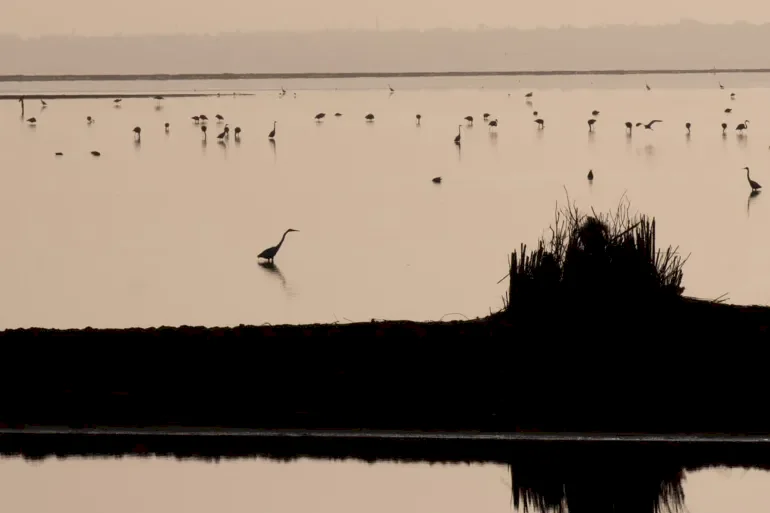
Birdwatching Tourism: Pleasure, Excitement, and Unexpected Scientific Discoveries
SadaNews - The birdwatching sector attracts millions of enthusiasts annually and is one of the fastest-growing sectors of eco-tourism. According to a report from Grand View Research, the market size for birdwatching tourism was about $66.2 billion in 2024, and it is expected to reach $95.2 billion by 2030. This growth is attributed to increased environmental awareness and a rising interest in sustainable travel patterns to destinations rich in bird biodiversity, such as Costa Rica, Kenya, Malaysia, and Egypt. This type of tourism is not only an important economic resource for local communities but also provides exceptional opportunities to discover diverse and rich ecosystems.
In the Egyptian context, Swiss Nina Prochazka, a specialist in organizational development, points out that the Fayoum region possesses remarkable potential for eco-tourism. Between 2003 and 2005, Prochazka coordinated a project aimed at mobilizing resources and creating the necessary conditions for sustainable tourism activities in the region. She states in an interview with Al Jazeera Net: "Fayoum has exceptional features for nature- and culture-based eco-tourism, from serene rural landscapes, lakes, and bird reserves, to pristine desert areas that contain fossils of global importance."
Prochazka explains that the project, named "The Preliminary Phase of Eco-Tourism in Fayoum," formed an initial nucleus to attract visitors to the region, adding: "Visitors are often ornithologists or professional amateurs, most of whom are from outside Egypt, particularly from the UK, Canada, and the USA. They travel specifically to observe rare or regional bird species, bringing advanced equipment such as high-quality binoculars and spotting scopes along with detailed field guides. They also have carefully planned and detailed itineraries and appreciate the unique opportunities Fayoum provides for observing species that are difficult to see elsewhere."
Not all birdwatching tourism enthusiasts are specialists; some are amateurs who need no more than a camera, binoculars, and a genuine desire to enjoy the amazing world of birds. This is how George describes the requirements of the trip, a Colombian citizen from one of the most biologically diverse countries in the world. His work in renewable energy brought him to Egypt, where his professional path intersected with his passion for birds.
George tells Al Jazeera Net: "Monitoring bird populations and understanding their behavior and migration patterns are fundamental considerations when planning wind energy farms; I also love photography, so I have both professional and personal reasons that underpin my passion for birdwatching."
George has been living in Egypt for two years and adds: "During my first visit to Fayoum, I was fortunate to find organized birdwatching tours, so I decided to participate. Visiting the area with a trained guide helps avoid frustration and opens up opportunities to see species that are difficult to identify or spot alone. From distinguishing between different species and male and female differences to recognizing bird calls and their various songs, it’s an incredibly enjoyable experience."
Serendipity that Led to Discoveries and Global Scientific Papers
Although the primary field of study for local Egyptian guide Ahmed Mansour is trade, serendipity has played a crucial role in his journey, repeatedly leading him into the depths of the bird world. The story began in 2001 when he joined a training program on eco-tourism in his home governorate of Fayoum. He then had to choose between becoming a desert guide or a local guide, and he chose the latter.
Mansour received training for three years, then obtained an official license before continuing to learn and specialize until he became one of the most notable local guides in birdwatching. He tells Al Jazeera Net: "Anyone who tries birdwatching even once rarely stops repeating the experience. Many visit Fayoum by chance or as part of a one-day trip, but I am often surprised by their deliberate return, motivated by a desire to understand this amazing world. Food, migration stops, return routes, and noticing colors and behaviors through binoculars are all enough to lead some visitors to become attached to a particular species, like gulls, owls, or raptors. It’s like a calling."
Mansour has a remarkable record of rare observations and discoveries, many of which he has documented in scientific papers. Notably, in 2015, he observed a black-colored bird of the Greater Flamingo species, while the usual color of this bird is white with a pinkish hue and of a specific size. After reviews with doctors and specialists, it was found that the condition resulted from a genetic mutation caused by the mating of a sick female, which affected the genes of the eggs.
In 2024, Mansour succeeded in documenting the migration of the Tundra Swan in Africa for the first time ever, also known as the Bewick's Swan. He also recorded the first appearance of the White-headed Duck, or the white duck, in Egypt, after an absence of over a hundred years.
Essential Tips for a More Enjoyable Experience
Nina Prochazka advises those wishing to experience birdwatching tourism to first ask themselves a fundamental question: Do we have patience and curiosity? She explains: "Birdwatching is not a race between sightings; it is about slowing down, listening, and a genuine opportunity to discover nature."
Prochazka provides a set of essential tips that contribute to making the birdwatching experience richer and more enjoyable, including:
Going with a local guide, who is often familiar with natural habitats and different species, as well as the best times of day for viewing, makes the experience easier and more profound.
Starting with common birds, as recognizing them helps build confidence and paves the way for later noticing subtle differences between less common species.
Being calm and moving slowly, as birds do not appear unless they feel secure and at ease.
Not worrying about equipment initially, as it is not necessary to buy a special binocular; guides often provide scopes for participants.
Enjoying the whole scenery, not just the birds, as birdwatching includes light, sounds, water, the surrounding desert or green spaces, along with the feeling of being part of this natural world.
Source: Al Jazeera
 Follow the latest Sada News via Google News
After Deschamps' Departure... Zinedine Zidane Tops the Candidates to Lead France

Mbappe Surpasses Messi and Becomes the All-Time Top Scorer in the World Cup

England Defeats France and Achieves Largest World Cup Achievement Since 1966

Messi Refused to Play for Spain and Missed 3 World Cups

Publishers Sue Google for Allegedly Using Books to Train Artificial Intelligence

Google Expands Capabilities of Google Search Console to Support Social Media Accounts

The Mediterranean Table... An Ancient Diet Revealing Its New Secrets for Health and Longev...
