

Shekel Against Dollar: Temporary Rebound or Long-term Decline?
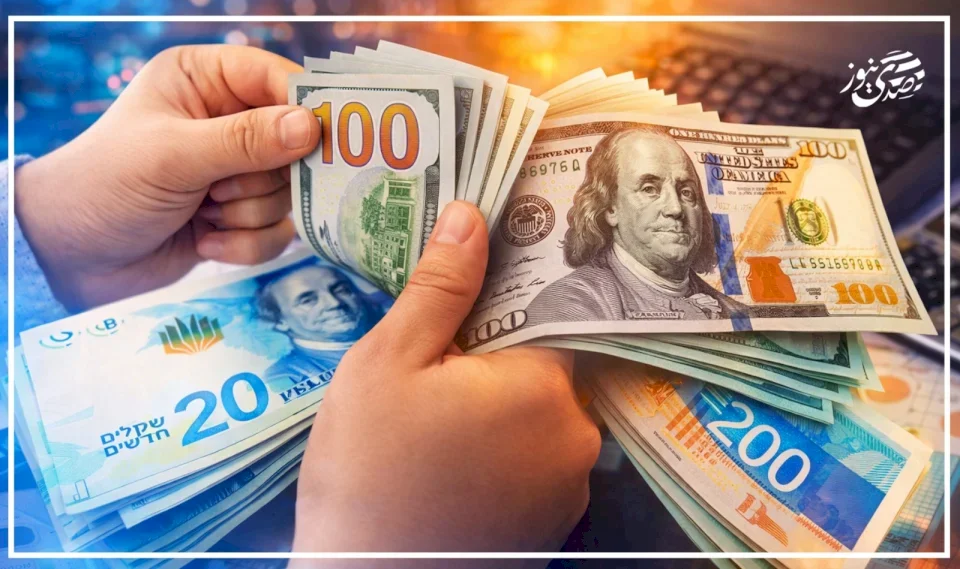
Exclusive to "SadaNews": The Israeli shekel fell today, Tuesday, to an exchange rate of 2.85 against the dollar, dispelling fears of breaking the 2.80 barrier and continuing its historical upward journey. Have we begun a long-term decline for the shekel or are we witnessing a temporary corrective rebound within a specific range?
The drop of the shekel came after statements from the Israeli central bank governor, who hinted at the possibility of proceeding with a policy of interest rate cuts if the strength of the shekel continues to curb inflation.
Financial consultant and banking expert Mohammed Salama told "SadaNews" that the possibility of the exchange rate reaching 3 shekels depends on several factors, the first of which is the extent of the interest rate cut to be made in the future. Will it be a quarter of a percentage point or more? Additionally, the decline in global stock prices, particularly in the United States, indicates that the shekel's strength has reached a saturation point, and a technical correction was expected. It was also anticipated that the Israeli central bank would intervene to stimulate the correction.
He added, "If the policy of reducing interest rates continues and coincides with a decline in global stock indicators, the shekel could reach an exchange rate approaching 3 shekels against the dollar. However, it can initially be said that the central bank is preparing the markets to cut interest rates, which will lead to an increase to an exchange rate of 2.90 or 2.92."
Salama noted that the Israeli central bank holds a monthly regular meeting, expecting it to reduce interest rates twice by the end of the year, by half a percentage point, pointing out that this will depend on several economic indicators, primarily inflation levels.
He added, "The extent of the interest rate reduction also depends on the trends of the U.S. Federal Reserve regarding interest rates on the dollar, whether up or down."
In addition to the statements from the Israeli central bank, Salama pointed out another important factor that contributed to the slight decline of the shekel, which is reports about the possibility of intervention to hedge dollar bonds that the Israeli Finance Ministry sold to finance the war. He noted that the Israeli government sold dollar bonds three times during the war, issuing bonds worth approximately 15 billion dollars, when the dollar price exceeded 3.80. If it hedges and buys dollars now, this means it is repaying the bonds at the current price of 2.80, achieving profits of 35% in shekels due to the exchange rate difference.
Today, the Governor of the Bank of Israel, Amir Yaron, hinted that the central bank may continue to lower interest rates in the upcoming period if inflation continues to decline towards the minimum target range, reinforcing market bets on a more flexible monetary policy in the coming months.
Yaron said the central bank will continue to consider lowering the interest rate "the closer inflation gets to the minimum target," referring to the level of 1% within the government-mandated inflation target range of 1% to 3%.
It is noteworthy that the Israeli central bank recently lowered the interest rate by a quarter of a percentage point to 3.75, a rate that equals the interest on the dollar. This means that continuing to lower the interest rate on the shekel while keeping the dollar interest rate steady or raising it will provide greater impetus for a downward journey for the shekel against the dollar.
The inflation rate in Israel is approaching 2%, within the targeted levels, noting that the Israeli consumer price index does not take energy prices into account when calculating inflation.
 Follow the latest Sada News via Google News
Soaring Oil Prices Burn the Pockets of the Palestinian Citizen "The Poor"

Millions of Dollars in Losses.. "SadaNews" Reveals Shocking Figures for Traders from Pales...

The Problem of Shekel Overcrowding Worsens.. Fuel Station Owners Threatened with Closure o...

The Palestinian Economy at a Crossroads: 4 Files Awaiting Resolution

Exchange Rates of Currencies Against the Shekel on Tuesday (July 21)

Inflation Expectations in Israel Stabilize at 1.5%

Ministry of Economy Announces the Opening of Import Application Submissions for Commodity...
