
Israeli Finance Ministry Official: The Israeli Economy is Experiencing a Sharp and Rapid Shift in Its Path Since the Outbreak of War
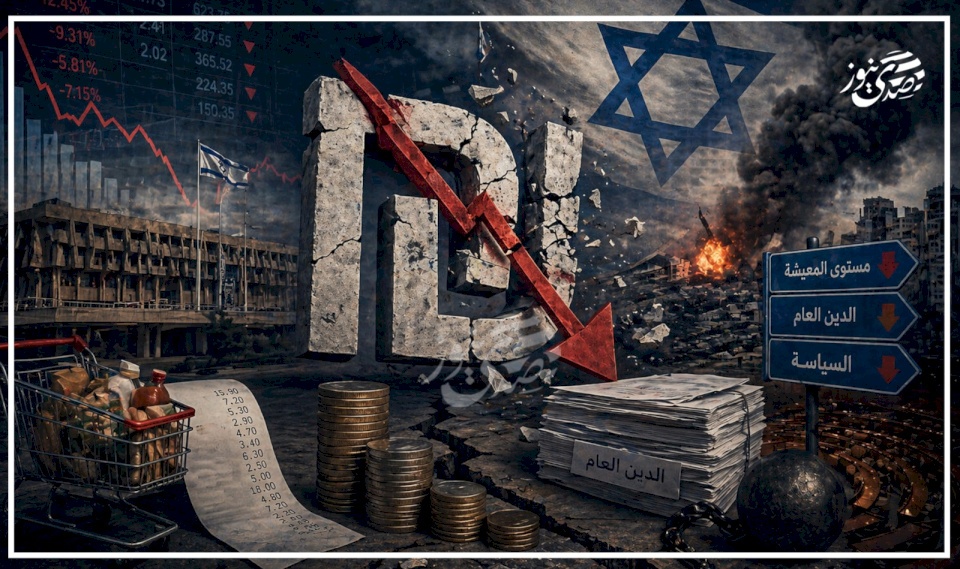
SadaNews Economy Translation - Tamar Levy-Bon, Deputy Budget Commissioner for Macroeconomic Affairs at the Israeli Ministry of Finance, stated that the Israeli economy is experiencing a sharp and rapid shift in its path since the outbreak of the war, directly affecting the standard of living, public debt, and policy.
This was during her participation in the annual conference of the Aharon Institute for Economic Policy at Reichman University.
Bon noted, as translated by SadaNews Economics from the Hebrew newspaper Maariv, that the trends that have characterized the Israeli economy over the past decade have flipped.
She said: "In the past, we had an economy that lowered interest rates, reduced debt, cut taxes, and restrained defense spending, but everything I described has turned upside down: interest rates are rising, debt is rising, defense spending is increasing, and expenditures are declining due to interest costs. And everyone is also aware of the credit rating."
She considered the pace of change to be extremely rapid, stating: "Over ten years, we worked hard to reduce the interest rate by half a percent of GDP each year, and in just three years, we raised it by about 2.5 percent."
She pointed out that the amount of borrowing in the past three years is nearly equal to the accumulated borrowing over an entire decade, which reached approximately 447 billion shekels.
The prominent figure in the Israeli Ministry of Finance, as translated by SadaNews Economics, affirmed that changes are already appearing in the standard of living, saying: "We have already lowered the standard of living for the citizens of Israel, and we have raised the tax burden by one and a half percent of GDP as a result of the war... This was a significant responsibility for the government in 2025, necessary and responsible, but it has consequences."
She added: "When calculating the cost of living, Israel has dropped in the global ranking from twelfth to twenty-second, and it may drop further under the impact of the war."
Regarding challenges related to the budget, Tamar Levy-Bon referred to a "trilemma" between security, debt, and the standard of living.
According to her, the sharp increase in defense spending is putting significant pressure on other budget items, saying: "If it is said that debt must be reduced and the standard of living will continue to rise, it means that security spending must be cut, but the defense system will impose enormous needs on the 2027 budget."
She warned of the "shock economy" phenomenon, where economic prioritization is affected by immediate security events, saying: "For three years, the economy has been drafted into the defense system. It is time for it to think of itself as a national system," according to her expression.
She addressed financial risks, noting that the debt-to-GDP ratio has rapidly increased from 60% to 70%.
She said: "No one can guarantee that we will not hit a wall in the next leap, between 70% and 80%... Hitting a wall in an economy that needs to meet wartime needs is a loss on the front line," drawing a comparison regarding the situation in other countries' economic crises, including Greece, which quickly lost market confidence.
She concluded by stating that relying on growth alone is not enough, saying: "If we want to achieve real growth, this means taking long and arduous steps, such as engaging Arab women and Haredi men in the labor market, removing barriers, and addressing fertility issues, therefore there are no quick solutions."
She added that the next government will be required to make complex decisions that include, among other things, increasing state revenues, whether by expanding labor market participation or raising taxes, steps expected to directly impact the general public."
 Follow the latest Sada News via Google News
Soaring Oil Prices Burn the Pockets of the Palestinian Citizen "The Poor"

Millions of Dollars in Losses.. "SadaNews" Reveals Shocking Figures for Traders from Pales...

The Problem of Shekel Overcrowding Worsens.. Fuel Station Owners Threatened with Closure o...

The Palestinian Economy at a Crossroads: 4 Files Awaiting Resolution

Inflation Expectations in Israel Stabilize at 1.5%

Ministry of Economy Announces the Opening of Import Application Submissions for Commodity...

Relative Stability of the Dollar Near 3.04 Shekels and Predictions of Returning Inflationa...
