

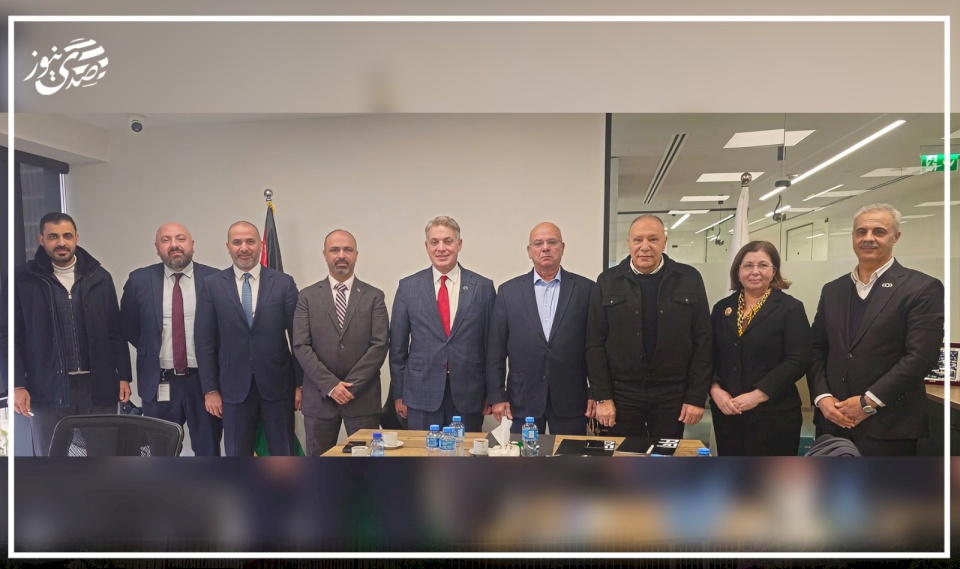
"The Monetary Authority" and "the Private Sector Coordination Council" Discuss the Implementation Plan of the Law to Reduce Cash Use
SadaNews - The Monetary Authority and the Private Sector Coordination Council held a meeting to discuss the implementation plan for the Law to Reduce Cash Use. The meeting, held at the headquarters of the Palestinian Federation of Industries in Ramallah, was attended by the Governor of the Monetary Authority, Yahya Shan'ar, the Secretary of the Coordination Council for the Private Sector/President of the Palestinian Federation of Industries Nassar Nassar, the Chairman of the Board of Baitrade Ibrahim Barham, the President of the Palestinian Federation of Chambers of Commerce, Industry, and Agriculture/President of Hebron Chamber of Commerce Abdu Idris, the President of the Ramallah Chamber of Commerce and Industry Abdul Ghani Al-Atari, the President of the Palestinian Contractors Union Ahmed Al-Qadi, the Chairman of the Board of the Palestinian Businessmen Association - Jerusalem Kamel Mujahid, Jamal Hoorani representing the Banks Association, the Chairwoman of the Women Entrepreneurs Forum Sherine Al-Shalla, the Chairwoman of the Shippers' Board Maha Abu Shousha, the Chairman of the Information Technology Systems Companies Union "Beta" Tamer Baransi, a representative from the Hotels Association Jamal Al-Nimer, the Secretary General of the Insurance Companies Union Kaid Miyari, along with several businessmen and representatives from private sector institutions.
The meeting aimed to inform private sector representatives about the plan to implement the Law to Reduce Cash Use, which is based on the gradual application of the law, thereby laying the groundwork for a transition toward a low cash economy, increasing financial inclusion, and enhancing reliance on electronic payment methods while mitigating financial risks.
For his part, the Governor of the Monetary Authority, Yahya Shan'ar, confirmed that the Monetary Authority follows a studied gradual approach to apply the law's provisions, ensuring a smooth transition to electronic payment, relying on readiness levels in various sectors and ensuring no negative impacts on the business sector.
The governor emphasized that the implementation of the Law to Reduce Cash Use represents a strategic step toward building a modern digital economy that enhances financial stability and maintains the efficiency of the financial system in Palestine. He pointed out that the current conditions facing the Palestinian financial and economic sector require financial and economic treatments to reduce the effects of cash accumulation and to maintain the correspondent banking relationship with Israeli banks.
Shan'ar highlighted the importance of partnership with the private sector to ensure compliance and achieve the desired goals, urging citizens and merchants to positively engage with the digital transition to benefit from the advantages of electronic payments. He affirmed that the Monetary Authority will continue its efforts in financial awareness and education, providing necessary incentives, alongside developing regulatory systems to ensure the law is implemented efficiently and fairly.
For his part, the Secretary of the Private Sector Coordination Council and President of the Palestinian Federation of Industries Nassar Nassar clarified that the move to limit cash use helps control the informal economy and enhances compliance, stressing the importance of considering the unique aspects of different economic sectors during the implementation phase and ensuring a smooth and gradual transition in applying the law.
Nassar noted that the successful application of the law requires integration between various public and private institutions to achieve the desired economic goals.
The implementation plan for the Law to Reduce Cash Use includes stages involving gradual application, preparing executive instructions, equipping systems, preparing infrastructure, and enhancing financial inclusion, leading to the effective implementation of the cash ceiling specified in the law and activating comprehensive oversight. The plan also includes launching comprehensive awareness campaigns for citizens, merchants, and companies about the benefits of digital transformation and usage methods, alongside providing incentives to encourage the use of electronic payment methods and ensuring effective monitoring and inspection mechanisms to guarantee the effective and sustainable application of the law.
 Follow the latest Sada News via Google News
Soaring Oil Prices Burn the Pockets of the Palestinian Citizen "The Poor"

Millions of Dollars in Losses.. "SadaNews" Reveals Shocking Figures for Traders from Pales...

The Problem of Shekel Overcrowding Worsens.. Fuel Station Owners Threatened with Closure o...

The Palestinian Economy at a Crossroads: 4 Files Awaiting Resolution

Exchange Rates of Currencies Against the Shekel on Tuesday (July 21)

Inflation Expectations in Israel Stabilize at 1.5%

Ministry of Economy Announces the Opening of Import Application Submissions for Commodity...
