

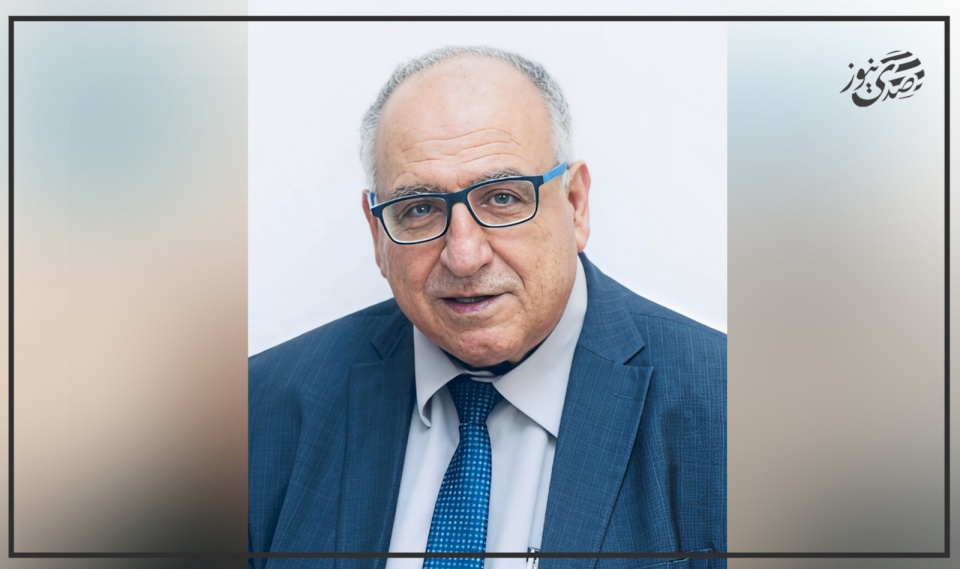
The Crisis of Crossings and Cigarette Trade: When Policies Address Outcomes and Ignore Causes
President and Founder of the Palestinian Center for Public Opinion (PCPO)
There is hardly a Palestinian who crosses the King Hussein Bridge without returning with a story of waiting, delay, suffering, and perhaps experiences of exploitation as well. For years, the bridge has transformed from merely a border crossing connecting Palestinians with the outside world into a symbol of the daily suffering of thousands of travelers. Long hours of waiting, repeated congestion, complex procedures, and chaos recur with every travel season, making the act of crossing itself a psychological, economic, and humanitarian burden. Perhaps what exacerbates the bitterness of this suffering is that most of it is no longer seen as an exception but has become part of many Palestinians' normal travel experience.
Amid this suffering, the Jordanian Ministry of Interior decided to prevent 468 individuals from traveling via the King Hussein Bridge starting June 30, 2026, after it was found that they were traveling frequently to Jordan for commercial purposes, particularly to take advantage of the price difference of cigarettes and shisha in duty-free markets. This decision sparked a wide debate in Palestinian society; while attention focused on the individuals engaged in this activity, a more important question was overlooked: is the problem with these individuals, or with the economic and administrative policies that led them to this option in the first place?
However, if we want to correctly understand this phenomenon, the question should not be: how do we prevent these individuals from traveling? But rather: why has this activity become a source of income for hundreds of Palestinian families? Can it be understood separately from the suffocating economic crisis faced by Palestinians, under the strict Israeli restrictions on the Palestinian economy, and the deprivation of tens of thousands of workers from accessing their jobs within the Green Line, which has resulted in unprecedented unemployment rates, declining income levels, and reduced job opportunities?
In economics, parallel markets or informal trade do not emerge from a vacuum; they arise when economic incentives are present that make the expected return greater than the risk cost. Therefore, an economist does not start by analyzing individuals’ behavior, but begins by studying the economic environment that produced this behavior.
This applies perfectly to the Palestinian case.
On one side, thousands of Palestinians have lost their livelihoods due to the restrictions imposed by Israel on the entry of Palestinian workers to work inside the Green Line, leading to unprecedented increases in unemployment rates and forcing many citizens to seek alternative income sources to support their families.
On the other hand, there is a large price gap between cigarette and shisha prices in Jordan's duty-free markets and their prices in the Palestinian market due to high taxes and fees imposed on them. When the loss of income sources coincides with such a significant price difference, it becomes natural for some individuals to attempt to benefit from this gap by purchasing these products and resale within the Palestinian market.
Thus, what we are witnessing today is not merely smuggling or individual trade, but rather an economic response to a difficult economic reality. Individuals do not create incentives; they respond to them.
Therefore, addressing the problem by tightening measures at crossings or limiting frequent travel may temporarily reduce the phenomenon, but it will not address its real causes. As long as unemployment remains high, the price gap continues to be significant, and economic incentives exist, the market will seek other means to achieve profits.
From this, one solution worth considering is to reassess the tax policies imposed on cigarettes and shisha. The aim is not to encourage smoking, as protecting public health remains a fundamental goal, but rather to arrive at a more balanced tax policy that reduces the price gap with Jordan, limits the economic viability of informal trade, and at the same time alleviates the financial burden on the Palestinian citizen who is living through one of the most challenging economic crises in his history.
Successful tax policies are not those that only achieve the highest revenues, but those that succeed in balancing public health goals, government revenues, reducing smuggling, and the economic reality experienced by the citizen.
From another perspective, I still believe that excluding Palestinian workers from the labor market within Israel will not be a permanent solution. Despite the expansion in bringing in foreign labor, demographic, social, and security considerations limit this option in the long term. Therefore, the return of Palestinian workers to their jobs will contribute to improving household incomes and reducing some citizens' dependence on temporary commercial activities, such as the cigarette trade, as people inherently prefer stable jobs over any precarious income source.
But the problem does not stop at cigarette trade alone; it extends to the management of the crossings themselves.
The suffering of Palestinians at the King Hussein Bridge has become part of their daily lives. Long hours of waiting, repeated congestion, complex procedures, while this bridge represents the main land outlet for Palestinians to the outside world.
The results of a public opinion poll conducted by the Palestinian Center for Public Opinion (PCPO) confirm that 76.6% of Palestinians attribute the congestion crisis at the bridge to political and security reasons, while only 19.1% see it as a result of weak coordination among the parties. This clearly indicates that public opinion in Palestine does not consider travelers or traders as the real cause of the crisis but links it to broader factors related to the crossing's management and the restrictions imposed on it. The results also showed that 83% of Palestinians believe that congestion constrains the freedom of movement and exacerbates human suffering, while 94% supported the operation of the Allenby Bridge around the clock as one of the most important solutions to alleviate the crisis. Additionally, 47% of citizens felt that the crossing does not meet travelers' needs, while 53.5% considered the VIP system to be unfair, and 52.1% saw it as contributing to increased congestion. Collectively, these results confirm that the problem is much larger than merely the issue of repeated travel or cigarette trade.
From my perspective, the bridge crisis consists of two main aspects.
The first aspect relates to administrative and organizational procedures that need a comprehensive review, development of work mechanisms, and improvement of coordination among all relevant parties, contributing to accelerating the movement of travelers and enhancing the quality of services. In this context, it seems that some Jordanian efforts have recently begun under the leadership of Jordanian Interior Minister Mazen Al-Farraya, aimed at organizing the movement of crossing and regulating the ticket sales of the Jet Company while limiting some practices that contributed to exacerbating the congestion. These are commendable steps, and we hope they translate into practical and effective measures that positively reflect the reality of travel and show results in the near future to alleviate the suffering of Palestinian travelers.
As for the second aspect, which has a more significant impact, it relates to the operating hours of the bridge itself. While most international crossings operate 24 hours a day, the King Hussein Bridge still operates for limited hours, closing daily early, which reduces its capacity and leads to a backlog of travelers and prolonged waiting times, especially during travel seasons. The Jordanian Interior Minister clarified that the number of travelers allowed to leave remains subject to restrictions imposed by the Israeli side, which confirms that addressing this crisis requires genuine cooperation and coordination among all parties and cannot solely rely on one side. From here, improving crossing management, reconsidering operating hours, increasing its capacity, and developing services provided to travelers are steps that are no less important than any regulatory measures aimed at limiting frequent travel.
I still believe that addressing this crisis is possible if there is real will among all parties. The Palestinian citizen is not seeking special privileges, nor attempting to circumvent regulations; they are looking for a crossing that operates efficiently, smoother procedures, and a decent job opportunity that provides a stable life for them and their families and frees them from searching for alternative income sources.
Economics has taught us that individuals respond to incentives; therefore, the real solution does not lie in pursuing individuals or merely addressing outcomes, but in removing the causes that led them to this behavior in the first place. When job opportunities are available, tax policies are reviewed in a balanced manner, crossing management improves, and its operational capacity increases, many of the phenomena we are currently concerned with combating will automatically decline.
The problem is not with the trader, but with the economic and administrative environment that produced them. Thus, the real question that should always be raised is not: how do we prevent people from traveling or trading? But rather: how do we address the policies and conditions that drove them to do so?
When we address the causes, the outcomes will automatically decrease. This is not just an economic principle but also the shortest path to more efficient crossings, a more stable economy, and a more dignified life for the Palestinian citizen.
*Dr. Nabil Kukali is the President and Founder of the Palestinian Center for Public Opinion (PCPO) and one of the researchers specialized in public opinion polling and socioeconomic research, with over three decades of experience in the design and implementation of field studies in Palestine and the Middle East.
 Follow the latest Sada News via Google News
Between the Memory of the Revolution and the Trust of the State… Palestine Seeks Its Great...

The Crisis of Crossings and Cigarette Trade: When Policies Address Outcomes and Ignore Cau...

رحيل الأعز من رفاق العمر

17 Billion Shekels in the Coffers.. When Liquidity Turns into a Crisis of Economic Soverei...

Gaza: Between Genocide and the Collapse of the International Protection System, and the Ab...

The Last Elegy of Hanthala... To the Witness Who Became a Martyr... and Remained a Witness...

Is the patience of the private sector running out?
