

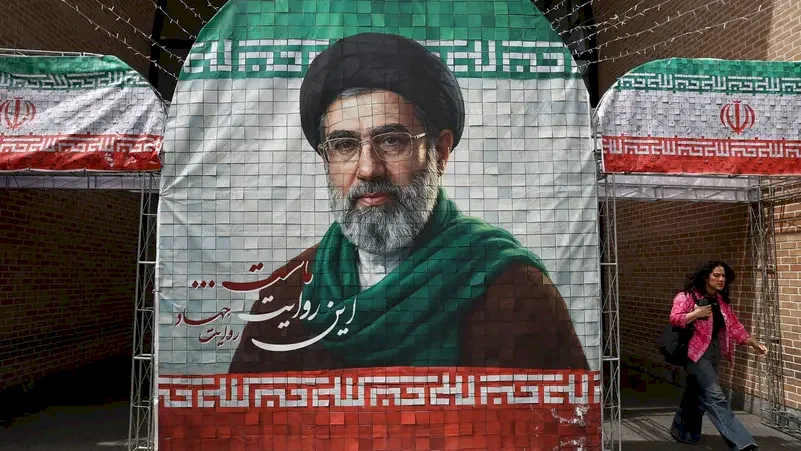
U.S. Intelligence: Iran's New Leader More Inclined Towards Nuclear Weapons
SadaNews - U.S. intelligence assessments have revealed that the new Iranian leader, Mojtaba Khamenei, adopts a more hardline stance than his father, Ali Khamenei, regarding the possession of nuclear weapons, while President Donald Trump considers expanding military action against Iran amid rising concerns over the future of Iran's nuclear program.
According to U.S. officials familiar with these assessments, intelligence agencies believe that Mojtaba Khamenei is more willing to pursue the development of advanced nuclear weapons, unlike his father who remained cautious about producing a nuclear bomb despite Iran's advancements in its nuclear capabilities, according to The New York Times.
Ali Khamenei was killed early in the war in an Israeli attack supported by U.S. intelligence, leading to the rise of a new leadership described within Washington as more hardline and more willing to change Iran's nuclear doctrine.
A More Hardline Government
U.S. intelligence agencies view the Iranian government formed following the deaths of several senior military and political leaders as becoming more rigid in its positions, both regarding the nuclear issue and in managing military confrontation with the United States and Israel.
Officials indicate that Tehran has strengthened its control over the Strait of Hormuz and has shown inflexibility in political negotiations, raising fears that the recent war has led Iran to become more convinced of the necessity to possess nuclear weapons, rather than deterring them from that. Despite these assessments, U.S. officials warn that most information regarding Mojtaba Khamenei's positions was gathered before the war broke out.
They clarified that the new Iranian leader was injured during the early days of the war and has since reduced his communications and public appearances for fear of being targeted; however, intelligence agencies believe he still manages state affairs, though he does not hold the absolute influence that his father had for more than three decades.
This assessment comes at a time when President Donald Trump is exploring options to expand military operations against Iran.
U.S. officials state that the belief that the new Iranian leadership may be open to developing a nuclear bomb provides the U.S. administration with additional justification to escalate military strikes if it deems necessary.
Iran Maintains Its Nuclear Program
Although Washington confirms that Iran has not officially resumed its nuclear program, it believes that Tehran has taken steps to preserve its infrastructure following American strikes that targeted key nuclear facilities last year, as well as during periods of calm in the ongoing war. U.S. officials have confirmed that Iran has moved a number of centrifuges to a heavily fortified underground complex in the central part of the country, known by U.S. intelligence as "Pickaxe Mountain."
U.S. estimates indicate that the "Pickaxe Mountain" facilities are located deep within the mountains, putting them beyond the range of the most powerful conventional bombs in the U.S. arsenal. Iranian officials believe, according to those comments, that the site has become safer after evaluating the outcomes of the strikes that targeted the Fordow nuclear facility, yet they still fear the possibility of U.S. forces executing a commando operation to destroy the facility from within, prompting Tehran to bolster its military presence around the site.
Significant Damage but the Program is Not Over
In June 2025, the United States launched a wide-ranging attack targeting the Fordow, Natanz, and Isfahan facilities using B-2 bombers and Tomahawk missiles.
At that time, President Trump announced that the facilities had been "completely destroyed," yet later intelligence assessments concluded that the strikes delayed Iran's nuclear program but did not eliminate it.
U.S. officials say the strikes succeeded in freezing the program's progress, but Iran still retains its key elements, headed by its stockpile of highly enriched uranium, which could be utilized in the future if the Iranian leadership decides to resume work.
 Follow the latest Sada News via Google News
U.S. Intelligence: Iran's New Leader More Inclined Towards Nuclear Weapons

Washington warns its citizens in Israel and the Middle East of possible flight cancellatio...

The Presidency Condemns the Terrorism of Settlers and Holds the Occupation Government Resp...

The Wall and Settlement Resistance Commission Condemns the Escalation of Settler Attacks i...

Jordan: The Israeli government is pushing the West Bank towards an explosion

Sources: Pakistan Discusses New Mediation Efforts with China to End Iran War

Trump Warns China and Russia Against Interference in Iranian War
