

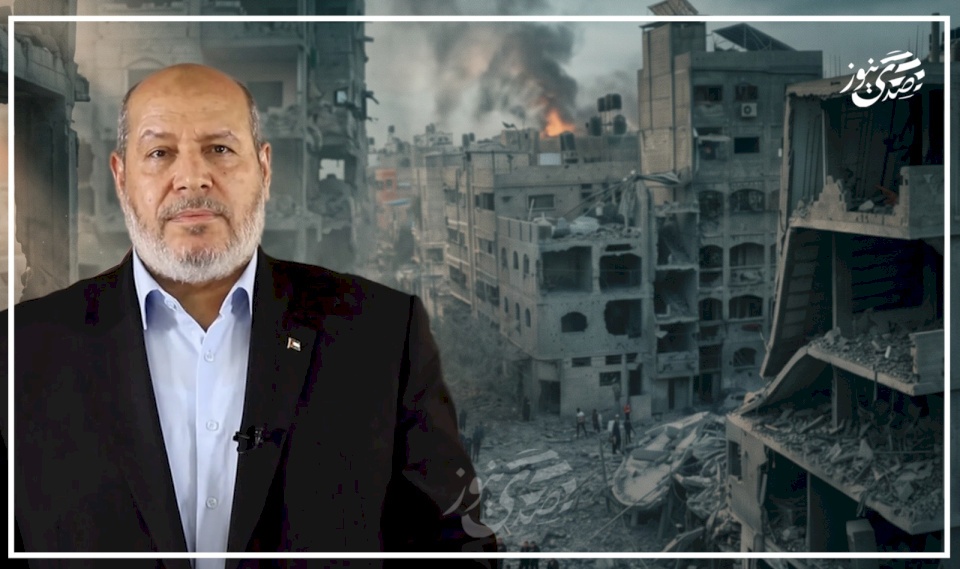
Will the election of Khalil al-Hayya change Hamas's approach and path?!
Exclusive "SadaNews": The election of Khalil al-Hayya as head of the political bureau of Hamas was only a surprise in the hours leading up to the elections, which indicated that Khaled Meshaal was closer to once again securing the presidency after having led the movement for many years, including two consecutive electoral terms since the current electoral law came into effect.
The indications that emerged in the final hours of the last stage of the elections held in Turkey suggested that Meshaal was ahead of al-Hayya. However, the latter secured the position by a very slim margin, having received just one more vote than Meshaal, highlighting the fierce competition that was also evident in the first round held last May, which saw neither candidate decisively winning after some voters used the white ballot paper to express their rejection of both leaders or general policies of the movement.
After al-Hayya's election, following months of attempts to finalize the elections due to security conditions, particularly within the Gaza Strip and the West Bank, the question raised by all is whether he will change Hamas's approach and path or continue on the same trajectory.
Many sources within Hamas told "SadaNews" that the martyrdom of al-Hayya's sons and the attempt on his life in Qatar, along with his leadership of the negotiations file regarding Gaza, were significant factors that clearly impacted the results of the internal elections. Additionally, the leadership of the movement in Gaza, as well as released prisoners holding important positions from various regions, voted in favor of the new Hamas leader.
The sources confirmed that al-Hayya's victory would not change the movement's approach to any of the issues except that it would seek to be more open in its relations with Arab, Islamic, and even foreign countries, and there is no objection to holding more meetings with the American administration, as has recently occurred during the ceasefire negotiations, with the goal of finding a path that grants Palestinians an independent state.
According to the sources, the movement's approach and path are not altered by an individual, even if they are the head of the political bureau, indicating that such matters are decided through consultations within the political bureau and Shura Council, hence, crucial decisions regarding such positions and others are made.
Observers believe that Hamas may be on its way to becoming a political party, a matter that has been raised several times in internal discussions of the movement; however, this seems unlikely at the moment unless there is a comprehensive political track regarding the Palestinian issue that includes ending the occupation based on the borders of a Palestinian state established on June 4, 1967. This matter was raised during the ceasefire negotiations when it was proposed to grant the Palestinians such a path.
Al-Hayya will face many challenges during his presidency of Hamas, including the hard work to stop the war on the Gaza Strip, particularly dealing with the file of disarming or restricting weapons amidst the pressures the movement faces to do so, leading to national relations with factions, especially Fatah, whose deputy, Hussein Sheikh, was quick to congratulate al-Hayya on leading the movement, and agreeing with those factions on the upcoming Palestinian legislative elections, which will be held in part of the Gaza Strip due to the war. There is talk of an agreement between Fatah and Hamas mediated by Egypt, which is evidenced by Hamas not issuing any statements rejecting the elections as was customary in the past.
It appears that challenges of foreign relations will add another layer of complexity to al-Hayya's position, including the relationship with Iran and whether to strengthen it amidst varying opinions on the matter within Hamas, especially when many see that relying solely on it is unfeasible given the current regional situation and the strikes Tehran faces. Additionally, relations with the resistance axis, especially Hezbollah, which is also facing very difficult conditions both internally in Lebanon and externally, amid the Lebanese government's tightening of positions regarding the arms situation in general, whether concerning the party or Palestinian factions. Alongside all this is the relationship with Arab and Islamic countries.
Al-Hayya is known to be among those who support strengthening relations with Iran as it is the primary supporter of the movement, but without neglecting relationships with other countries, while continuing to maintain strong ties with Qatar, Egypt, and Turkey as these countries are hosts and mediators between the movement and various parties, not just Israel, albeit indirectly. This was also followed by "SadaNews".
Moreover, al-Hayya will face, according to analysts and observers from within Hamas, challenges related to addressing the vacancies caused by ongoing assassinations that targeted historical leaders on the political and military levels, and organizing the internal situation within the movement that is suffering from significant and ongoing crises due to Israeli policies and attempts to dry up the sources of Hamas.
While some analysts and observers affiliated with Hamas see that the greatest challenge lies in achieving a balance between the principle of collective leadership and swift decision-making that ensures the movement's institutions participate in decision-making without the multiplicity of consultation centers slowing down responses in critical moments. They hint at many opportunities that could have been exploited during the war on Gaza to halt it without having to revert to comprehensive consultations involving Gaza and others, as the difficulty in communication and contacts diminished the momentum of those proposals from mediators and others to stop the war, before returning to similar or worse proposals regarding what could be offered after Hamas and Gazans had already lost a great deal of blood, land, and resources to the occupation.
 Follow the latest Sada News via Google News
High-level sources reveal to SadaNews: Washington seeks to hold a Gaza Reconstruction Conf...

Will the election of Khalil al-Hayya change Hamas's approach and path?!

Iraqji Reveals Details of the Attack on the Iranian Supreme Leader's Headquarters

صراع على إرث خامنئي وسط غياب مجتبى.. والمتشددون يتهمون قادة إيران بـ«الانقلاب»

The European Union Reiterates Its Call for Israel to Refrain from Expanding Settlements in...

"Mamdani Berlin".. The German Left Bets on a Politician of Turkish Descent to Lead the Cap...

Hebrew Channel: Kushner Pushing to Enhance Communication Between the United States and the...
