

Marches and Other Reasons: 5 Indicators of a Shift in the Balance of Power in Favor of Ukraine
SadaNews - Military experts say there are five reasons that have tilted the balance of power in the Russian-Ukrainian war in favor of Kyiv in some aspects, and they point out that Ukraine's ability to shift from defense to offense is dependent on continued Western support.
European military reports and analyses indicate that the balance of power in this war is undergoing gradual changes, despite the continued numerical superiority and large military capabilities of Russia.
This assessment relies on a set of field, technical, and organizational indicators, in addition to a noticeable development in Ukraine’s capabilities in the field of unconventional warfare, especially the use of drones, alongside the ongoing Western support that remains a decisive factor in shaping the trajectory of the conflict.
Zelensky Brags
Ukrainian President Volodymyr Zelensky boasted in late April during an interview with the conservative American television channel (Newsmax) that his country is in a better battlefield position than it has been in the last 9 or 10 months, considering that Russia is not achieving any decisive strategic progress.
Although this statement carries an element of political optimism, battlefield data indicates that Russia, according to military experts, is making slow progress in areas like Donbas, but is unable to achieve significant breakthroughs due to the high cost in lives and equipment, as well as the fortification of Ukrainian defenses.
At a time when Russia is celebrating Victory Day over Nazi Germany in World War II, the war in Ukraine holds particular importance, and hardly a single German newspaper lacks an editorial about this war and its effects on security in Europe and the pockets of citizens.
Five Reasons
One of the large newspapers that allocated significant space to this war is the left-liberal (Süddeutsche Zeitung). In an in-depth investigation, it quoted three military experts outlining five reasons indicating a recent tilt of the battlefield in favor of Ukraine.
Süddeutsche states that when the most fervent propagandists loyal to Putin, such as political program host Vladimir Solovyov and writer and blogger Maxim Kalashnikov, start criticizing this war and highlighting the contradiction between military goals and the battlefield situation, it clearly means that the "special military operation" is not progressing as Putin desires.
The newspaper quotes former Australian officer Mick Ryan and military expert Michael Kofman, who recently returned from Ukraine, as well as their counterpart Gustav Grisel, confirming that Ukraine's situation is indeed "much better than it was in the spring of last year" and that the losses incurred by the Russian side mean it "cannot continue fighting except at the same pace or slightly slower," which makes the factor of time favor what Zelensky told the television channel, i.e., in favor of Ukraine.
Closing the Drone Gap
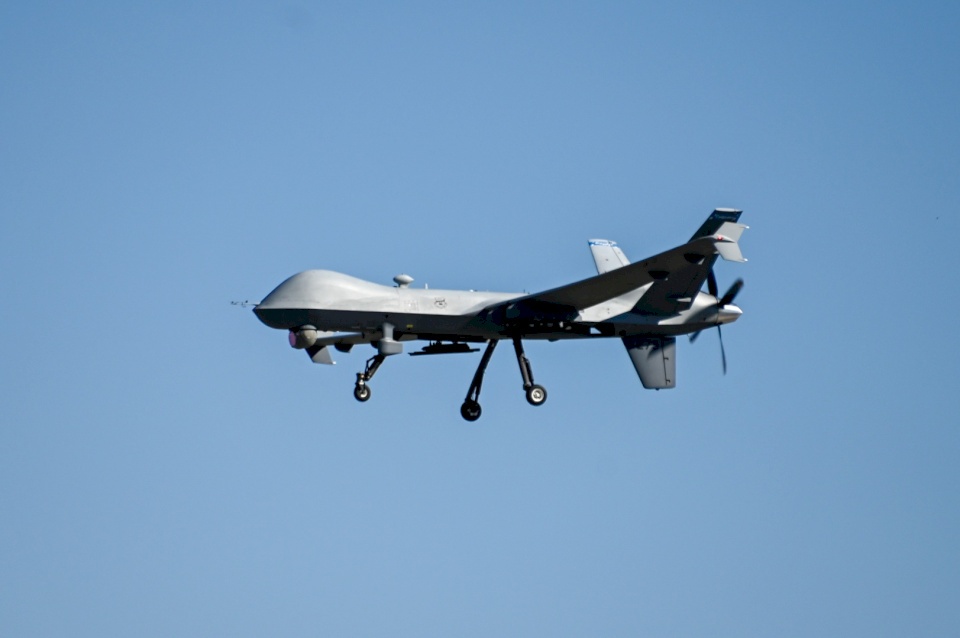
The newspaper lists five reasons for this, stating that Ukraine had long suffered from a gap in capabilities, specifically in not having medium-range drones. Previously, it only possessed short-range drones (30 kilometers) and long-range drones (300 kilometers) and lacked drones covering the distance between 30 and 300 kilometers.
It adds that the Ukrainian forces were able to close this gap over the past year, thanks mainly to the use of locally manufactured drones, alongside some missiles.
Long-Range Strikes
However, the Ukrainian advance, according to the newspaper, did not stop at medium distances but also included carrying out long-range airstrikes. These strikes have noticeably increased in effectiveness over recent months. In 2024, attacks inside Russian territory were limited and sporadic, having no strategic impact. Today, however, their results have become measurable.
Ukraine has also begun producing advanced interception drones in large numbers. According to Süddeutsche, these drones, including the P1-Sun model, are used to intercept long-range Shahid drones. However, they also play an important role on the front lines, where they shoot down large numbers of Russian reconnaissance drones on either side of the fire line, representing the actual front line.
Military Tactics
The third reason relates to military tactics; Süddeutsche states that drone warfare represents a new form of combat and consequently tests many things for the first time in the field, leading both sides to make mistakes. However, the Ukrainians have learned faster.
Grisel states that improving the use of different drones, distributing capabilities, and organizing command levels all contributed tactically to Ukraine regaining territories. By the end of 2025, it managed to liberate the city of Kupiansk, and at the beginning of 2026, it recaptured about 400 kilometers in the south.
Innovation
For Ukraine, compensating for Russia's numerical advantage through innovation is a matter of existence. New Defense Minister Mykhailo Fedorov has successfully advanced this path. He worked on allocating equipment to fighting units based on analyzing actual battles, leading to a clear improvement in the use of resources.
Fedorov’s role has not been limited to developing aerial drones of all types; he has also pushed for the development of ground drones and unmanned vehicles that transport the injured and secure supplies to frontline locations.
Süddeutsche concluded by stating that Ukraine still suffers from a shortage of equipment, human resources, and air defense munitions, and that Russia may exploit this situation to launch new strikes. However, Ukraine has succeeded in exhausting Russian forces and may have the opportunity to transition in the fall from defense to offense.
Balance on the Front
The left-liberal newspaper (Frankfurter Rundschau) quoted Austrian Colonel and military expert Markus Reisner as saying that the war in Ukraine is currently experiencing a stalemate at the tactical level, but he warned that the situation might change over the summer.
Reisner believes that the war should be assessed on three levels: strategic, operational, and tactical, adding that at the tactical level, a state of battlefield balance prevails, attributing this to the intense use of drones. At the operational level, the expert pointed out that Russia is trying to strengthen military pressure to create suitable conditions for a new summer offensive by opening additional fronts in areas like Kharkiv and Sumy.
He added that both sides are now capable of striking deep into the adversary using these drones.
At the strategic level, the expert emphasized that air warfare has become the decisive factor, stating that Ukraine experienced a difficult winter while Russia intensified its air strikes using drones and cruise and ballistic missiles.
According to Reisner, Russia conducts extensive attacks two to three times a month, yet Ukraine has become partly capable of keeping up with them, even executing strategic airstrikes, as evidenced by the images of Russian oil refineries under heavy bombardment since the outbreak of the Iran War.
Has the Dynamic of War Changed?
Regarding the impact of pressures on Russia, including Ukrainian strikes on the oil infrastructure, Reisner stated that any change in the course of the war must be measurable and able to provide answers to the following questions: Have battlefield gains been made? Can Ukraine maintain its infrastructure despite the attacks? Is there clear evidence of a decrease in Russian oil revenues?
The expert concluded that, so far, it has not been possible to provide definitive answers supported by tangible evidence to these questions.
The magazine (Der Spiegel) has also reached nearly the same conclusions, quoting expert at the Royal United Services Institute (RUSI) Natia Siskuria as saying that Russia will continue military pressure and will risk sustaining heavy losses without achieving decisive ground gains, but she did not rule out the possibility of Ukraine regaining the strategic initiative it lost after the failure of its counter-offensive in 2023, emphasizing that this depends on continued Western support.
According to Siskuria, what is known as "war behind the front" has become the most important arena of confrontation for both parties, with ongoing exchanges of long-range strikes at a time when Russia relies on targeting cities and infrastructure to wear down civilians and break the will of Ukrainian fighters, while Ukraine retaliates with strikes on Russian forces, supply lines, and energy centers across the border.
Siskuria concluded by stating that the course of battle at the front indicates:
- There is no imminent resolution to the war. - Russia is stuck in the Donbas region without making significant progress. - Ukraine is improving its situation thanks to drones and local manufacturing. - The war is increasingly tending towards attrition and long-range strikes. - The final outcomes of the war depend on Western support and international developments.
Source: German Press
 Follow the latest Sada News via Google News
Casualties in Explosion in Damascus

The General Secretariat of the Organization of Islamic Cooperation Affirms the Role of UNR...

Paul's Initiative in Libya: A Real Settlement or a New Division of Influence and Resources...

The Ghost of El Fasher Haunts El Obeid.. A Funding Gap Threatens the Lives of 20 Million H...

Dozens Dead and Injured in Russian Missile and Drone Attack on Kyiv

8 Dead and Injured.. Russia Launches Deadly Attacks on Kyiv

Aoun calls on those opposed to the "framework agreement" to present an alternative
