

Scenarios and Messages in Fire.. 5 Questions Explaining the Implications of Targeting the Leader of 'Al-Ridwan' in Beirut
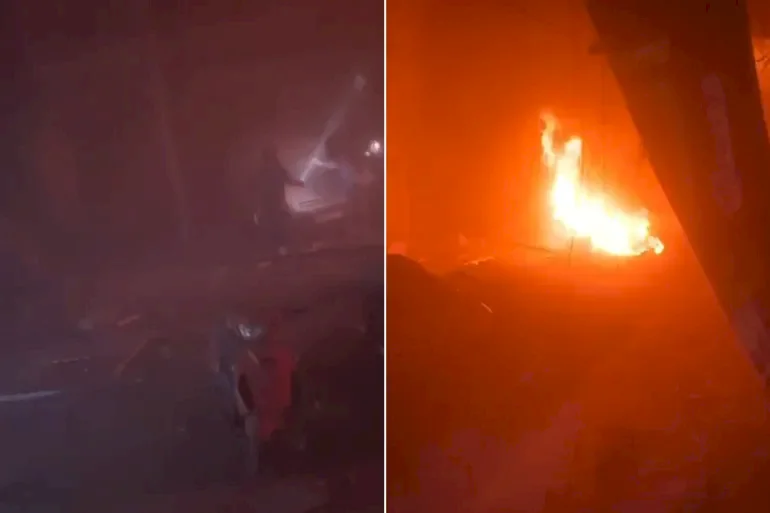
SadaNews - In the first targeting of the Lebanese capital Beirut since the ceasefire agreement came into effect, Israel carried out an air raid on the Harat Hreik area in the southern suburbs of Beirut, targeting the leader of the "Al-Ridwan" Brigade of Hezbollah, Malik Balout, amid Israeli estimations of the success of the assassination operation.
This development puts the truce to a real test and raises direct questions about the resurgence of security breaches, and the political messages that Tel Aviv seeks to direct to Beirut, Washington, and Tehran simultaneously.
To answer these questions, the scene and its dimensions can be unpacked through the following points:
First: Who was the target? What are the details of the operation?
Israeli Prime Minister Benjamin Netanyahu and his Defense Minister Israel Katz quickly announced the operation, while the Israeli broadcasting corporation reported from a senior official that the party's headquarters had issued instructions to breach the ceasefire.
According to Israeli army radio, Malik Balout has been leading the "Al-Ridwan Brigade" - Hezbollah's elite offensive unit - for about two years, following the assassination of the previous head of the unit.
Unconfirmed Israeli narratives about the execution method varied, as while army radio spoke of an attack by fighter jets, the newspaper "Israel Hayom" mentioned that a warship launched 3 missiles from the Mediterranean Sea.
Notably, according to Israeli media, the timing of the operation coincides with the first day of the new commander of the Israeli Air Force, Omri Teichler, taking on his duties, which may reflect an Israeli attempt to present a "quick operational achievement" in response to internal criticisms of Netanyahu's government regarding restricting the military's operational freedom in Lebanon.
Second: What is the importance of the "Al-Ridwan Brigade"?
The Al-Ridwan Brigade is considered Hezbollah's elite offensive unit, founded during the 2006 war under the name "Rapid Intervention Forces", before taking its current name in 2008 in honor of the military commander Imad Mughniyeh - whose title was "Haj Radwan" - after his assassination in Damascus.
The brigade's missions revolve around infiltrating behind Israeli lines and controlling territories within Israel, and its fighters undergo intensive training in Lebanon and Iran under the supervision of the Iranian Revolutionary Guard.
The series of Israeli assassinations has included several of its prominent leaders, from Imad Mughniyeh in 2008, to Wissam Talloul in 2024, and Ibrahim Aqil in September 2024 who was the last to lead it before Balout.
Third: Have breaches of security in Hezbollah returned?
This targeting opens the door again to questioning the extent of the security breach within the ranks of the party.
Military expert Elias Hanna explained in an interview with Al Jazeera that Israel was not in "intelligence blindness" during the ceasefire period; while Hezbollah was reorganizing and rearming itself with a new command structure, Israeli intelligence was gathering its tactical information and monitoring this structure, ready to strike once it received the "green light" from human intelligence sources on the ground.
Despite the initial news accompanying the event regarding targeting a "meeting" of elite leaders, Israeli army radio merely indicated that the deputy commander of the Al-Ridwan Brigade was not present at the strike site and was not killed.
Fourth: What is the significance of Israeli-American coordination?
This air raid doesn't gain its significance merely from surpassing the limited targeting scope south of the Litani River, but also from being coordinated with Washington; the Israeli broadcasting authority reported a senior official stating that the targeting operation "was conducted in coordination with the United States".
This announcement, as political analyst Nicholas Nasif notes, makes the Americans - who are supposed to play the role of guardians of negotiations and ensuring the ceasefire - appear as if they are "partners" with Israel, allowing it freedom of action militarily and operationally instead of restraining it.
Fifth: What does Israel want from this raid?
The Beirut raid was not isolated from a broader battlefield scene; it coincided with an escalation in the pace of Israeli bombings and demolition operations in southern villages and towns, as well as expanding raids to include the western Bekaa and northern Litani, in a clear departure from the targeting pattern that has prevailed over the past weeks.
In light of this rolling escalation, observers' interpretations of the scene intersect at 3 key levels:
The field and security level: Reinforcing the return to a policy of precise assassinations and targeting key centers within the party, beyond the geographical lines of the ceasefire.
The Lebanese-Israeli track: Al Jazeera correspondent Mazen Ibrahim indicates that Israel seeks to send a fiery message to decision-making circles in Beirut, indicating that it will negotiate "under fire" and retain freedom of military movement; this comes in response to the Lebanese side's assertion that the priority of negotiations is a ceasefire, and President of the Republic's rejection of any meeting with Netanyahu.
The American-Iranian track: Attempting to influence the indirect talks taking place through exchanged messages in Pakistan. Here, the position conveyed by Speaker of the Lebanese Parliament Nabih Berri from the Iranian Foreign Minister is notable, affirming that Lebanon will be part of any comprehensive agreement.
In this last context, analysts argue that Netanyahu is attempting through this escalation to hinder the imminent American-Iranian agreement and to "separate the tracks" to keep the Lebanese arena open for targeting far from any regional deal.
Summary
The recent air raid, along with the wide escalation accompanying it, puts the fragile ceasefire agreement before some of its most dangerous tests. And with Hezbollah's official stance still absent so far, attention turns to the possible form of response.
According to political analyst Ali Haidar, the previous equations suggest a clear response from the party deep inside Israel, which may be met with an Israeli reaction that goes beyond the Lebanese South.
In the face of this complex scene, the important question remains: Was this raid a prelude to mutual escalation that could return the region to an open war, or will the parties contain the blow and save the negotiation track?
Source: Al Jazeera
 Follow the latest Sada News via Google News
Casualties in Explosion in Damascus

The General Secretariat of the Organization of Islamic Cooperation Affirms the Role of UNR...

Paul's Initiative in Libya: A Real Settlement or a New Division of Influence and Resources...

The Ghost of El Fasher Haunts El Obeid.. A Funding Gap Threatens the Lives of 20 Million H...

Dozens Dead and Injured in Russian Missile and Drone Attack on Kyiv

8 Dead and Injured.. Russia Launches Deadly Attacks on Kyiv

Aoun calls on those opposed to the "framework agreement" to present an alternative
